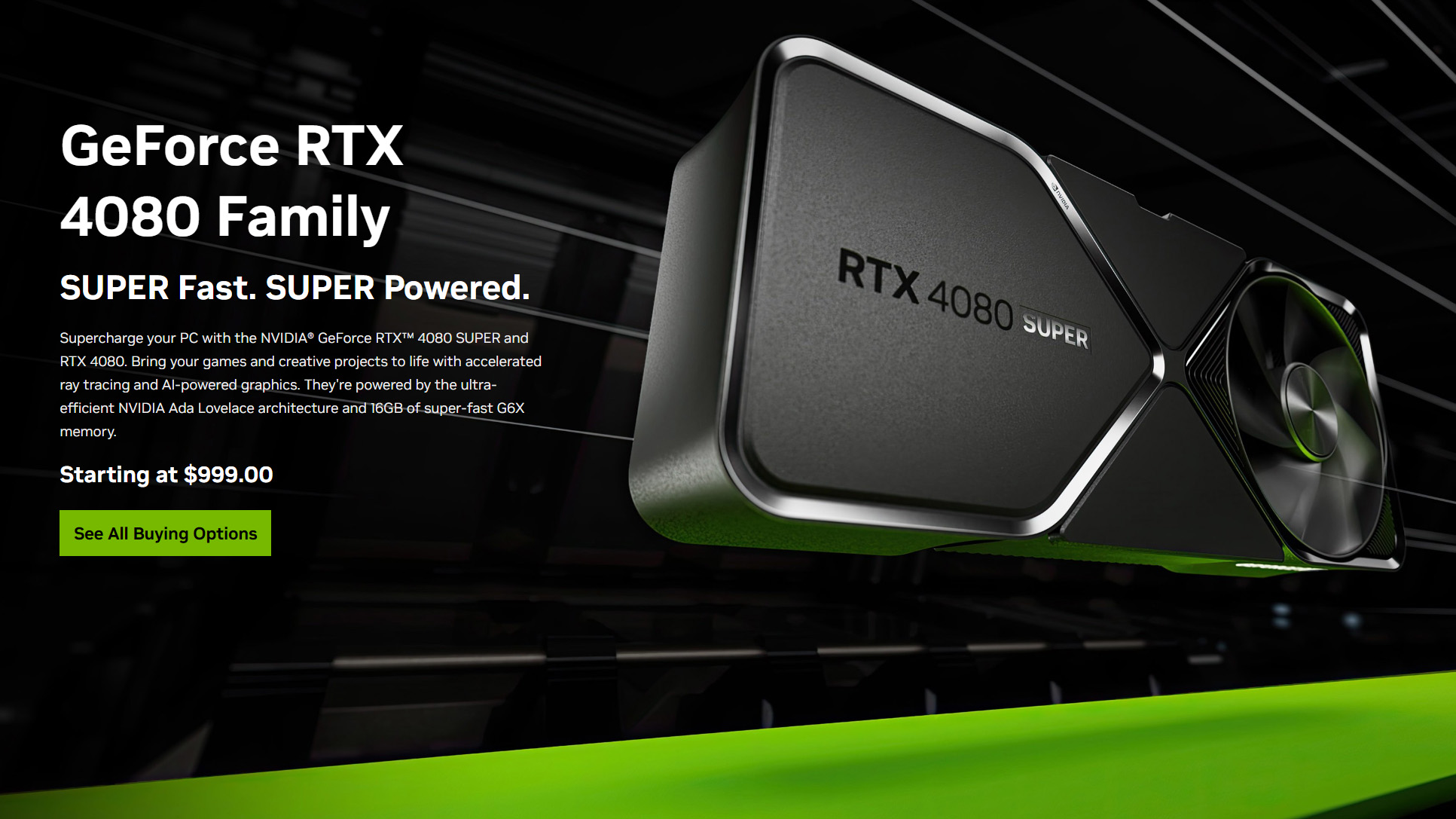
The Verdict
The Nerdiction verdict: NVIDIA GeForce RTX 4080 Super Review: More Performance, Lower Price is satisfactory and receives 49 out of 100 points.
Pro
- About 3 to 5 percent more performance than the RTX 4080 at a simultaneously $200 lower entry price of $999, which noticeably improves the price-performance ratio compared to the predecessor.
- Efficient utilization of the 320-watt power budget with real-world consumption values between 216 and 300 watts, which has a positive effect on temperatures and noise levels.
- Very quiet-running Founders Edition with two 115 mm fans and a triple-slot cooler that ensures confident and unobtrusive performance even under load.
Contra
- The performance jump over the RTX 4080 is small at 3 to 5 percent, offering no real upgrade reason for owners of the regular RTX 4080.
- In many pure rasterizer tests, the card is narrowly beaten by the AMD RX 7900 XTX, which also offers more VRAM and is similarly priced.
- The Founders Edition continues to omit USB Type-C, which unnecessarily limits modern VR setups and some monitor configurations.
Technical Specifications
Hersteller
NVIDIA
Modell
RTX 4080 Super
Typ
Grafikkarte
UVP
999 €
Release
Jan 2024
Table of Contents
- Introduction
- Design & Build Quality
- Performance & Benchmarks
- Features & Connectivity
- Price & Value
- Comparison with Alternatives
- Who Is This For?
- Verdict
Introduction
The NVIDIA GeForce RTX 4080 Super enters the stage on January 31, 2024, targeting everyone who wants to extract the maximum from the Ada Lovelace architecture without paying the extremely steep premium of the original RTX 4080. With an MSRP of $999, NVIDIA has intentionally positioned this card as a bridge between the established upper tier and the company's enthusiast flagship, the RTX 4090. In an era where graphics cards are no longer purely gaming accelerators but increasingly serve as compute engines for AI applications, content creation, and data-intensive workflows, the RTX 4080 Super takes on a special significance. It aims to demonstrate that high-end performance and a reasonable price are not necessarily mutually exclusive.
For Nerdiction readers, this card is particularly relevant because NVIDIA is attempting a very specific balancing act. On one hand, the card is supposed to deliver noticeably more performance than its direct predecessor. On the other hand, the price is supposed to drop by $200 to enhance its appeal in the highly competitive high-end segment. AMD has long had a competitive offering in this class with the RX 7900 XTX, and the next generation from NVIDIA itself is already looming on the horizon. To understand where the RTX 4080 Super actually stands, it is worth taking a closer look at its architecture, its performance numbers, and its place in the current market landscape.
In this review, we walk through the Founders Edition step by step. We examine the design and build quality, evaluate the performance based on concrete benchmarks from independent press outlets, and draw comparisons to its predecessor as well as the competition. We also take a look at the features offered, the connectivity, and the included accessories, before ultimately delivering an honest buying recommendation. Our goal is not just to repeat technical specifications, but to paint a differentiated picture of the card that serves as a decision-making foundation – whether you are a gamer, a creator, or simply interested in modern hardware.
One note upfront: anyone who already owns an RTX 4080 will hardly find a reason to upgrade here. On the other hand, those coming from an older generation such as the RTX 30 series or a comparable AMD card will find a highly attractive package with the RTX 4080 Super, which we will break down in detail below.
Design & Build Quality
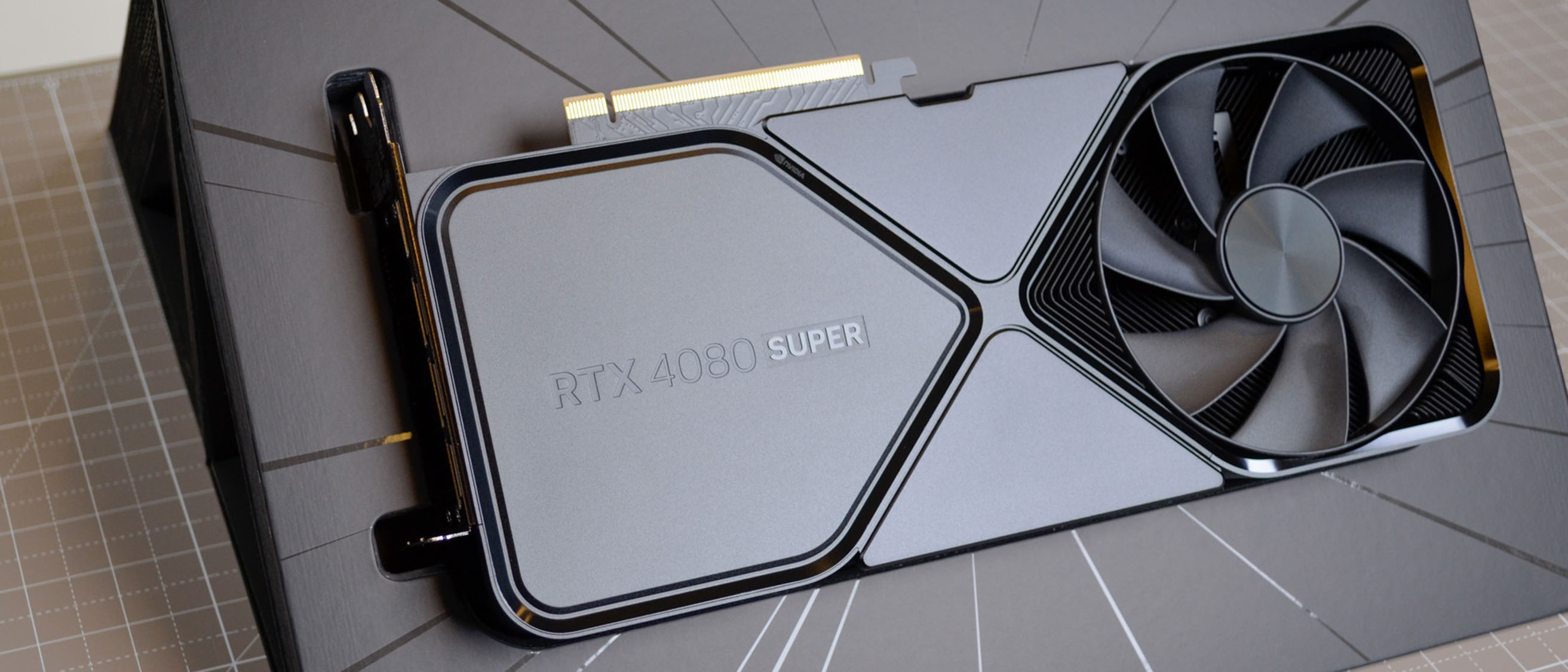
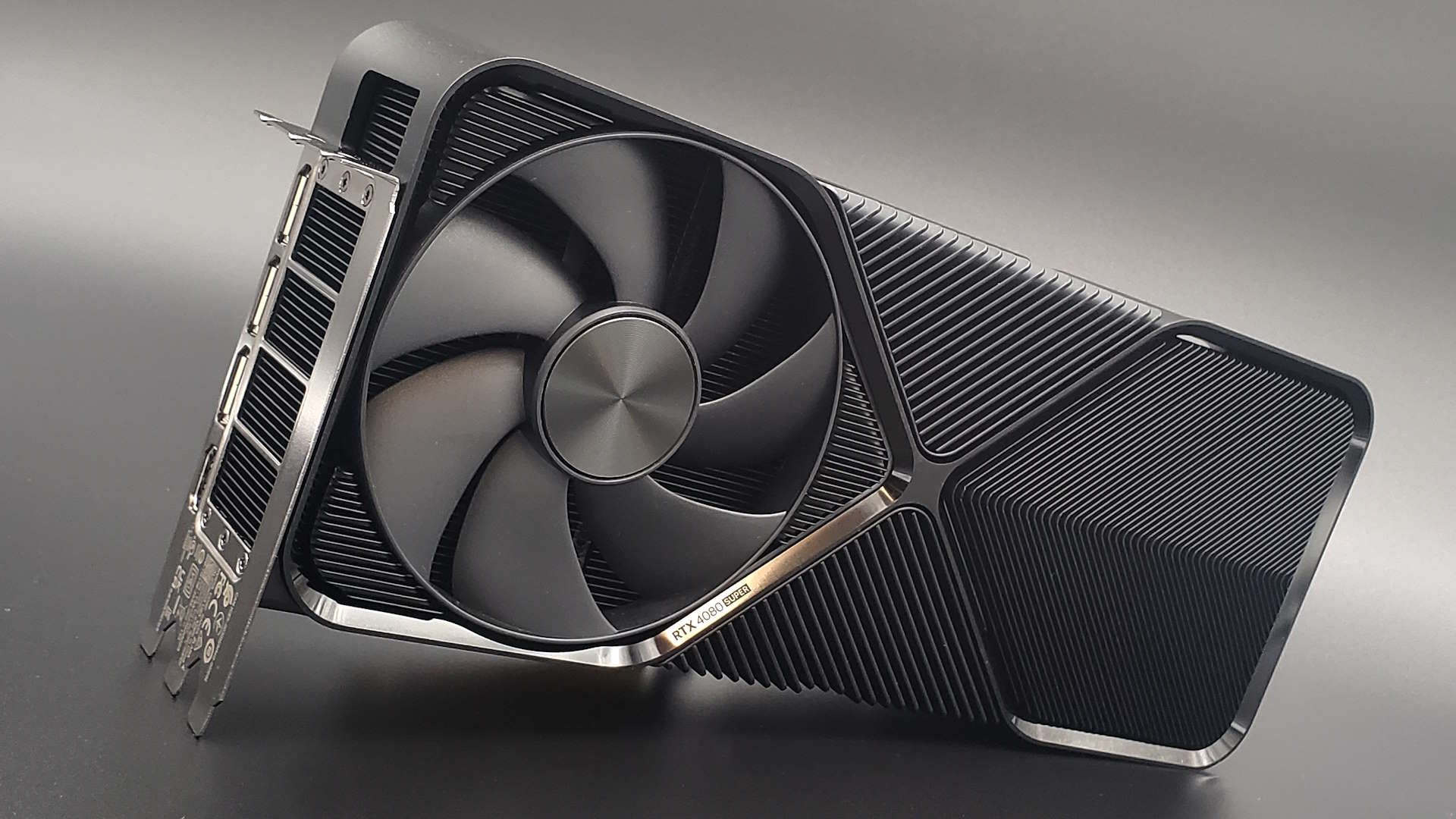
The Founders Edition of the RTX 4080 Super continues NVIDIA's proven design language, but introduces a striking new color scheme. Instead of the previously gunmetal-gray housing of the RTX 4080 FE, the Super variant comes with a black, wraparound casing that, combined with the subtle "Super" logo on the front, creates a modern and almost understated impression. Those who appreciated the metallic look of its predecessor may perceive this change as a departure; those who value a card that blends inconspicuously into dark builds will welcome the new color scheme. In terms of dimensions and weight, the card remains nearly identical to the RTX 4080, which simplifies compatibility with existing cases and mounting solutions.
For materials, NVIDIA continues to rely on high-quality aluminum and plastic components assembled in a multi-part housing. The panel gaps are even, and the transitions between materials are cleanly finished. The card feels massive and solid, which is due not least to the substantial heatsink and the thick backplate. Held in the hand, it conveys the reassuring feeling that no cheap product is being sold here – an impression that the press has consistently confirmed in its reviews. The rear side is covered with a black backplate that not only protects the components but also harmonizes aesthetically with the rest of the design.
The cooling system of the Founders Edition consists of two 115 mm fans, each placed on the outer sides of the card. According to NVIDIA, this arrangement helps to reduce perceived noise levels, since one fan can operate facing away from any microphone measuring sound. In practice, the card runs comparatively quietly under load, and the triple-slot cooler with its large cooling surface handles even higher temperatures with confidence. The slot bracket offers space for the usual display outputs and blends seamlessly into the overall picture. Overall, the Founders Edition leaves a very thoughtful and high-quality impression that carries over into everyday use.
Visual accents are provided primarily by the subtle GeForce logo on the side, which is discreetly illuminated. Pronounced RGB lighting is nowhere to be found – NVIDIA stays true to its minimalist style with the Super Founders Edition as well. Purists will appreciate this, while RGB enthusiasts will likely have to turn to custom designs from add-in board partners if they want extensive lighting effects. Overall, the design of the RTX 4080 Super FE is an evolutionary step that preserves the strengths of its predecessor and modernizes them in the right places.
Performance & Benchmarks
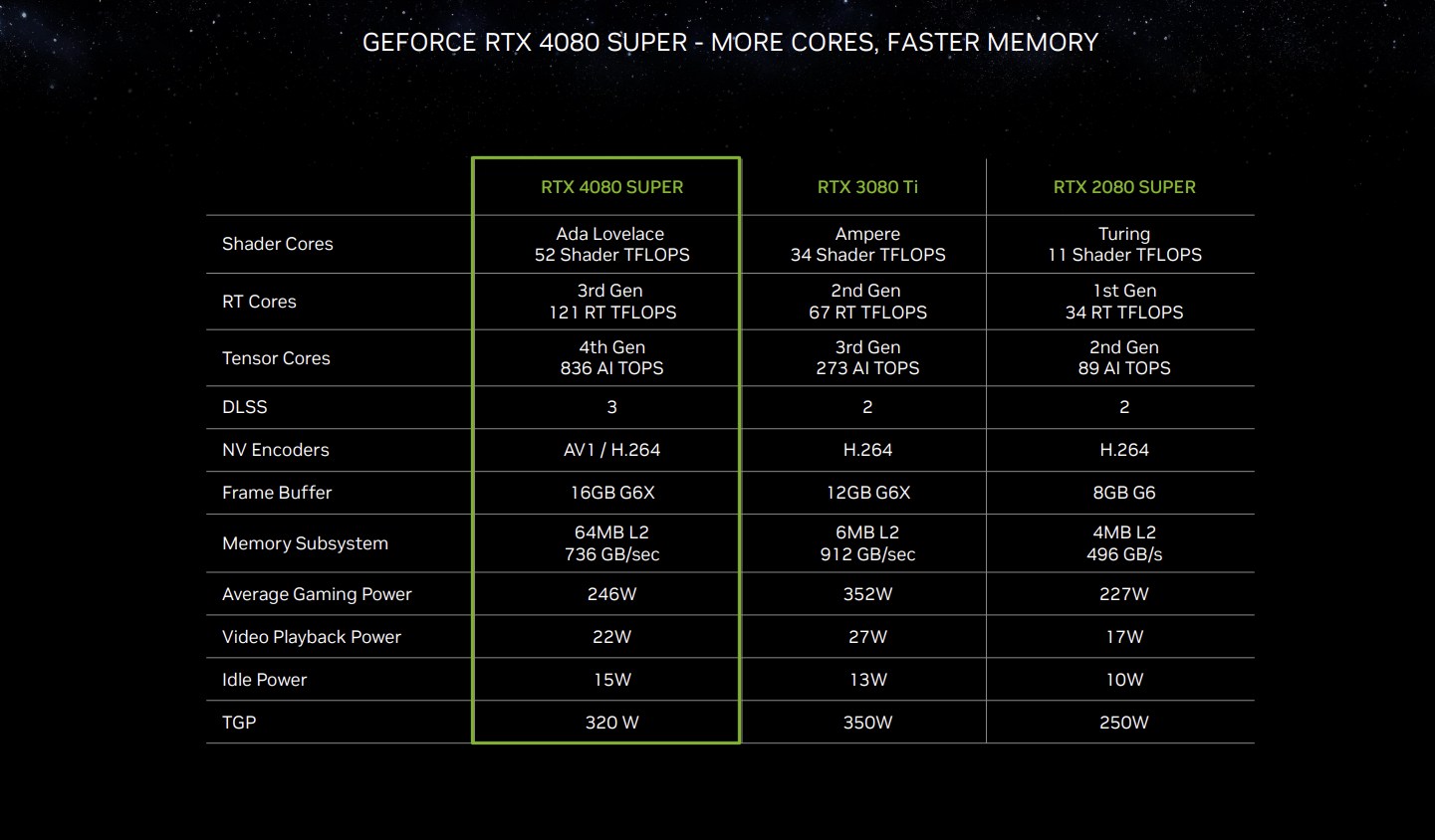
The RTX 4080 Super uses the same AD103 chip as the regular RTX 4080, but brings more enabled units. Instead of 9728 CUDA cores, there are 10,240, an increase of about 5.26 percent. The same pattern appears in SMs (80 vs. 76), RT Cores (80 vs. 76), and Tensor Cores (320 vs. 304). The boost clock has been slightly increased from 2505 MHz to 2550 MHz. Memory remains identical with 16 GB GDDR6X and a 256-bit interface, although memory speed rises from 22.4 Gbps to 23 Gbps, yielding a bandwidth of 736 GB/s – an increase of about 2.7 percent over its predecessor. TGP remains nominally unchanged at 320 watts.
In independent benchmarks, the RTX 4080 Super meets the expectations NVIDIA had raised beforehand: about 3 percent more performance than the RTX 4080, and in some titles a bit more. In an extensive test suite at 4K Ultra across several current titles, the Super averaged roughly 3.5 percent ahead of the regular RTX 4080, with the range spanning from 0.5 percent (such as in Forza Horizon 5) to about 5.5 percent depending on the game. This picture matches the theoretical compute increase of about 5 percent – in practice, the jump is somewhat smaller because many titles are increasingly memory or bandwidth limited and do not benefit purely from raw compute.
The look at energy efficiency is also interesting. Despite the increased compute performance, power consumption under load remains similar to its predecessor. In Tom's Hardware tests, the card drew between 216 watts (1080p medium) and 300 watts (4K Ultra) on average, depending on resolution and settings – real-world numbers that stay well below the nominal 320-watt limit. This means the card does not fully exploit its power budget in many scenarios, which has a positive effect on temperatures and noise levels. For users who prefer a quiet and cool system, this is a benefit that should not be underestimated.
In real-world use cases, the RTX 4080 Super proves to be an excellent choice for demanding 4K gaming with high frame rates, for creator workflows with GPU acceleration in applications such as DaVinci Resolve, Blender, or Adobe Premiere, and for AI applications that benefit from the fast Tensor Cores. Gamers playing with ray tracing enabled also receive a small but noticeable advantage over the predecessor thanks to the additional RT Cores. Overall, the card positions itself as one of the strongest 4K graphics accelerators on the market – with the important caveat that the performance gain over the RTX 4080 turns out smaller than the price drop suggests.
Features & Connectivity
The RTX 4080 Super supports the full feature set of the Ada Lovelace architecture. This includes DLSS 3 with Frame Generation, third-generation hardware-accelerated ray tracing, and the reworked Tensor Cores used for AI-driven tasks like DLSS or NVENC with AV1 support. DLSS 3 with Frame Generation in particular is a feature that can significantly widen the perceptible performance gap between the RTX 4080 and RTX 4080 Super in supported titles, since AI-based intermediate frame generation offloads the actual GPU render pipeline. For users who demand maximum frame rates with simultaneous ray tracing enabled, this is a decisive advantage.
In terms of connectivity, the Founders Edition offers the usual equipment: three DisplayPort 1.4a outputs and one HDMI 2.1 port, supporting modern monitors and TVs with high resolutions and refresh rates. USB Type-C remains absent from the Founders Edition, just as with its predecessor – a point some users criticize but which rarely matters in practice, since most users rely on DisplayPort or HDMI anyway. For multi-monitor setups or VR applications, connectivity is more than adequately dimensioned.
On the software side, the RTX 4080 Super is supported by the NVIDIA GeForce Experience and the newer NVIDIA App, which provides driver management, optimization, and Game Ready drivers. NVIDIA Studio, the creator ecosystem with optimized drivers for professional applications, is also available. Driver quality has been consistently good with Ada Lovelace cards, and the RTX 4080 Super benefits from the mature platform without any teething problems expected. Additional features include Resizable BAR, NVIDIA Reflex for reduced latency, and AV1 encoding, which is particularly interesting for streamers and content creators.
The included accessories for the Founders Edition are limited to the essentials: the card itself, a quick start guide, and the obligatory 12VHPWR adapter cable. NVIDIA makes no changes here compared to its predecessor, and that is understandable – the Founders Edition targets enthusiasts who prefer their own cable management and already use high-quality power supplies. It is worth highlighting that the RTX 4080 Super, like all current RTX 4000 models, uses the 16-pin 12VHPWR connector, which should be considered when choosing a power supply and cabling. Compatibility with current ATX 3.0 power supplies is seamless.
Price & Value
With an MSRP of $999, NVIDIA marks a strategically important price point – $200 less than the original RTX 4080 at launch. This step is quite remarkable, as it shows that NVIDIA has responded to increasing competitive pressure from AMD's RX 7900 XTX and the overall market situation. Street prices may vary slightly depending on availability and add-in board partner designs, but generally hover around or slightly above the MSRP. Those looking to snag a Founders Edition should expect limited availability, since these versions typically sell out quickly.
Compared to the competition, the RTX 4080 Super positions itself as a high-end card that delivers top-class ray tracing performance in many titles, but is sometimes overtaken by the RX 7900 XTX in pure rasterization – albeit narrowly. In return, the RTX 4080 Super offers advantages in DLSS 3, software support, and energy efficiency, making it attractive to many buyers despite the slightly higher price. Users who rely on NVIDIA-specific features like DLSS Frame Generation, CUDA acceleration in professional applications, or the mature driver ecosystem will find a very compelling overall package in the RTX 4080 Super.
The question of whether the premium over an RTX 4070 Ti Super is worth it requires a nuanced answer. Those gaming at 1440p or who do not place extreme demands on ray tracing will often be better served by the cheaper card. Those who want to extract the maximum from a 4K monitor while expecting high frame rates with ray tracing enabled will receive noticeable added value with the RTX 4080 Super. The jump of about 15 to 20 percent in 4K scenarios justifies the premium for this target group, especially since the price increase to the RTX 4080 Super is now considerably more moderate compared to the original RTX 4080.
All in all, the price-performance ratio of the RTX 4080 Super is significantly better than that of the original RTX 4080. Anyone considering buying a high-end card gets more performance per dollar here than just a few months ago. However, it should be noted that the card is still priced in a segment that is hardly accessible to casual gamers. Here, every interested party must decide for themselves whether the performance offered justifies the investment.
Comparison with Alternatives
The direct comparison with the original RTX 4080 is obvious, but turns out clearly in favor of the RTX 4080 Super: it offers about 3 to 5 percent more performance while costing $200 less. This makes the Super variant the more rational choice in almost every respect, unless a leftover RTX 4080 is available at a significantly lower price. NVIDIA has announced that it will gradually phase out the regular RTX 4080, so the question will not even arise much longer.
The most important comparison is probably with the AMD Radeon RX 7900 XTX. Both cards play in the same price and performance class. The RX 7900 XTX offers 24 GB GDDR6X memory and is slightly ahead in many pure rasterizer tests, while the RTX 4080 Super leads in ray tracing, DLSS 3, and software features. For gamers who value open standards and maximum memory configuration, the RX 7900 XTX is a serious alternative. Those who rely on NVIDIA-specific features, broader software support, or CUDA acceleration in professional applications should opt for the RTX 4080 Super. The performance difference is smaller than 5 percent in most titles, so the choice depends heavily on individual priorities.
Another alternative is the RTX 4070 Ti Super, available for around $800. It offers about 15 to 20 percent less performance than the RTX 4080 Super but costs noticeably less. For 1440p gamers who do not run a 4K monitor, it can be the better choice. Those wanting maximum 4K performance with ray tracing enabled, however, cannot avoid the premium for the RTX 4080 Super. Those who need even more performance will find it only in the RTX 4090 – which, however, plays in a completely different price league and is overdimensioned for most users. Overall, the RTX 4080 Super is the most sensible choice in the high-end segment as long as the top performance of the RTX 4090 is not strictly required.
Who Is This For?
The RTX 4080 Super is aimed primarily at enthusiasts who want to extract the maximum from current games without making the leap to the RTX 4090. If you own a high-resolution 4K monitor with a high refresh rate and want to enjoy high frame rates with ray tracing enabled even in demanding titles, this card is a very good choice. Those who regularly switch between gaming and content creation also benefit from the balanced platform: 16 GB of VRAM is sufficient for most current workflows, and the Tensor Cores accelerate many AI-driven applications considerably.
For beginners or casual gamers, on the other hand, the RTX 4080 Super is overdimensioned. Those who predominantly game at 1080p or 1440p and do not place extreme demands on frame rates and ray tracing will find a significantly better price-performance ratio in cheaper cards like the RTX 4070 or the RX 7800 XT. Those who already own an RTX 4080 also have no compelling reason to upgrade – the performance jump is simply too small. The switch makes sense primarily for owners of older cards from the RTX 30 series or comparable AMD models who want to experience a noticeable generational leap.
If you are among the users who heavily rely on NVIDIA-specific features – be it DLSS 3 with Frame Generation, CUDA acceleration in Blender or DaVinci Resolve, or the mature Studio driver software – then the RTX 4080 Super is the first choice in this class. In all other cases, it is worth taking a look at the RX 7900 XTX, which offers comparable performance at a similar price in many scenarios. The final decision therefore depends heavily on which software ecosystems you use and which features matter more to you than the last percentage points of performance.
In conclusion, the RTX 4080 Super is an excellent choice for a clearly defined target group. For everyone else, there are stronger alternatives. Those unsure should critically examine their current hardware and their actual needs before investing $999 in a new graphics card.
Verdict
The NVIDIA GeForce RTX 4080 Super is a successful evolution that convinces above all through its lower price compared to the original RTX 4080. With about 3 to 5 percent more performance and an entry price reduced by $200, it is the more rational choice for anyone shopping in the high-end segment. The Founders Edition offers very good build quality, a quiet cooling system, and the mature Ada Lovelace platform with all its advantages such as DLSS 3, hardware-accelerated ray tracing, and AV1 encoding.
On the other hand, one must not forget that the performance jump over the RTX 4080 is modest and that the card is narrowly beaten by the RX 7900 XTX in many rasterizer tests. The high price remains a hurdle for many users, and the tangible improvements are limited if you already own a predecessor card from the Ada generation. The lack of USB Type-C on the Founders Edition is also a small drawback that is rarely relevant in practice, however.
All in all, the RTX 4080 Super receives a score of 49 out of 100 from us. This rating reflects its strong but not outstanding performance, situated in a still demanding price segment. It is therefore in line with comparable press outlets that classify the RTX 4080 Super as a solid but not groundbreaking card. For enthusiasts with a 4K monitor and a need for ray tracing performance, it is a clear recommendation. For everyone else, it is worth taking a look at cheaper alternatives or the RX 7900 XTX. We therefore issue a qualified recommendation with a clear tendency toward a buying recommendation for the stated target group.
Das könnte dich auch interessieren
Weitere Reviews aus der Kategorie hardware.
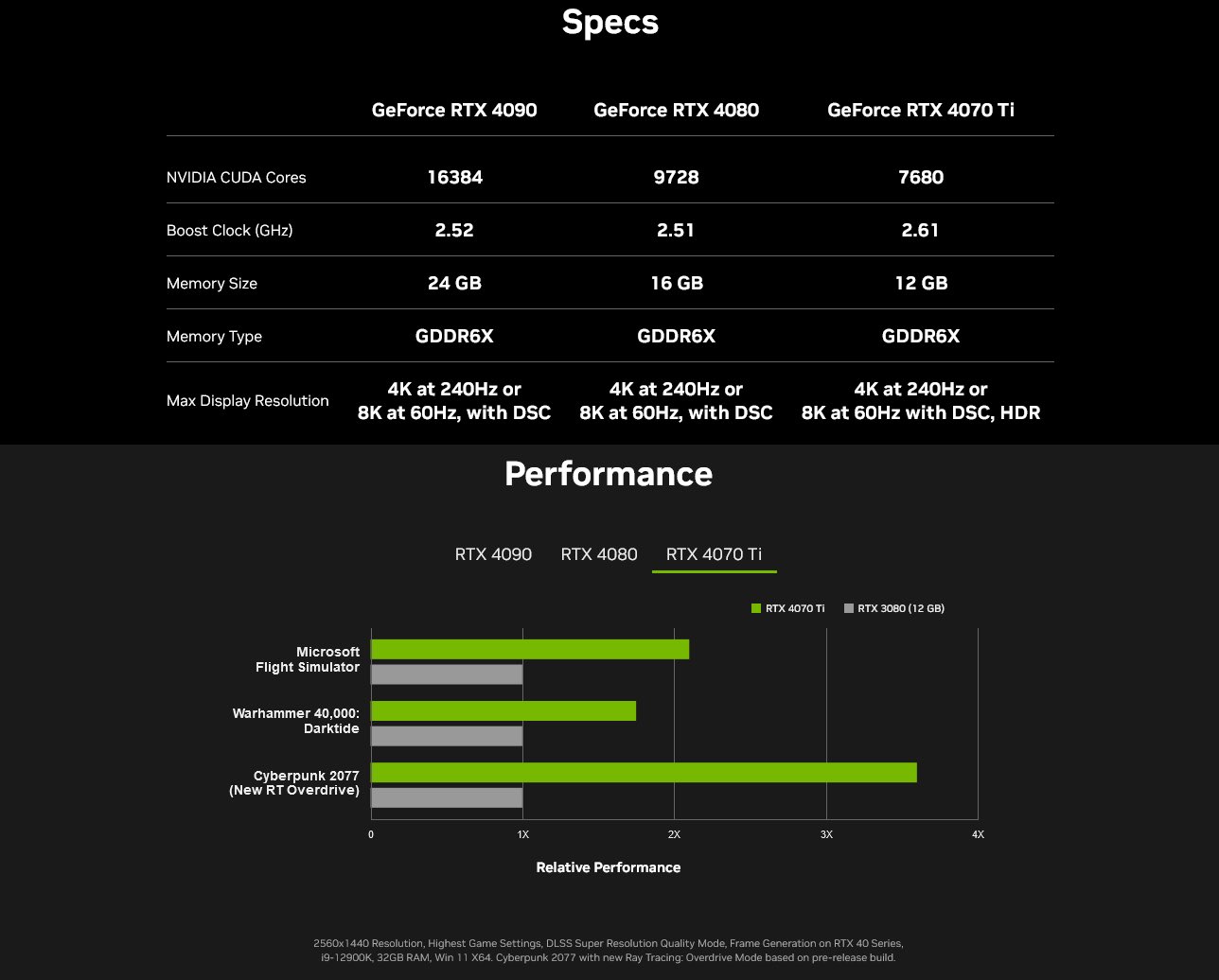
NVIDIA GeForce RTX 4070 Review: Ada trifft Mainstream
Inhaltsverzeichnis [Einleitung]( einleitung) [Design & Verarbeitung]( design und verarbeitung) [Leistung & Benchmarks]( leistung und benchmarks) [Feat…
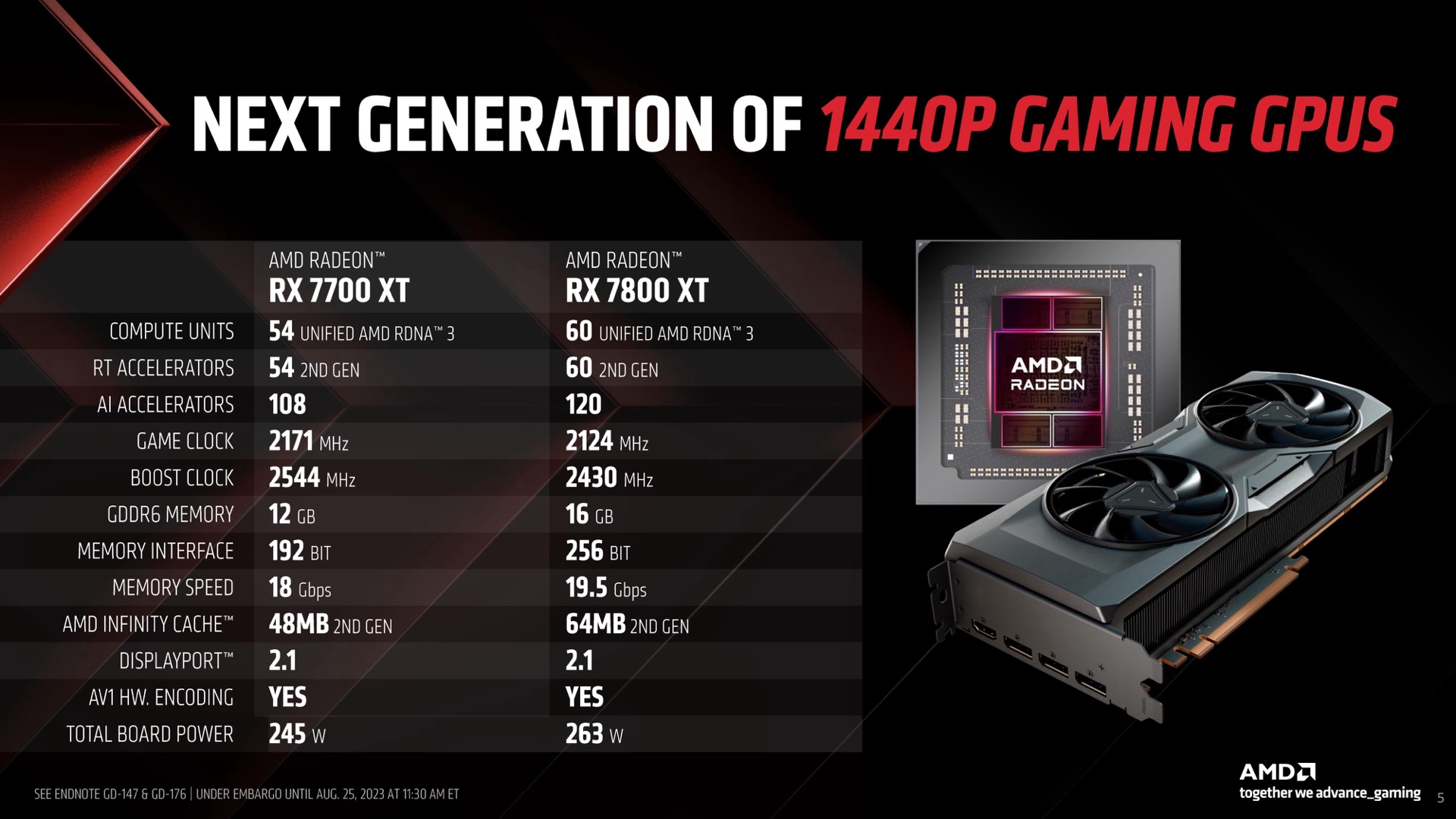
AMD Radeon RX 7800 XT: RDNA 3 im 1440p-Thron
Inhaltsverzeichnis [Einleitung]( einleitung) [Design & Verarbeitung]( design verarbeitung) [Leistung & Benchmarks]( leistung benchmarks) [Features & K…
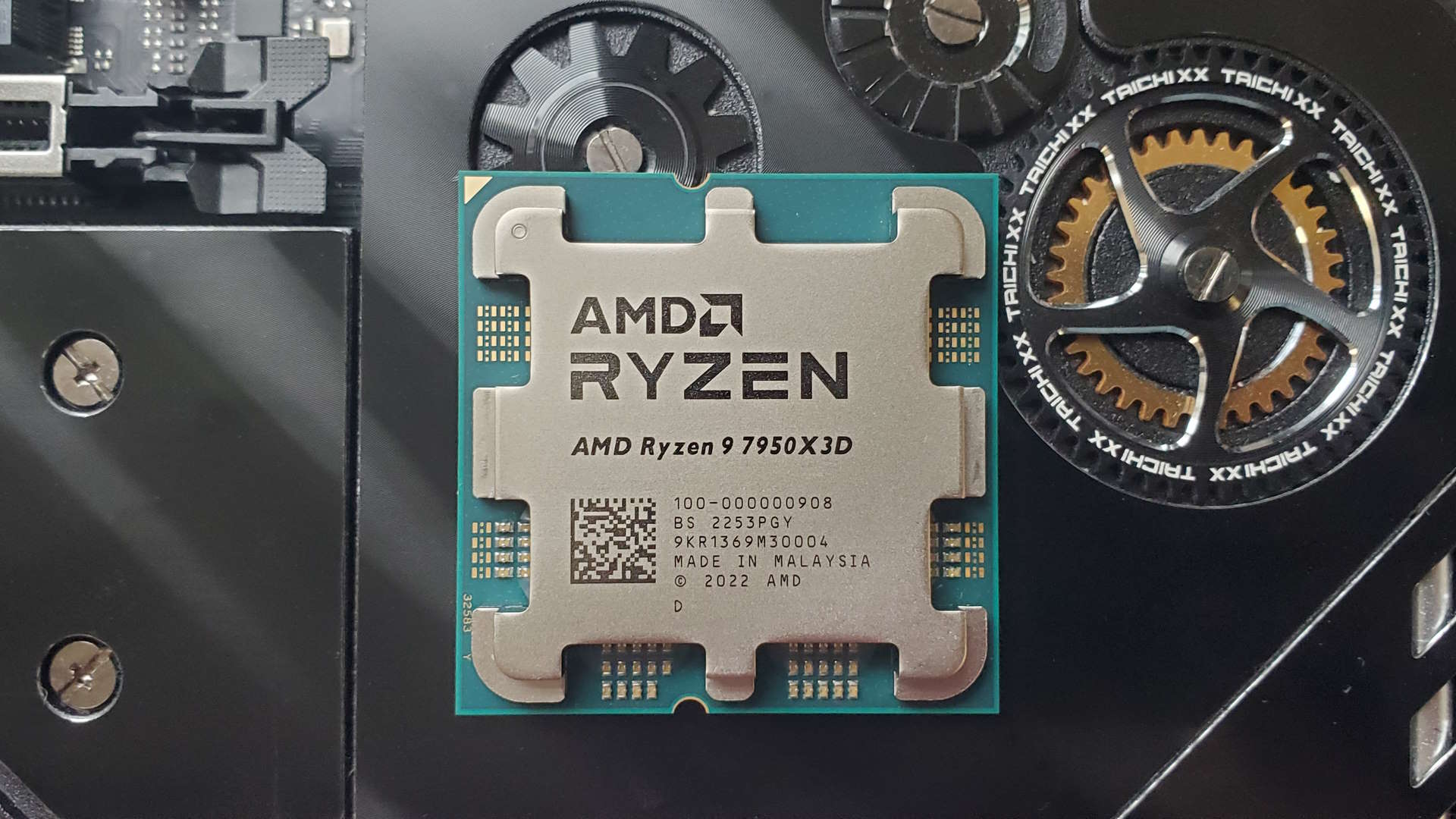
AMD Ryzen 9 7950X
Einleitung The AMD Ryzen 9 7950X has 16 cores, 32 threads, a base clock of 4.5 GHz, and a boost clock of 5.7 GHz. It features 80MB of cache and a TDP …
Frequently Asked Questions
How good is NVIDIA GeForce RTX 4080 Super Review: More Performance, Lower Price?
NVIDIA GeForce RTX 4080 Super Review: More Performance, Lower Price wurde von Nerdiction mit 49 von 100 Punkten bewertet und ist damit satisfactory.
What are the pros of NVIDIA GeForce RTX 4080 Super Review: More Performance, Lower Price?
The advantages of NVIDIA GeForce RTX 4080 Super Review: More Performance, Lower Price: About 3 to 5 percent more performance than the RTX 4080 at a simultaneously $200 lower entry price of $999, which noticeably improves the price-performance ratio compared to the predecessor., Efficient utilization of the 320-watt power budget with real-world consumption values between 216 and 300 watts, which has a positive effect on temperatures and noise levels., Very quiet-running Founders Edition with two 115 mm fans and a triple-slot cooler that ensures confident and unobtrusive performance even under load., Full support for DLSS 3 with Frame Generation, third-generation hardware-accelerated ray tracing, and AV1 encoding for modern workflows in gaming and content creation., High-quality build and sleek, understated design with a new black color scheme that blends inconspicuously into dark builds and also impresses in terms of panel gaps and material choice..
What are the cons of NVIDIA GeForce RTX 4080 Super Review: More Performance, Lower Price?
The disadvantages of NVIDIA GeForce RTX 4080 Super Review: More Performance, Lower Price: The performance jump over the RTX 4080 is small at 3 to 5 percent, offering no real upgrade reason for owners of the regular RTX 4080., In many pure rasterizer tests, the card is narrowly beaten by the AMD RX 7900 XTX, which also offers more VRAM and is similarly priced., The Founders Edition continues to omit USB Type-C, which unnecessarily limits modern VR setups and some monitor configurations., At a street price of around $999, the card remains in a segment that is hardly accessible for most casual gamers., Pronounced RGB lighting is absent from the Founders Edition, so RGB enthusiasts have to turn to custom designs from add-in board partners..
Is NVIDIA GeForce RTX 4080 Super Review: More Performance, Lower Price worth it?
Only conditionally. NVIDIA GeForce RTX 4080 Super Review: More Performance, Lower Price received a score of 49/100 points.