The Verdict
The Nerdiction verdict: LG UltraGear 27GR95QE Review: OLED Gaming at 27 Inches is excellent and receives 88 out of 100 points.
Pro
- Excellent OLED image quality with perfect black levels and a contrast ratio of 1,500,000:1
- Extremely fast 0.03 ms (GtG) response time combined with 240 Hz for clean motion rendering
- Modern connectivity with HDMI 2.1, DisplayPort 1.4, and USB Type-C for flexible setups
Contra
- Measured peak brightness of around 206 nits falls well below Mini-LED and QD-OLED competitors, limiting HDR highlights
- MSRP of 999 Euro is a significant premium over high-quality 240 Hz IPS monitors
- OLED-typical risk of burn-in with long static content remains
Technical Specifications
Hersteller
LG
Modell
27GR95QE-B
Typ
Monitor
UVP
999 €
Release
Dec 2022
Table of Contents
- Introduction
- Design & Build Quality
- Performance & Benchmarks
- Features & Connectivity
- Price & Value
- Comparison with Alternatives
- Who Is This For?
- Verdict
Introduction
With the UltraGear 27GR95QE, LG brings a monitor to the gaming market that attracts attention in several ways. For the first time, the manufacturer combines a flat 27-inch OLED panel with a native refresh rate of 240 Hz and the OLED-typical response time of 0.03 ms (GtG). LG specifically addresses gamers who don't want to compromise between the brilliant black levels and high color accuracy of modern OLED panels and the speed of classic high-refresh IPS or TN panels. The 27GR95QE is part of a new generation of OLED gaming monitors that addresses OLED's previous weakness – lower refresh rates – and promises a sweet spot of response time, motion clarity, and image quality.
In the market, the 27GR95QE plays a particularly notable role. While OLED displays have long been established in the TV segment, they have only recently entered the PC world, especially for gaming. With an MSRP of 999 Euro, LG positions the device in the upper mid-range – priced below the first OLED monitors of 2022, but still significantly above classic IPS monitors with comparable screen size and resolution. The monitor thus targets enthusiasts willing to pay a premium for cutting-edge technology but who don't want to enter the price range of large curved OLED models like the LG 45GR95QE.
In this review, we look at the LG UltraGear 27GR95QE from different perspectives: from design to technical performance to the question of who actually benefits from this monitor. We rely on manufacturer specifications, independent measurements from professional reviewers, and the hands-on experiences of seasoned testers to paint a differentiated picture. Spoiler: it is one of the best 27-inch gaming monitors on the market, but it isn't perfect – and that's not necessarily the display's fault.
Design & Build Quality
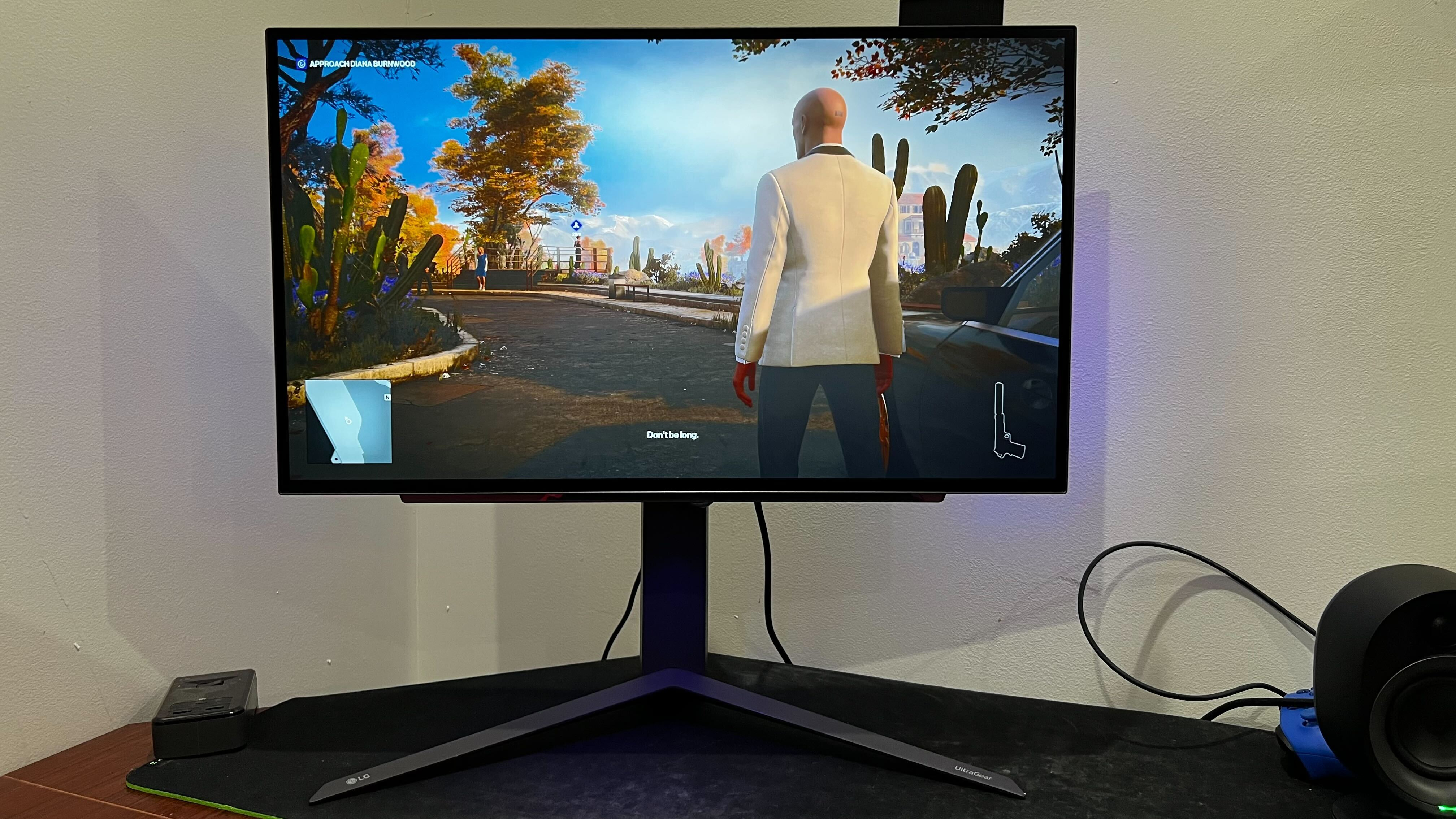
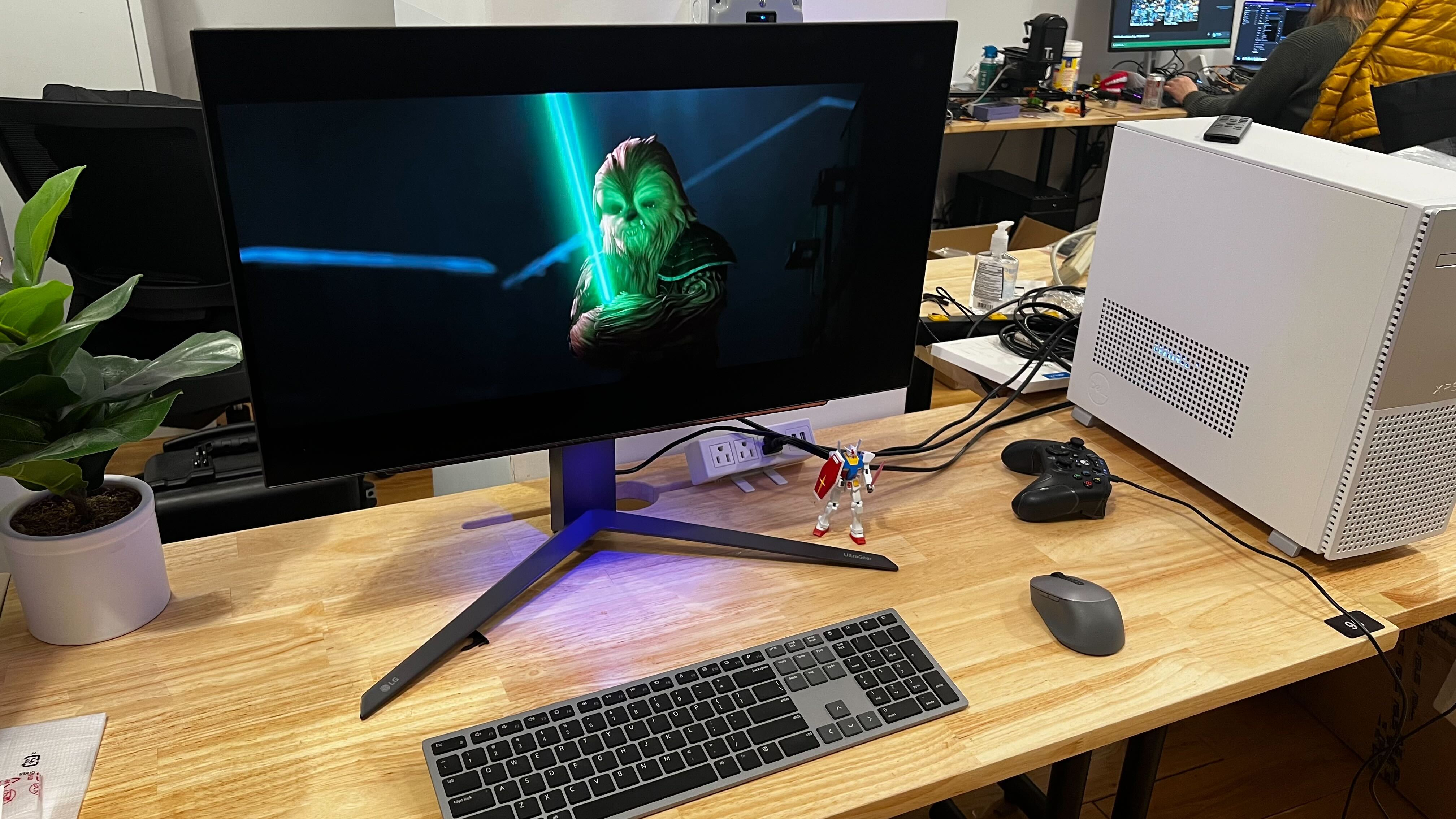
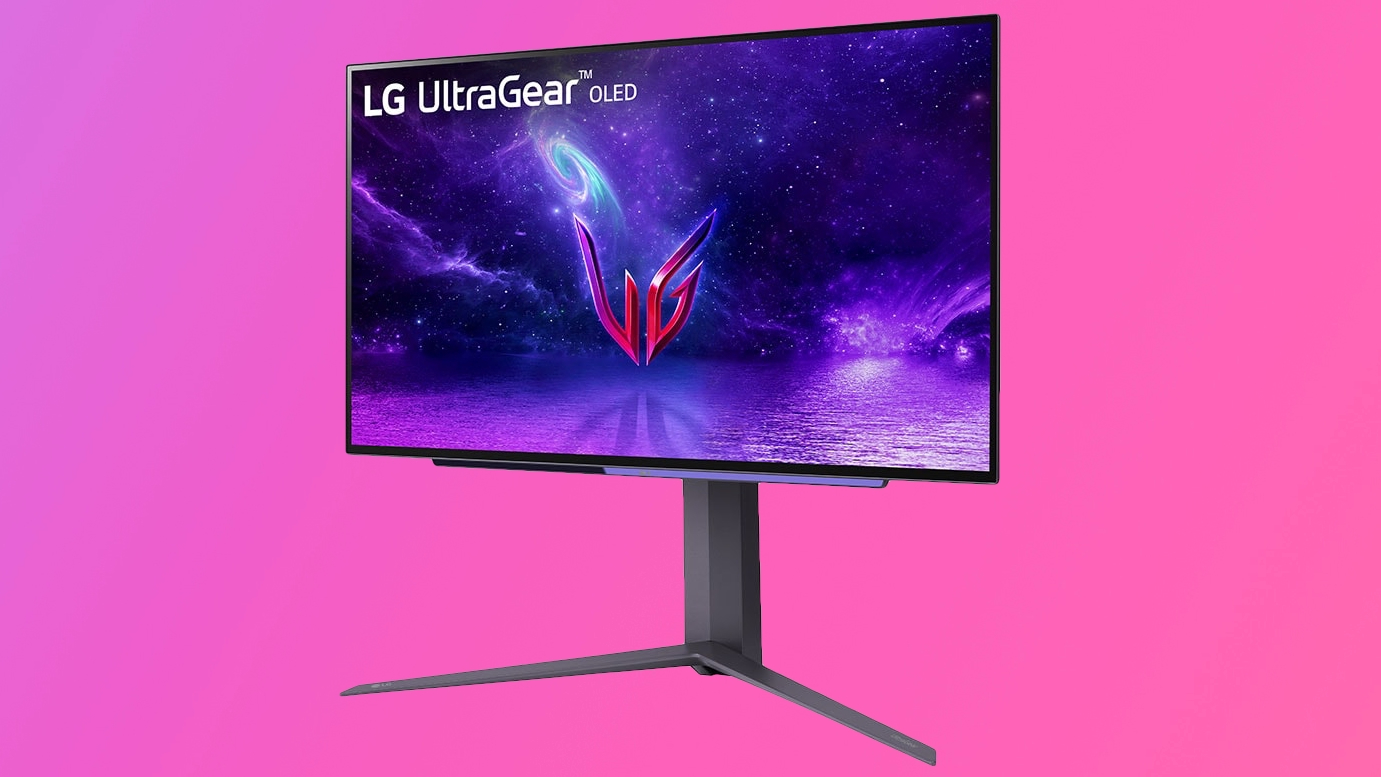
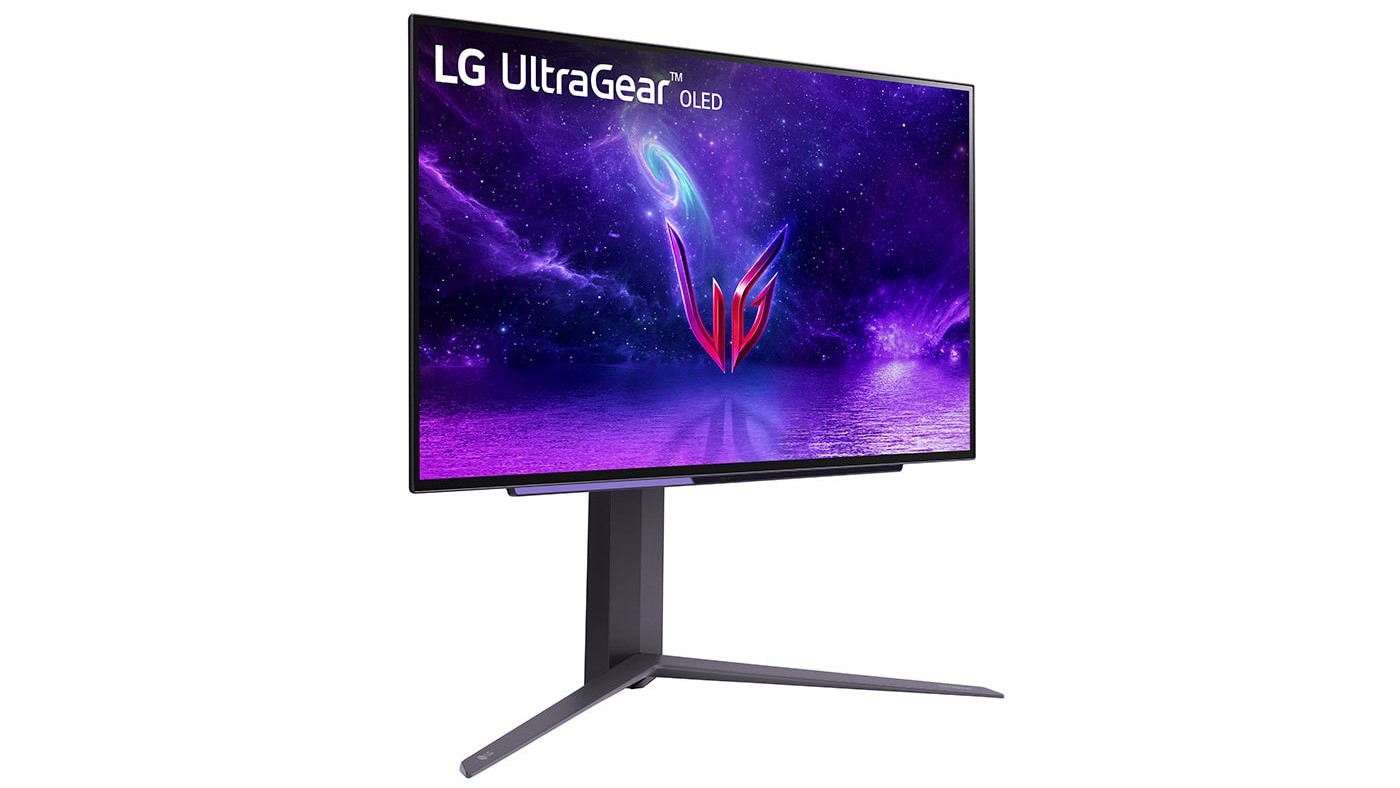
The LG UltraGear 27GR95QE carries the unmistakable design language of the UltraGear series, while setting its own accents thanks to the OLED panel and the more compact form factor. The stand is in the typical V-shaped design that LG has used on previous UltraGear models and ensures a stable footprint on the desk. The build feels premium, with materials consisting predominantly of matte plastic in a dark colorway that looks both understated and robust. Compared to many competitors that go for aggressive gaming aesthetics with sharp edges and bold accents, LG stays restrained with the 27GR95QE – which also helps the monitor fit into productive environments.
The screen itself measures effectively 26.5 inches diagonally, which LG markets as the 27-inch class. The panel is flat – unlike the larger sibling 45GR95QE, which comes with an 800R curvature. For many gamers who prefer competitive play or simply favor a classic 16:9 format, this flat design is the right choice. The bezels around the display are pleasantly thin, making multi-monitor setups theoretically possible, although OLED monitors in this price range are rarely purchased primarily for such configurations.
On the back, LG relies on a clean design with subtle UltraGear accents. RGB lighting is not present on the 27GR95QE to the extent that some competitors offer it – instead, LG uses restrained elements that do not dominate the overall look. The monitor is ergonomically well-equipped: it supports height adjustment, tilt, and swivel, so it can flexibly adapt to different seating positions and desk heights. A pivot function for portrait mode is missing, but that's rarely relevant in the gaming class anyway.
Overall, the 27GR95QE leaves a very solid impression in terms of design and build quality. It isn't a showpiece monitor in the literal sense, but it blends unobtrusively into any environment and delivers exactly what one expects from a premium gaming monitor: a thoughtful enclosure, stable construction, and appropriate ergonomics. The fact that LG forgoes excessive gaming gimmicks like aggressive RGB lighting is a plus for many buyers.
Performance & Benchmarks
The heart of the LG UltraGear 27GR95QE is undoubtedly its OLED panel with 2560 x 1440 resolution and a native refresh rate of 240 Hz. Combined with LG's specified 0.03 ms (GtG) response time, the monitor promises exceptionally fast and clean motion rendering. OLED panels are traditionally superior in this discipline because each pixel is controlled individually and no backlight overshoot like on IPS or VA panels is required. In practice, independent tests confirm this strength: motion remains crisp, ghosting and smearing are virtually absent, and fast camera pans appear clean and sharp even in competitive titles like Counter-Strike 2 or Apex Legends.
In terms of color reproduction, the 27GR95QE also delivers excellent numbers. LG specifies 98.5% DCI-P3 coverage, which makes the monitor interesting not only for gaming but also for content creation. The 10-bit color depth additionally ensures fine color gradients without visible banding. The contrast is specified at a factory value of 1,500,000:1 – a typical OLED figure that in reality means true black is actually black and doesn't end up as a dark gray like on IPS monitors. This is a massive advantage especially for HDR content, where the 27GR95QE fully unleashes OLED's strengths.
However, when it comes to peak brightness, one needs to set realistic expectations. In independent measurements, a peak brightness of around 206 nits (per SD) was measured in SDR operation. That's sufficient for typical desk and living room conditions but falls well short of what Mini-LED or QD-OLED competitors can achieve. HDR content certainly benefits from the perfect black levels and the resulting contrast, but very bright highlights cannot shine to the extent that one is used to from high-quality HDR displays. Those looking for a monitor primarily for HDR movies or brightly lit scenes should keep this limitation in mind.
Compared to the direct predecessor and to classic IPS competitors in the same price range, the 27GR95QE performs significantly better in motion tests. The combination of 240 Hz, OLED response time, and QHD resolution hits the nerve of many PC gamers: the resolution is high enough to also look sharp in productive applications, but not so demanding that current graphics cards are pushed to their limits. Even with an upper mid-range GPU, frame rates near the native 240 Hz can be achieved in many current games, allowing the monitor to fully unleash its potential. Adaptive Sync is naturally on board and ensures a tear-free experience even when the frame rate cannot be held constant.
Features & Connectivity
In terms of connectivity, the LG UltraGear 27GR95QE is well-equipped. The monitor offers one DisplayPort 1.4 input, two HDMI 2.1 ports, and a USB Type-C port that is particularly useful for users of modern notebooks. Additionally, USB-A ports for peripherals are provided, making integration into a clean desk workflow easier. An optical audio output (S/PDIF) and a classic audio output are also on board, which makes the monitor interesting for users with external speakers or headphone setups.
LG includes a remote control with the 27GR95QE, allowing convenient control of the on-screen display. This is an underrated advantage, because many monitors are never again operated via joystick or buttons after the initial setup – especially with a device that switches between different usage profiles (e.g., HDR gaming, SDR gaming, movie mode, productivity mode), a remote control makes quick access much easier. The OSD structure itself offers a wide range of settings for picture modes, response time, black stabilizer, crosshair overlay, and other gaming-relevant functions.
The monitor natively supports HDR10, which is particularly effective given OLED's typical contrast values. Adaptive Sync (FreeSync Premium) ensures variable refresh rate synchronization to eliminate tearing and keep the picture stable even with fluctuating frame rates. Additionally, the monitor is capable of downscaling 4K content over HDMI 2.1 and displaying it on its 1440p panel – a feature that, according to The Verge, is especially useful when you connect a console or external source with 4K resolution and still want to enjoy the benefits of the OLED panel.
In terms of included accessories, LG is solid but without extras: the stand, the required power cable, and the usual display and HDMI cables are included. Comprehensive documentation is provided, making the start easier. On the software side, LG relies on its in-house UltraGear or OnScreen Control software, which allows basic settings to be made via mouse on the PC – in practice, however, most users reach for the included remote anyway.
Price & Value
With an MSRP of 999 Euro and a street price that according to our research also sits around 999 Euro, the LG UltraGear 27GR95QE is clearly positioned in the premium segment. That's not a bargain, but in the context of the OLED gaming monitor landscape, it's a comparatively moderate entry price. Larger OLED models like the LG 45GR95QE or comparable curved OLEDs from other manufacturers are priced significantly higher, while classic 27-inch IPS monitors with 240 Hz are now available for a fraction of this price – albeit without the OLED advantages in terms of contrast, black levels, and response time.
Whether the premium over a high-quality IPS panel with similar resolution and refresh rate is worth it depends heavily on the individual usage profile. Gamers who primarily play competitively and barely notice the difference between OLED and a modern IPS panel in fast motion can potentially save several hundred Euro with a classic 240 Hz IPS monitor. Those, however, who value cinematic image quality, perfect black levels, and the most immersive HDR experience possible will find the 27GR95QE a monitor that is currently hard to beat in its class – provided they can live with the limited peak brightness.
An important point in the price-value assessment is also longevity. OLED panels are generally more susceptible to burn-in than IPS or VA panels, even though modern OLED generations have been significantly improved. LG has integrated various protective functions, including automatic brightness adjustments and pixel refresh routines. For users who primarily consume mixed content – i.e., not constantly displaying static elements like news tickers or HUDs for hours on end – the risk in everyday use is manageable. Those, however, who use the monitor 8+ hours daily with identical static interfaces should keep an eye on the burn-in topic.
Comparison with Alternatives
The most prominent competitor in the same class is the Dell Alienware AW2725DF, a 27-inch QD-OLED monitor that also offers 2560 x 1440 resolution and a high refresh rate. QD-OLED panels combine the OLED advantages with quantum dots and often achieve higher peak brightness, especially with colorful HDR content. So if you need maximum HDR brightness and a wider color gamut, you might be happier with a QD-OLED model. However, such devices are often more expensive and don't necessarily handle text rendering – a traditional OLED weakness – any better than classic WOLED panels like the one in the LG 27GR95QE.
Another alternative is the ASUS ROG Swift PG27AQDM, also a 27-inch OLED gaming monitor with QHD resolution and similar specs. ASUS positions itself with aggressive gaming aesthetics and extensive software, while LG takes a slightly more restrained approach with the 27GR95QE. Both monitors deliver excellent image quality in games; differences show mainly in software philosophy, stand ergonomics, and connectivity. Those who already use ASUS peripherals and value a unified ecosystem might be better served by the PG27AQDM; those who appreciate a cleaner design and LG's remote control stick with the 27GR95QE.
Those looking to spend significantly less than the 27GR95QE can opt for a classic IPS monitor like the LG 27GP850 or the ASUS VG27AQ1A. These also deliver 1440p and refresh rates of 165 to 170 Hz but don't reach OLED's typical values for contrast and response time. In fast-paced games they are still very good, but the cinematic wow factor of an OLED panel is missing. For budget-conscious gamers who don't necessarily see the difference or don't need HDR, these alternatives remain a sensible choice.
Who Is This For?
The LG UltraGear 27GR95QE is primarily intended for gamers looking for a compact 27-inch monitor and not wanting to compromise on OLED quality. It is ideally suited for players who enjoy a mix of competitive titles and atmospheric single-player experiences and want to enjoy the benefits of a 16:9 panel with high pixel density and fast refresh rate. Content creators who want a single monitor for gaming and color-accurate image editing also benefit from the strong DCI-P3 coverage and 10-bit color depth.
The monitor is less suitable for users who primarily work in bright environments or use the monitor for office tasks with persistent static elements like office applications, browser toolbars, or program menus. Here, the OLED panel could be more susceptible to burn-in in the long run than a classic IPS panel, even though modern protective mechanisms significantly reduce the risk. It's also only conditionally the first choice for console gamers who prefer 4K resolution – it does downscale 4K, but doesn't offer the native 4K resolution that consoles like the PlayStation 5 or Xbox Series X prefer to output.
Those already using a high-quality 144 Hz or 165 Hz monitor and happy with the image quality don't necessarily have to make the jump to OLED – the difference is noticeable but not a quantum leap. Those, however, still gaming on a 60 Hz or 75 Hz display and have the necessary budget will find the difference revolutionary. In this regard, the 27GR95QE is a classic enthusiast product: not strictly necessary, but a significant upgrade for anyone wanting to get the most out of their gaming hardware.
Verdict
The LG UltraGear 27GR95QE is an outstanding 27-inch gaming monitor that combines the strengths of OLED technology with a 240 Hz refresh rate relevant to gamers. It delivers image quality that is hard to beat in this class – perfect black levels, extremely fast response times, and wide color reproduction. The build is solid, the ergonomics good, and the connectivity with HDMI 2.1, DisplayPort 1.4, and USB Type-C is contemporary. Anyone looking for a compact OLED gaming monitor and has the necessary budget will get an almost unbeatable overall package here.
On the other hand, there are some limitations that prevent an unrestricted recommendation. The measured peak brightness of around 206 nits is disappointingly low for HDR enthusiasts, and the concern about burn-in with an OLED panel – despite all the improvements – is never entirely off the table. Add to that a price of 999 Euro, which positions the monitor significantly above classic IPS competitors. These points aren't deal-breakers, but they do relativize the price-performance ratio for budget-conscious buyers.
All in all, the LG UltraGear 27GR95QE receives a rating of 88 out of 100 possible points. It is a premium product for demanding gamers and content creators that excels in the crucial disciplines – image quality, response time, and HDR contrast. Those willing to accept OLED's specific quirks and have the budget will own one of the best 27-inch gaming monitors on the market with the 27GR95QE.
Das könnte dich auch interessieren
Weitere Reviews aus der Kategorie hardware.
AMD Radeon RX 7900 XTX im Test: RDNA-3-Flaggschiff unter der Logz
Inhaltsverzeichnis [Einleitung]( einleitung) [Design & Verarbeitung]( design und verarbeitung) [Leistung & Benchmarks]( leistung und benchmarks) [Feat…
NVIDIA GeForce RTX 4090 – Königsklasse der Grafikkarten im Test
Inhaltsverzeichnis [Einleitung]( einleitung) [Design & Verarbeitung]( design und verarbeitung) [Leistung & Benchmarks]( leistung und benchmarks) [Feat…
Philips Evnia 34M2C6500
Einleitung The Philips Evnia 34M2C6500 features a 34 inch OLED panel with a 21:9 aspect ratio, 3440 x 1440 resolution, and 175Hz refresh rate. It incl…
Frequently Asked Questions
How good is LG UltraGear 27GR95QE Review: OLED Gaming at 27 Inches?
LG UltraGear 27GR95QE Review: OLED Gaming at 27 Inches wurde von Nerdiction mit 88 von 100 Punkten bewertet und ist damit excellent.
What are the pros of LG UltraGear 27GR95QE Review: OLED Gaming at 27 Inches?
The advantages of LG UltraGear 27GR95QE Review: OLED Gaming at 27 Inches: Excellent OLED image quality with perfect black levels and a contrast ratio of 1,500,000:1, Extremely fast 0.03 ms (GtG) response time combined with 240 Hz for clean motion rendering, Modern connectivity with HDMI 2.1, DisplayPort 1.4, and USB Type-C for flexible setups, 10-bit color depth and 98.5% DCI-P3 coverage make the monitor also interesting for content creation, Adaptive Sync support and 4K downscaling capability increase everyday versatility.
What are the cons of LG UltraGear 27GR95QE Review: OLED Gaming at 27 Inches?
The disadvantages of LG UltraGear 27GR95QE Review: OLED Gaming at 27 Inches: Measured peak brightness of around 206 nits falls well below Mini-LED and QD-OLED competitors, limiting HDR highlights, MSRP of 999 Euro is a significant premium over high-quality 240 Hz IPS monitors, OLED-typical risk of burn-in with long static content remains, No notable RGB lighting or aggressive gaming aesthetics for users who prefer flashy designs, Adaptive Sync is primarily listed as FreeSync Premium – G-Sync compatibility is not explicitly certified.
Is LG UltraGear 27GR95QE Review: OLED Gaming at 27 Inches worth it?
Yes. LG UltraGear 27GR95QE Review: OLED Gaming at 27 Inches received a score of 88/100 points and is excellent.