The Verdict
The Nerdiction verdict: The Legend of Zelda: A Link to the Past - A Timeless Masterpiece of Action-Adventure Gaming is outstanding and receives 96 out of 100 points.
Pro
- Timeless, perfectly balanced gameplay mechanics
- Masterful level design with clever puzzles
- Iconic soundtrack by Koji Kondo
Contra
- Graphics may seem outdated to newcomers
- No quest markers or modern assistance features
- Some puzzles require trial-and-error approaches
Videos & Trailers
Loading video…
Loading video…
Loading video…
Loading video…
Table of Contents
- Introduction
- A Perfectly Crafted Story
- Gameplay Mechanics That Defined a Genre
- Level Design and Dungeon Mastery
- Audiovisual Excellence
- Impact on Gaming History
- Conclusion
Introduction
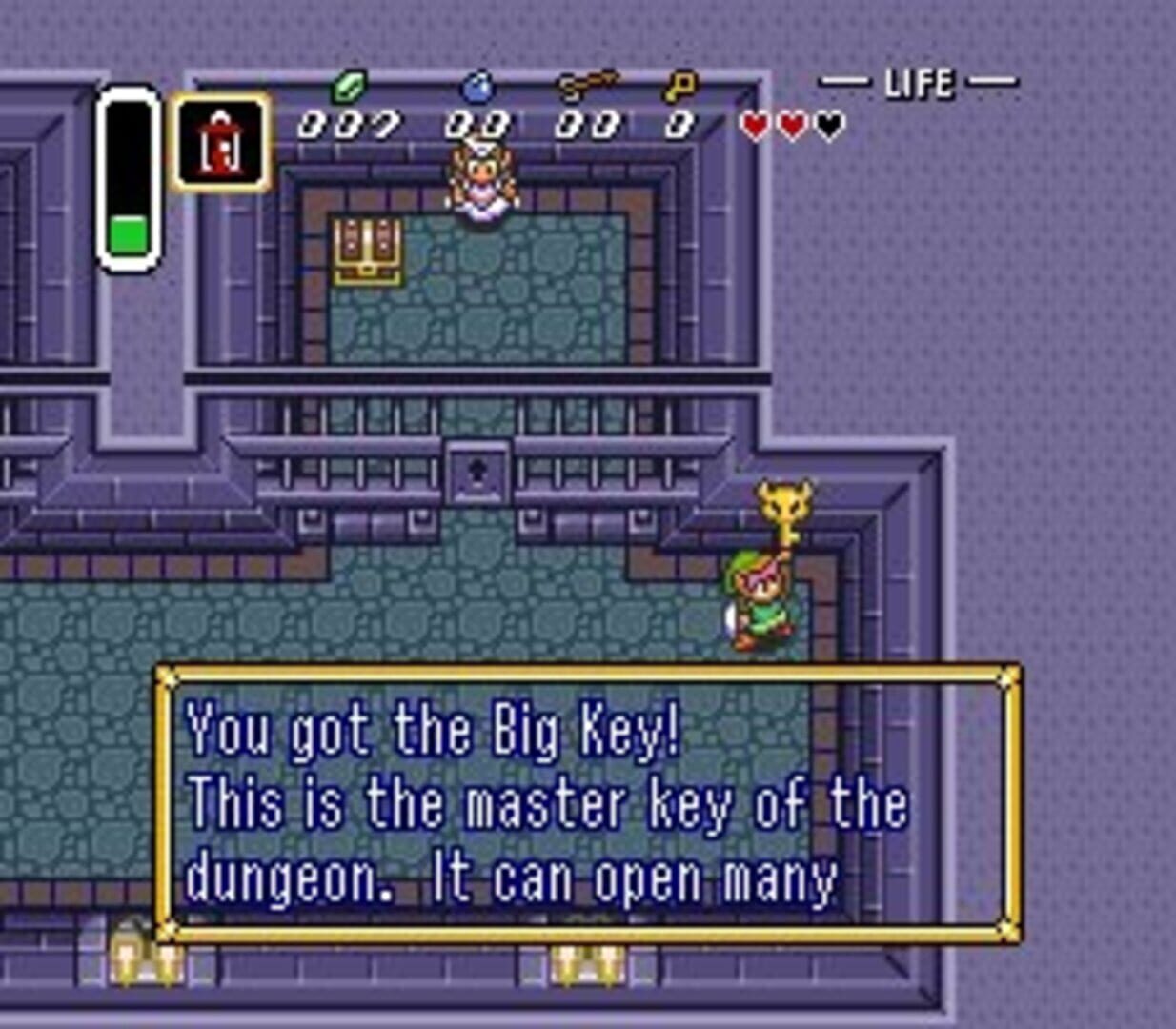
The Legend of Zelda: A Link to the Past isn't just a video game – it's a cultural milestone that shaped the DNA of the action-adventure genre for decades to come. Released by Nintendo for the Super Nintendo Entertainment System in 1991, this third Zelda title set new standards and demonstrated convincingly that sequels can not only match but surpass their predecessors.
The game takes us back to the series' roots while simultaneously presenting a technical and mechanical evolution that remains impressive today. Through its masterful fusion of exploration, puzzle-solving, and action-packed combat, A Link to the Past established gameplay mechanics that continue to influence modern Zelda games.
A Perfectly Crafted Story
The narrative of A Link to the Past follows a classic hero's journey in the finest sense. Link awakens to telepathic cries for help from Princess Zelda and must save the kingdom of Hyrule from the evil wizard Agahnim, who has captured the Seven Sages. What begins as a straightforward rescue mission evolves into an epic quest spanning two parallel worlds.
The brilliant concept of the Light World and Dark World adds narrative depth and gameplay complexity. This dual-world structure isn't just narratively clever but also brilliantly implemented mechanically – actions in one world affect the other, leading to complex and satisfying puzzle mechanics.
The story unfolds without intrusive cutscenes, instead being conveyed organically through gameplay and environment. Every character, ruin, and dungeon contributes to world-building, making Hyrule feel like a living, believable place.
Gameplay Mechanics That Defined a Genre
A Link to the Past perfected the 2D action-adventure formula in ways that still serve as the gold standard today. The controls are precise and intuitive – every movement feels exact and predictable, which proves essential during the sometimes demanding puzzles and combat encounters.
The combat system creatively combines various weapons and items. Link's Master Sword transcends being merely a weapon – it becomes a tool for environmental puzzles. The boomerang, hookshot, bombs, and other items aren't just combat implements but keys to complex puzzles that demand logic and creativity.
Particularly noteworthy is the magic system. Spells like the Spin Attack and various medallions add strategic depth to combat without compromising accessibility. The balance between simplicity and complexity is masterfully achieved.
Level Design and Dungeon Mastery
The dungeons in A Link to the Past are small masterpieces of level design. Each of the twelve main dungeons possesses its own identity, unique mechanics, and logical progression that continuously challenges players without overwhelming them.
The structure follows a perfected formula: new items are introduced, their basic function explained, then gradually employed in more complex ways until they reach full significance in the boss battle. This design philosophy is so elegant that it continues to be applied in modern games today.
The overworld is equally thoughtfully designed. Hyrule feels like a cohesive, living kingdom rather than a collection of levels. Secrets are organically integrated into the landscape, and nearly every screen contains something worth discovering – whether it's a hidden rupee cache or an important heart container.
Audiovisual Excellence
Visually, A Link to the Past optimally utilized the Super Nintendo's capabilities. The detailed sprites, fluid animations, and clever use of Mode 7 effects created a presentation that remains charming and impressive today.
Particularly remarkable is the use of color and lighting. The contrasts between the bright, hopeful Light World and the grim, threatening Dark World are conveyed not only through different color palettes but also through clever sprite variations.
Musically, composer Koji Kondo delivered one of his finest works. Tracks like "Overworld Theme," "Zelda's Lullaby," and "Ganon's Theme" have become iconic melodies known even outside the gaming community. The musical pieces perfectly support the atmosphere of every situation – from epic adventures to melancholic moments.
Impact on Gaming History
The influence of A Link to the Past on gaming history can hardly be overstated. Countless action-adventures still orient themselves around the formula established here. The concept of items as puzzle tools, non-linear exploration with controlled progression elements, and the integration of story into gameplay are design principles that find application far beyond the Zelda franchise.
Even modern indie developers regularly cite A Link to the Past as inspiration. Games like "Hyper Light Drifter," "CrossCode," and "A Hat in Time" bear clearly recognizable DNA traces of this classic.
Conclusion
The Legend of Zelda: A Link to the Past is more than just an excellent video game – it's a timeless work of art that found the perfect balance between accessibility and depth, between innovation and tradition. Even over 30 years after its release, every minute of this adventure feels fresh and relevant.
For modern players, the 16-bit graphics might initially seem antiquated, but those who embrace it will be rewarded with one of the richest and most satisfying gaming experiences of all time. A Link to the Past is not only essential for retro gaming fans but for anyone who wants to understand what constitutes great game design.
It's a game that proves technical limitations don't hinder creative brilliance – on the contrary, they can actually foster it.
System Requirements
Minimum
Recommended
Das könnte dich auch interessieren
Weitere Reviews aus der Kategorie game.
GridBeat! – Rhythmische Hack & Slash‑Abenteuer im Mainframe
Inhaltsverzeichnis [Einleitung]( einleitung) [Gameplay & Mechaniken]( gameplay mechaniken) [Grafik & Sound]( grafik sound) [Story & Atmosphäre]( story…

Ranger’s Path: National Park Simulator – Ein tiefgehender Review
Inhaltsverzeichnis\n [Einleitung]( einleitung)\n [Gameplay & Mechaniken]( gameplay mechaniken)\n [Grafik & Sound]( grafik sound)\n [Benutzeroberfläche…
King of Conquerors - Ein Strategisches Rollenspielabenteuer der Extraklasse
Inhaltsverzeichnis 1. [Einleitung]( einleitung) 2. [Gameplay und Mechaniken]( gameplay und mechaniken) 3. [Storytelling und Charakterentwicklung]( sto…
Frequently Asked Questions
How good is The Legend of Zelda: A Link to the Past - A Timeless Masterpiece of Action-Adventure Gaming?
The Legend of Zelda: A Link to the Past - A Timeless Masterpiece of Action-Adventure Gaming wurde von Nerdiction mit 96 von 100 Punkten bewertet und ist damit outstanding.
What are the pros of The Legend of Zelda: A Link to the Past - A Timeless Masterpiece of Action-Adventure Gaming?
The advantages of The Legend of Zelda: A Link to the Past - A Timeless Masterpiece of Action-Adventure Gaming: Timeless, perfectly balanced gameplay mechanics, Masterful level design with clever puzzles, Iconic soundtrack by Koji Kondo, Innovative dual-world mechanics, Intuitive controls and precise game mechanics.
What are the cons of The Legend of Zelda: A Link to the Past - A Timeless Masterpiece of Action-Adventure Gaming?
The disadvantages of The Legend of Zelda: A Link to the Past - A Timeless Masterpiece of Action-Adventure Gaming: Graphics may seem outdated to newcomers, No quest markers or modern assistance features, Some puzzles require trial-and-error approaches, Limited save slots available, Occasionally cryptic hints without external help.
Is The Legend of Zelda: A Link to the Past - A Timeless Masterpiece of Action-Adventure Gaming worth it?
Yes. The Legend of Zelda: A Link to the Past - A Timeless Masterpiece of Action-Adventure Gaming received a score of 96/100 points and is outstanding.