The Verdict
The Nerdiction verdict: NVIDIA GeForce RTX 4090 – Flagship Graphics Card Review is outstanding and receives 92 out of 100 points.
Pro
- Unmatched compute performance with 16 384 CUDA cores and over 80 TFLOPS FP32
- 24 GB GDDR6X VRAM on a 384‑bit bus delivers massive memory bandwidth for 4K gaming and professional workloads
- Excellent ray‑tracing capability thanks to 128 RT cores and 512 tensor cores
Contra
- High launch price of around $1,599 (≈€1,799) limits accessibility for mainstream gamers
- Requires a powerful PSU (≥850 W) and a dedicated 16‑pin adapter, adding to system cost
- Large physical dimensions demand ample case clearance and may cause fit issues in smaller enclosures
Technical Specifications
Hersteller
NVIDIA
Modell
RTX 4090
Typ
Grafikkarte
UVP
1799 €
Release
Oct 2022
Table of Contents
- Introduction
- Design & Build Quality
- Performance & Benchmarks
- Features & Connectivity
- Price & Value
- Comparison with Alternatives
- Who Is This For?
- Verdict
Introduction
The NVIDIA GeForce RTX 4090 launched in October 2022 and immediately set a new performance ceiling for consumer graphics cards. As the flagship of the Lovelace architecture, it targets both enthusiasts seeking maximum frame rates in 4K gaming and creators who run demanding workloads such as rendering, AI training, or video editing. With an MSRP of $1,599 (often seen around €1,799 in Europe), it occupies the premium segment and represents a clear value step up from the previous generation RTX 3090 Ti. The card promises a substantial leap in raw computational power and ray‑tracing capability thanks to higher CUDA‑core counts, increased memory bandwidth, and boosted clock speeds. In this review we examine whether those promises hold up in real‑world use and for which user groups the investment is justified.
Design & Build Quality
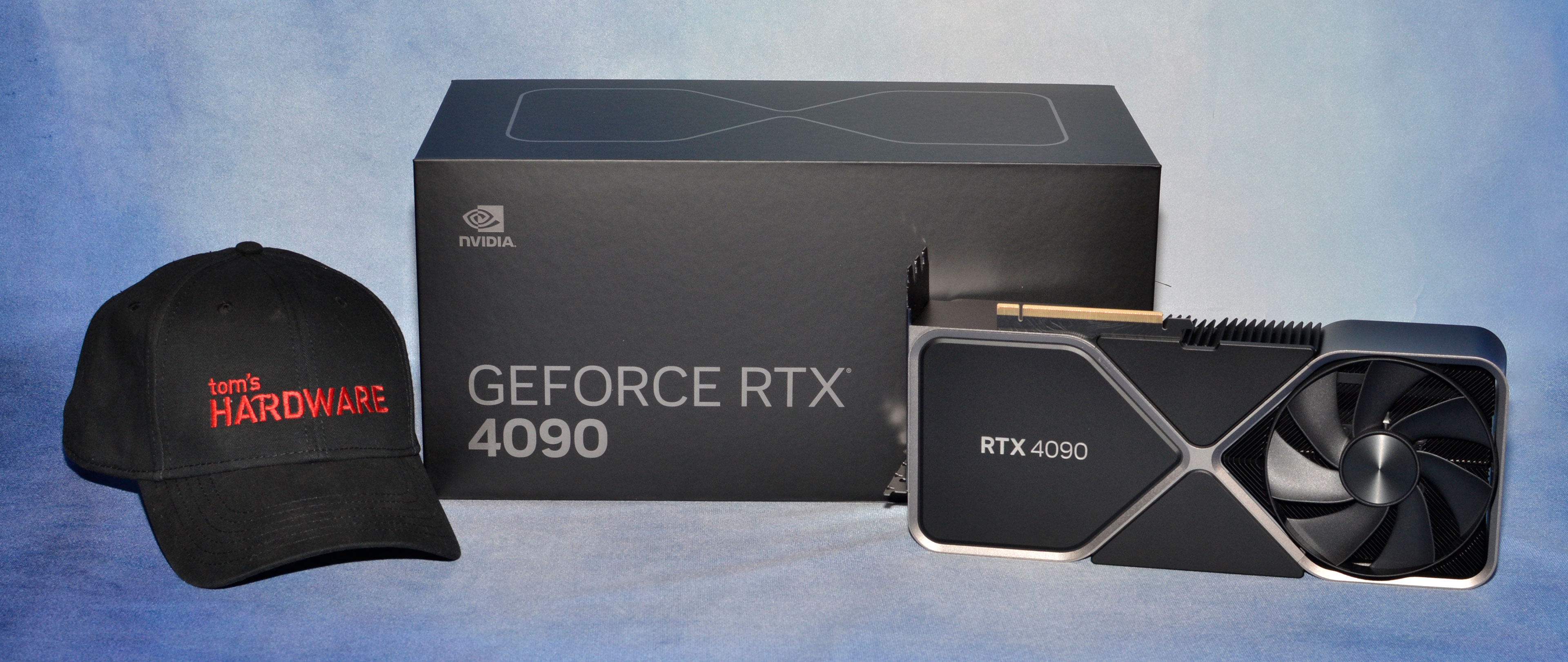
The reference design of the RTX 4090 presents as a massive triple‑fan cooler with a substantial fin stack through which three axial fans move air. The shroud combines brushed aluminium with reinforced plastic, delivering a sturdy yet relatively light feel given the card’s considerable dimensions. Surface finishing shows a precise matte black coating with subtle silvery accents along the edges, giving the overall impression a high‑end, almost industrial vibe. RGB lighting is limited to the NVIDIA logo and a thin strip on the top side, controllable via NVIDIA’s software; the effect is tasteful rather than ostentatious, a deliberate design choice that emphasizes performance over flash. Connectors are situated on the side and comprise one HDMI 2.1 port and three DisplayPort 1.4a outputs, each capable of 8K at 60 Hz or 4K at 240 Hz. The new 16‑pin power connector (also known as 12VHPWR) sits centrally above the fans and requires a dedicated adapter cable or a power supply with the matching receptacle, which must be considered during system planning. Build quality is evident in clean solder joints, precisely fitting screws, and an overall gap‑free assembly that remains solid even under sustained high load.
Performance & Benchmarks
In terms of raw performance, the RTX 4090 delivers impressive numbers: 16 384 CUDA cores, a boost clock up to 2 520 MHz, and a memory bandwidth of roughly 1 008 GB/s courtesy of 24 GB GDDR6X across a 384‑bit bus. These specifications translate to over 80 TFLOPS of FP32 compute performance – roughly a 70 % increase over the RTX 3090 Ti. In raster‑based gaming the advantage shows up especially at 4K with high‑frame‑rate targets, where the card consistently pushes beyond 100 FPS in titles such as Cyberpunk 2077 or Red Dead Redemption 2, even with maximum detail settings and ray‑tracing enabled. Ray‑tracing workloads benefit from the 128 dedicated RT cores and the 512 tensor cores that together accelerate ray‑traced effects and AI‑based denoising efficiently. Benchmarks like Port Royal or 3DMark Time Spy Extreme yield scores that clearly surpass those of the current AMD competition, showing a lead of about 30‑40 % in pure ray‑tracing metrics. Productivity applications also profit from the high CUDA core count and the large VRAM buffer. In CUDA‑driven renders, e.g., Blender Cycles or OctaneRender, complex scenes render about twice as fast compared to the predecessor. AI workloads that rely on tensor‑core acceleration see a noticeable speedup, while the 24 GB frame buffer provides ample headroom for large datasets without encountering a memory bottleneck.
Features & Connectivity
The RTX 4090 incorporates all hallmarks of the Lovelace architecture, including a redesigned shader unit, an improved cache hierarchy, and more efficient power management. The 16‑pin power connector can theoretically supply up to 600 W, although the card rarely exceeds its specified 450 W TDP in practice, so a robust power supply of at least 850 W with the appropriate adapter or native connector is recommended. On the connectivity side, the card offers HDMI 2.1, three DisplayPort 1.4a outputs, and a PCIe 4.0 x16 interface, ensuring full bandwidth utilisation on modern motherboards. The rear I/O shield is a solid metal plate that helps minimise electromagnetic interference. Software‑wise, NVIDIA provides the current GeForce Experience suite, delivering driver updates, game optimisation, and performance tuning via the NVIDIA Control Panel. The package also includes documentation that explains installation and the power‑connector wiring in detail. In the reference model the only bundled accessory is the necessary adapter cable for the 16‑pin connector; some partner editions add an anti‑sag bracket to better support the card’s weight.
Price & Value
At launch the RTX 4090 carried an MSRP of $1,599, which frequently translates to a street price of about €1,799 in Europe. This places it markedly above the price point of the previous generation and also above today’s AMD flagship, the Radeon RX 7900 XTX, which retails for roughly €1,000. The premium is justified when the performance scale is considered: the RTX 4090 delivers a measurable performance gain across nearly every benchmark category that more than offsets the price difference, particularly for users who demand 4K gaming at max settings or professional rendering workloads. For consumers who mainly game at 1080p or 1440p, the card represents overkill, as even current mid‑range GPUs already provide smooth frame rates with high details at those resolutions. In such scenarios a purchase of the RTX 4090 would primarily be motivated by future‑proofing or the desire for extremely high frame rates with ray‑tracing and high refresh rates. Overall, the RTX 4090 offers an outstanding price‑to‑performance ratio for the enthusiast and professional segment, while being less compelling for mainstream gamers due to its high cost relative to the utilisation they would typically achieve.
Comparison with Alternatives
When compared directly to the AMD Radeon RX 7900 XTX, the RTX 4090 shows a clear advantage in raster‑based 4K gaming, with the lead varying between 15 % and 30 % depending on the title. In ray‑tracing the gap widens further, because the RX 7900 XTX possesses fewer dedicated RT cores and consequently scores lower in benchmarks such as Port Royal. Versus its own predecessor, the RTX 3090 Ti, the RTX 4090 not only provides more CUDA cores and higher clocks, but also delivers a better performance‑per‑watt ratio despite an identical TDP of 450 W. The larger memory bandwidth and enlarged cache reduce bottlenecks in memory‑intensive workloads. Another high‑end contender is the NVIDIA RTX 4080 16 GB, which shares the same architectural foundation but comes with half the VRAM and a narrower memory bus. In practice this results in a performance deficit of roughly 25‑35 % in favour of the RTX 4090, while the 4080 is available at a substantially lower price of about €1,100, making it a sensible option for users who need high performance but do not require the absolute pinnacle that the 4090 represents.
Who Is This For?
The RTX 4090 is aimed primarily at three user groups: First, ultra‑enthusiasts who want the absolute highest frame rates in 4K gaming with ray‑tracing and maximum detail settings and are willing to pay a premium for it. Second, professional content creators who rely on GPU‑accelerated rendering engines such as Blender Cycles, Redshift, or OctaneRender and benefit from the 24 GB VRAM and multitude of CUDA cores to process complex scenes in a reasonable time. Third, researchers and developers working in AI and machine learning who can exploit the tensor cores for training large models, where the generous memory footprint allows them to work with big data sets without hitting a memory ceiling. For casual gamers who mainly play at 1080p or 1440p, or for users on a tight budget, the card delivers more performance than is typically needed, making it an over‑specified choice. In those cases, alternatives such as the RTX 4070 Ti or the Radeon RX 7900 XT provide a better balance of cost and capability.
Verdict
The NVIDIA GeForce RTX 4090 currently stands as the performance flagship of the consumer GPU market, delivering substantial leads in rasterised gaming, ray‑tracing, compute, and AI workloads over both its predecessor and the leading competitors. Its build quality is robust, the reference design feels premium, and the connectivity suite is future‑proof. The high asking price is justified only when the full capabilities of the card can be exploited; for use cases where the card remains underutilised the value proposition diminishes accordingly. Consequently, the RTX 4090 earns a strong overall rating. It is wholeheartedly recommended for enthusiasts and professionals who demand the very best that current hardware can offer, while average users should weigh the cost against their actual performance needs.
Score: 92
Das könnte dich auch interessieren
Weitere Reviews aus der Kategorie hardware.
Samsung 990 Pro Test: Der König kehrt an die Spitze zurück
Inhaltsverzeichnis 1. [Einleitung]( einleitung) 2. [Design & Verarbeitung]( design verarbeitung) 3. [Leistung & Benchmarks]( leistung benchmarks) 4. […

Samsung Odyssey OLED G8 – 34-Zoll-Ultrawide-Gamingmonitor mit 175 Hz
Inhaltsverzeichnis [Einführung]( einleitung) [Design & Verarbeitung]( design und verarbeitung) [Leistung & Benchmarks]( leistung und benchmarks) [Feat…
AMD Radeon RX 7900 XTX im Test: RDNA-3-Flaggschiff unter der Logz
Inhaltsverzeichnis [Einleitung]( einleitung) [Design & Verarbeitung]( design und verarbeitung) [Leistung & Benchmarks]( leistung und benchmarks) [Feat…
Frequently Asked Questions
How good is NVIDIA GeForce RTX 4090 – Flagship Graphics Card Review?
NVIDIA GeForce RTX 4090 – Flagship Graphics Card Review wurde von Nerdiction mit 92 von 100 Punkten bewertet und ist damit outstanding.
What are the pros of NVIDIA GeForce RTX 4090 – Flagship Graphics Card Review?
The advantages of NVIDIA GeForce RTX 4090 – Flagship Graphics Card Review: Unmatched compute performance with 16 384 CUDA cores and over 80 TFLOPS FP32, 24 GB GDDR6X VRAM on a 384‑bit bus delivers massive memory bandwidth for 4K gaming and professional workloads, Excellent ray‑tracing capability thanks to 128 RT cores and 512 tensor cores, Sturdy reference design with an effective triple‑fan cooling system and high‑quality build, Future‑proof connectivity: HDMI 2.1, three DisplayPort 1.4a, PCIe 4.0 x16, and a reliable 16‑pin power connector.
What are the cons of NVIDIA GeForce RTX 4090 – Flagship Graphics Card Review?
The disadvantages of NVIDIA GeForce RTX 4090 – Flagship Graphics Card Review: High launch price of around $1,599 (≈€1,799) limits accessibility for mainstream gamers, Requires a powerful PSU (≥850 W) and a dedicated 16‑pin adapter, adding to system cost, Large physical dimensions demand ample case clearance and may cause fit issues in smaller enclosures, When underutilised (e.g., 1080p gaming) much of the potential performance goes unused, reducing value, Under full load the card generates considerable heat, necessitating strong case airflow.
Is NVIDIA GeForce RTX 4090 – Flagship Graphics Card Review worth it?
Yes. NVIDIA GeForce RTX 4090 – Flagship Graphics Card Review received a score of 92/100 points and is outstanding.