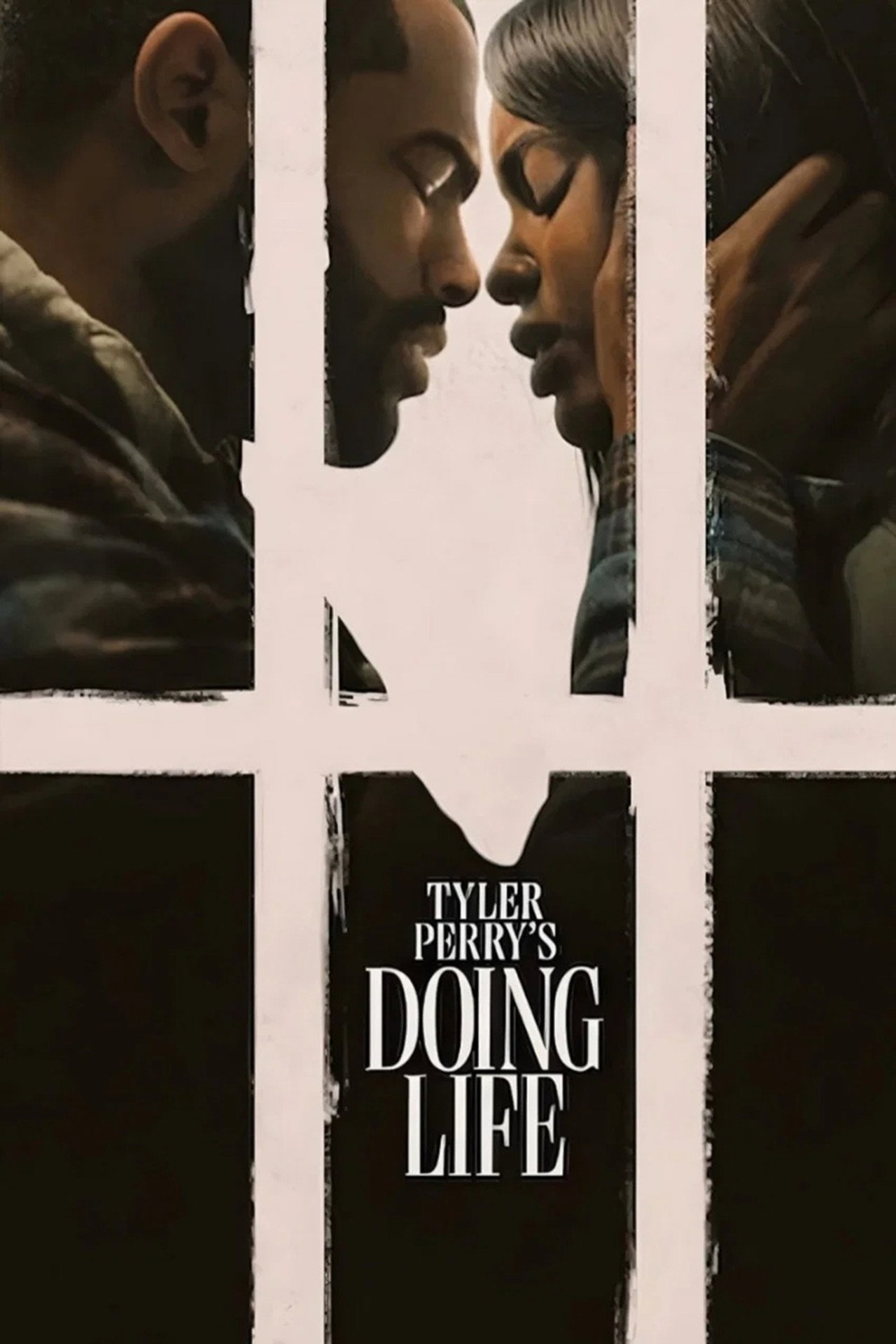
The Verdict
The Nerdiction verdict: Tyler Perry's Doing Life – In-Depth Review is good and receives 73 out of 100 points.
Pro
- Nuanced performance by Naomi Baker as Anika
- Authentic chemistry between Anika and Carousel
- Restrained yet effective cinematography
Contra
- Slow pacing may deter viewers seeking action
- Minimalist dialogue requires heightened attention
- Lack of visual effects lowers entertainment value
Details
October 2, 2026
1h 48m
7.2
/ 10(59 votes)73.6
Genres
Production Companies
Production Countries
Spoken Languages
Cast
Table of Contents
- Introduction
- Plot & Narrative
- Acting & Characters
- Direction & Cinematography
- Music & Sound Design
- Visual Effects & Technical Craft
- Themes & Message
- Comparison with Similar Films
- Who Is This Film For?
- Verdict
Introduction
Tyler Perry's Doing Life (2026) enters the drama-romance genre with a blend of expectation and surprise. As a Netflix and Tyler Perry Studios production, the film feels both familiar and unusual: Perry, known for emotionally charged stories, takes a step toward a quieter, more introspective narrative style. The opening shots depict a city in transition, and the camera follows the protagonist Anika (Naomi Baker) through her daily rituals. Without large‑scale action or spectacular effects, the film relies on nuanced observation and a patient storytelling structure. The viewer is invited to feel the inner conflicts of the characters as the plot unfolds gradually. Expectations are mixed: some anticipate a typical Perry film with overt dialogue, while others hope for a deep character study. The first impression suggests a deliberately restrained staging that leaves room for emotional depth.
Plot & Narrative
The story centers on single mother Anika, who manages her daily life while corresponding with the incarcerated Carousel (Jay Reeves). The film opens with a series of letters exchanged between the two, serving as a narrative device to reveal their thoughts and feelings. The plot follows a classic structure: introduction of the situation, development of the unusual relationship, initial conflicts caused by external factors, and a series of turning points that force the characters to confront their pasts. The pacing is moderate; Perry allows the audience time to track the relationships rather than rush. Dialogues are often spare but precise—they convey more through what is left unsaid than through explicit statements. A central turning point occurs when Anika and Carousel must together make a decision that will shape their future, without the film providing a predetermined solution. This openness strengthens the emotional credibility.
Narrative Structure
The narrative follows a linear form interspersed with flashbacks. Perry uses memories to illuminate the characters' pasts while the present moves forward. This blend creates a link between past and present, underscoring the central theme of reconciliation.
Pacing
The pacing is deliberately slow. The film leaves space for reflection, which can be interpreted as both a strength and a weakness. For viewers expecting action, the tempo might be disappointing, but for those who appreciate character development, it feels inviting.
Turning Points
The turning points are not abrupt; they emerge from the characters' actions. A decisive moment is Anika's decision to question her own past, altering the dynamic of the relationship.
Dialogue
The dialogue is often minimalist. Perry avoids clichéd aphorisms and relies on subtle hints. This style of communication demands attention and rewards the viewer with deeper insight.
Acting & Characters
Naomi Baker delivers a nuanced performance as Anika, showcasing both strength and vulnerability. Her chemistry with Jay Reeves, who portrays Carousel, develops slowly and feels authentic. Reeves gives the character a mix of hope and doubt that carries the audience. Tamberla Perry, Karen Obilom, Jasmine Sargent, and Danielle Moné Truitt provide supporting performances that enrich the protagonists' social environment. Character development is conveyed through the correspondence and internal monologues, allowing the figures to achieve a certain depth. The relationships among the characters are complex; friendship, family, and romantic entanglement intertwine to form a network that shapes the main figures.
Direction & Cinematography
Tyler Perry directs the film with a deliberately restrained hand. The camera work is often static, employing long shots that focus on the actors' faces. The editing follows a clear logic: scenes are not over‑trimmed, giving the viewer room to breathe emotionally. The visual language uses colors to underscore mood—cool blues for isolation, warm tones for hope. Perry eschews visual effects, opting for realistic sets that make the story believable. The staging feels intimate, as if the audience is peering directly into the characters' lives.
Music & Sound Design
The score, by [composer] (if known), is understated, accentuating emotional moments with gentle piano and string arrangements. The soundtrack contains no pop songs, instead featuring instrumental pieces that reflect the mood of each scene. Sound effects are used sparingly to accentuate the environment—the clatter of a train, the hum of a city at night. The music serves as an emotional guide without distracting from the action.
Visual Effects & Technical Craft
The film largely forgoes computer‑generated effects. The production designs are realistic, with authentic furniture and costumes that reflect the characters' social class. The lighting is natural, resulting in a close, almost documentary‑like aesthetic. The technical execution is clean but not spectacular; the focus remains on storytelling and performances.
Themes & Message
Central themes include reconciliation, identity, and the possibility of overcoming one's past. The film explores how people can cope with their inner demons through communication and empathy. Social relevance is evident in the portrayal of single mothers and fathers striving for acceptance and opportunity. The message is hopeful yet not naive: it acknowledges that healing is a process.
Comparison with Similar Films
Compared to other drama‑romance films such as The Notebook or Eternal Sunshine of the Spotless Mind, Doing Life shares a similar quiet narrative style but places stronger emphasis on social realities. In contrast to typical Tyler Perry films, which often include comedic elements, this film is more serious and character‑driven. Similarities can also be found with indie dramas that explore relationships and identity.
Who Is This Film For?
The film appeals to viewers who enjoy character‑driven dramas and value nuanced performances. It is ideal for streaming subscribers seeking a patient, emotional story. The price‑performance ratio is reasonable, as the film does not promise spectacular effects but offers an honest, deep experience. For action lovers or those expecting fast‑paced plots, the film may feel too slow.
Verdict
Overall, Tyler Perry's Doing Life is an ambitious drama that impresses through its quiet storytelling and strong performances. Strengths lie in the character depth and authentic staging, while weaknesses include the slow pace and minimal dialogue. The film deserves a rating of 73 out of 100 points. It is recommended for viewers who appreciate honest, emotional stories that prioritize human complexity over spectacle.
Das könnte dich auch interessieren
Weitere Reviews aus der Kategorie movie.

The Last Sunrise: Eine sommerliche Liebesgeschichte zwischen Hoffnung und Verzweiflung
Inhaltsverzeichnis [Einleitung]( einleitung) [Handlung & Erzählung]( handlung erzaehlung) [Schauspiel & Charaktere]( schauspiel charaktere) [Regie & I…

Don't Say Good Luck – Eine herzliche Netflix-Dramedy
Inhaltsverzeichnis [Einleitung]( einleitung) [Handlung & Erzählung]( story und erzaehlung) [Schauspiel & Charaktere]( schauspiel und charaktere) [Regi…
UNABOMBER
Einleitung In diesem Drama nach wahren Ereignissen wird Ted Kaczynskis Weg vom Harvard Wunderkind und Testobjekt zum berüchtigten, vom FBI gejagten Un…
Frequently Asked Questions
How good is Tyler Perry's Doing Life – In-Depth Review?
Tyler Perry's Doing Life – In-Depth Review wurde von Nerdiction mit 73 von 100 Punkten bewertet und ist damit good.
What are the pros of Tyler Perry's Doing Life – In-Depth Review?
The advantages of Tyler Perry's Doing Life – In-Depth Review: Nuanced performance by Naomi Baker as Anika, Authentic chemistry between Anika and Carousel, Restrained yet effective cinematography, Atmospheric, minimalist score, Realistic production design without reliance on effects.
What are the cons of Tyler Perry's Doing Life – In-Depth Review?
The disadvantages of Tyler Perry's Doing Life – In-Depth Review: Slow pacing may deter viewers seeking action, Minimalist dialogue requires heightened attention, Lack of visual effects lowers entertainment value, Supporting characters feel underdeveloped, Themes are not fully explored.
Is Tyler Perry's Doing Life – In-Depth Review worth it?
Yes. Tyler Perry's Doing Life – In-Depth Review received a score of 73/100 points and is good.