Available at
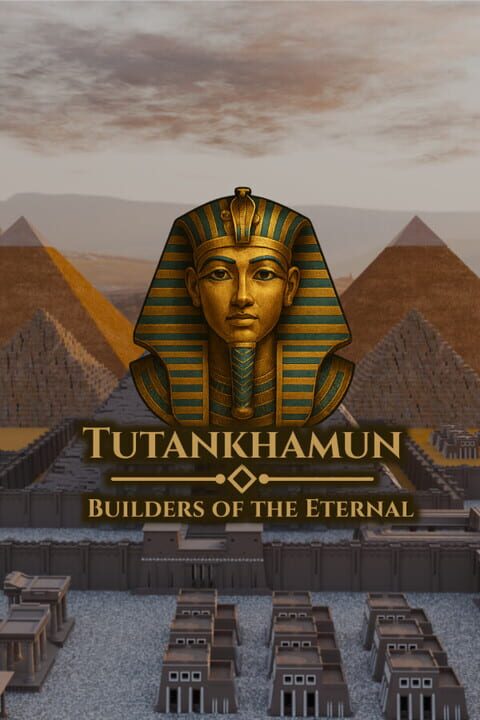
Tutankhamun: Builders of the Eternal - A Pharaoh's Dream Realized
Table of Contents
- Introduction
- The Nile Awakens
- Divine Power and Spiritual Complexity
- Economic Systems and Trade
- Military and Diplomacy
- Monumental Construction
- Graphics and Atmosphere
- Performance and Technical Aspects
- Conclusion
Introduction
After years of mediocre city-building simulations, a title finally returns to the genre's roots - with a depth and complexity reminiscent of the golden age of Caesar III and Pharaoh. "Tutankhamun: Builders of the Eternal" catapults us into mystical ancient Egypt while delivering one of the most authentic and captivating city-building experiences in recent years.

The title from Italian developer Anima Entertainment promises not just building a city, but creating an entire civilization. After over 40 hours of gameplay, I can confirm: this promise is delivered upon.
The Nile Awakens
The heart of "Tutankhamun" lies in its sophisticated agricultural system that perfectly captures the natural rhythm of the Nile. The annual floods are not only visually stunning but form the strategic foundation of every successful city.

Cultivating the fertile floodplains requires precise planning: irrigation channels must be constructed, granaries filled in time, and the population sustained through lean months. Particularly well-implemented is the variety of crops - from wheat and barley to papyrus and flax - each with different growing cycles and uses.
The system is complex enough to challenge experienced strategists without overwhelming newcomers. Intuitive tooltips and a well-designed user interface ensure that even complex supply chains remain comprehensible.
Divine Power and Spiritual Complexity
A particular highlight is the religion system, which goes far beyond simple satisfaction meters. Each of the twelve playable deities - from Ra to Isis to Anubis - brings unique mechanics, bonuses, and requirements.

Worshipping Sobek, for example, strengthens Nile floods and improves fishing but requires regular crocodile sacrifices. Ptah blesses craftsmen and builders but demands magnificent temples and precious materials. These divine influences aren't just mechanical bonuses but shape the appearance and development of the entire city.
Particularly impressive are the religious festivals that occur several times per year, setting the entire population in motion. These events are not only visually spectacular but have real strategic impacts on trade, production, and citizen satisfaction.
Economic Systems and Trade
The trading system convinces through its historical authenticity and strategic depth. Trade routes lead to distant lands like Nubia, Mesopotamia, or Cyprus, with each region offering characteristic goods and challenges.

Trade isn't limited to simple buying and selling. Caravans can be raided, sea routes are weather-dependent, and political tensions affect prices. Establishing trading posts and warehouses requires strategic thinking, while luxury goods like incense, gold, or lapis lazuli not only bring profit but also increase the city's prestige.
Particularly well-executed is the depiction of barter trade, corresponding to ancient Egypt's monetary system. Instead of abstract currency, goods are directly exchanged, resulting in authentic and challenging economic decisions.
Military and Diplomacy
The military system surprises with its balance between peaceful city-building and strategic warfare. Different troop types - from Nubian archers to heavily armored chariot warriors - each bring unique strengths and weaknesses.

Wars are rarely inevitable, but when they break out, strategic skill determines victory and defeat. Besieging enemy cities is tactically demanding, while defending your own settlement involves walls, towers, and clever troop positioning.
Diplomacy plays an equally important role: tribute payments can prevent wars, alliances open new trading opportunities, and marriages between ruling families bring long-term benefits. The system is complex enough to enable political intrigue without losing clarity.
Monumental Construction
Building monumental structures forms the emotional heart of the game. Pyramids, temples, and palaces don't appear overnight but require years of planning, massive resources, and specialized workers.

Each monument is unique and can be individually customized. The Great Pyramid, for instance, can be equipped with various chambers, traps, and treasures, while temples can receive different architectural styles and decorations.
The construction process itself is captivatingly staged: quarries become exhausted, workers must be supplied, and progress is trackable in real-time. The feeling of creating a wonder of the world is indescribably satisfying.
Graphics and Atmosphere
Visually, "Tutankhamun" sets new standards for the genre. The detailed 3D graphics bring ancient Egypt to life without sacrificing clarity. Day-night cycles and weather effects enhance immersion, while Jeremy Soule's atmospheric musical score perfectly complements the atmosphere.
Particularly impressive is the attention to detail: workers wear realistic clothing, markets bustle with life, and even small pets populate the streets. Camera control is intuitive, allowing examination of both the big picture and smallest details.
Performance and Technical Aspects
Technically, "Tutankhamun" runs stable and smooth on most systems. Only with very large cities exceeding 50,000 inhabitants can slight stuttering occur. Loading times are acceptable, and crashes are thankfully a thing of the past.
The user interface is well-designed and customizable, though some menus can seem overwhelming at first encounter. A comprehensive tutorial and helpful tooltips significantly ease the learning curve.
Conclusion
"Tutankhamun: Builders of the Eternal" is a masterpiece of the city-building genre that perfectly balances complexity and accessibility. The authentic portrayal of ancient Egypt, combined with innovative gameplay mechanics and impressive presentation, makes this title an absolute must-have for all strategy fans.
Despite minor technical issues and an initially steep learning curve, the game convinces across the board. Anyone who has ever dreamed of ruling as Pharaoh over a flourishing kingdom will find their digital home here.
A worthy successor to city-building classics and simultaneously an innovative step into the genre's future.
Hardware check
System Requirements
Minimum
Recommended
Das könnte dich auch interessieren
Weitere Reviews aus der Kategorie game.

Inhaltsverzeichnis\n- [Einleitung](einleitung)\n- [Gameplay & Mechaniken](gameplay--mechaniken)\n- [Grafik & Sound](grafik--sound)\n- [Benutzeroberfl...

Inhaltsverzeichnis 1. [Einleitung](einleitung) 2. [Gameplay-Mechaniken](gameplay-mechaniken) 3. [Visuelle Gestaltung und Atmosphäre](visuelle-gestal...

Inhaltsverzeichnis - Einleitung - Gameplay, Spielgefühl und Kernsysteme - Welt, Struktur, Umfang und Wiederspielwert - Technik, Präsentation, Kritik...
Community Feedback
10 Kommentare87 Punkte sind absolut gerechtfertigt! Das Religionssystem mit den zwölf Gottheiten ist wirklich innovativ. Jede Gottheit hat ihre eigenen Boni und Rituale, das macht das Gameplay extrem abwechslungsreich. Hab schon 40 Stunden reingesteckt und entdecke immer noch neue Kombinationen. Die Details bei den Tempeln sind einfach atemberaubend.
Kann die Kritik zur Lernkurve nur bestätigen. Als jemand, der sonst nur Shooter spielt, war der Einstieg echt hart. Die ersten 5 Stunden hab ich nur Tutorials gemacht und war trotzdem überfordert. Aber wenn man erstmal drin ist, macht es süchtig. Das Wirtschaftssystem ist komplex, aber logisch aufgebaut.
Performance-Probleme kann ich bestätigen. Meine Stadt hat jetzt 50.000 Einwohner und die Framerate bricht regelmäßig ein, besonders bei Festivals. Hoffe auf baldige Patches. Ansonsten ist das Spiel ein Meisterwerk - die Authentizität des Settings ist unübertroffen.
Endlich mal ein Aufbauspiel, das sich von den üblichen Mittelalter-Settings abhebt! Die Pyramidenkonstruktion allein ist schon das Geld wert. Man kann wirklich jeden Stein planen und die verschiedenen Bautechniken ausprobieren. Grafisch eine Wucht, auch wenn die UI gewöhnungsbedürftig ist.
Diplomatiesystem nervt mich. Die KI verhält sich völlig unlogisch - erst Handelsabkommen, dann plötzlich Krieg ohne ersichtlichen Grund. Das zerstört manchmal stundenlange Planungen. Ansonsten solides Game, aber 87 Punkte sind vielleicht etwas hoch gegriffen bei den technischen Mängeln.
Spiele seit 20 Jahren Aufbausimulationen und das hier gehört definitiv zu den Besten. Die Balance zwischen Komplexität und Zugänglichkeit stimmt. Das Handelssystem mit Nilrouten und Karawanen ist genial durchdacht. Nur die Tooltips könnten wirklich ausführlicher sein - manchmal rätselt man ewig an Mechaniken rum.
Bin noch unentschlossen. Grafisch wow, aber die Komplexität schreckt mich ab. Ist das auch was für Gelegenheitsspieler oder braucht man wirklich hunderte Stunden zum Meistern? Die Review klingt sehr positiv, aber 87 Punkte bei den genannten Problemen?
Das Ägypten-Setting ist unfassbar authentisch! Hab Ägyptologie studiert und kann sagen: Die Entwickler haben ihre Hausaufgaben gemacht. Von Hieroglyphen bis zu religiösen Praktiken - alles stimmig. Schade nur, dass große Städte das System überlasten. Trotzdem klare Kaufempfehlung für Geschichts-Fans.
UI-Design ist echt katastrophal. Menüs über Menüs, alles verschachtelt und unintuitiv. Brauchte Stunden um rauszufinden, wie man Handelsrouten plant. Das Spiel mag gut sein, aber die Bedienung macht keinen Spaß. Für 87 Punkte hätte ich mehr Benutzerfreundlichkeit erwartet.
Nach 60 Stunden kann ich sagen: Bestes Aufbauspiel seit Jahren! Die Mischung aus Religion, Wirtschaft und Monumentbau ist perfekt. Ja, die Lernkurve ist steil, aber das macht es umso belohnender. Wer sich durchbeißt, wird mit einem tiefgehenden, süchtig machenden Erlebnis belohnt.