The Verdict
The Nerdiction verdict: Toxic Review: Style Over Substance – Yash Shines, Story Falters is good and receives 78 out of 100 points.
Pro
- Yash delivers a standout dual role that blends physical intensity with emotional nuance.
- The visual style marries vivid Goan colours with a gritty action aesthetic, creating a unique look.
- Practical effects and authentic locations give the scenes tangible realism and presence.
Contra
- The plot contains gaps and certain character arcs remain underdeveloped, diminishing emotional impact.
- The editing is at times overly frantic, causing quieter moments to be rushed and disrupting pacing.
- In several scenes the music overwhelms dialogue, harming the clarity of subtle linguistic nuances.
Details
August 26, 2026
3h 15m
7.9
/ 10(68 votes)236.4
Genres
Production Companies
Production Countries
Spoken Languages
Cast
Table of Contents
Introduction Plot & Narrative Acting & Characters Direction & Cinematography Music & Sound Design Visual Effects & Technical Craft Themes & Message Comparison with Similar Films Who Is This Film For? Verdict
Introduction
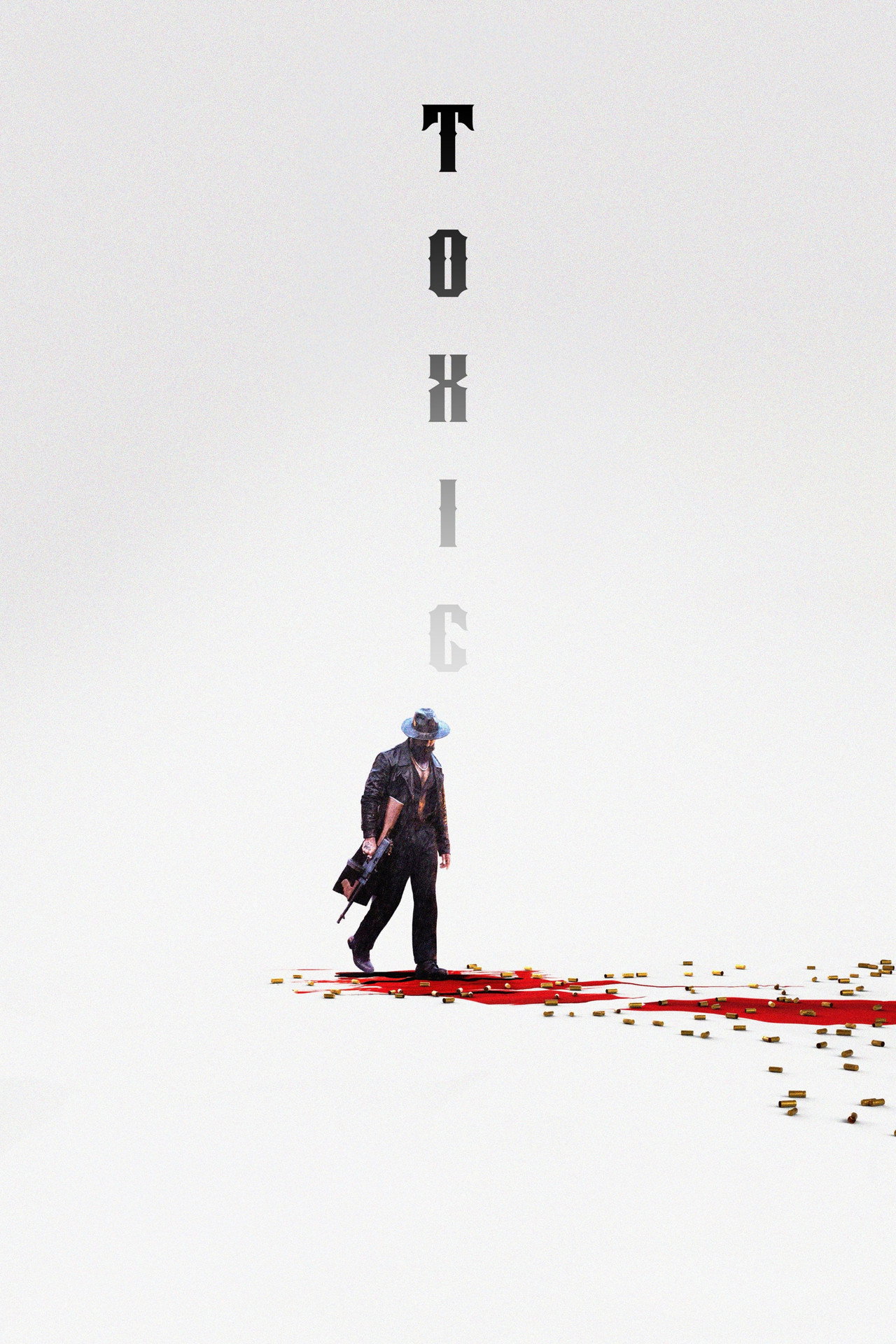
Toxic arrives in late summer 2026 and marks Geethu Mohandas’s first major directorial effort after her acclaimed debut. The film positions itself as an action‑crime drama set against the sun‑soaked coastline of Goa, where a powerful drug cartel hides behind picture‑perfect beaches and vibrant nightlife. Expectations were high, not only because of the star‑studded cast featuring Yash, Kiara Advani and Nayanthara, but also due to the promised lavish production values and international ambitions. At first glance, the polished cinematography catches the eye – saturated colours, fluid camera movements and a glossy finish that immediately signal a big‑budget endeavor. Yet even the trailer hinted that style and swagger might outweigh narrative depth. Opening minutes confirm this impression: rapid cuts, a pulsating beat and Yash’s magnetic screen presence dominate, while the script raises early questions about plot coherence, leaving the audience wondering whether the visual splendor can be matched by substantive storytelling.
[[IMAGE_1]]
Plot & Narrative
The story of Toxic unfolds in a fictionalised version of Goa during an economic boom, when the illicit synthetic drug trade flourishes. Raya, portrayed by Yash, is a rising enforcer within the cartel who finds himself torn between two women: Rebecca, the daughter of the cartel boss, and Nadia, an independent circus performer played by Kiara Advani. The film opens with a spectacular raid on a harbour warehouse, establishing the cartel’s brutality and simultaneously showcasing Raya’s loyalty and ruthlessness. In the first act we receive glimpses of Raya’s background – his upbringing in the slums of Panaji and his motivation to escape poverty.
The second act takes an unexpected turn when Raya falls in love with Nadia, prompting him to question the cartel’s inner workings from within. This romance, however, is constantly undermined by external pressures: rival gangs, corrupt officials and a past that keeps catching up with him. The film frequently employs flashbacks to illustrate Raya’s inner turmoil, although these sequences sometimes overstay their welcome and disrupt the flow of the main narrative. The climax of the second act arrives in a confrontational scene where Raya must choose between his love for Nadia and his obligations to the cartel.
The third act ramps up the tension through a series of high‑octane chases and gunfights that fully exploit the film’s action potential. Nevertheless, the final resolution remains somewhat open, leaving certain character arcs only partially resolved. Toxic avoids a tidy happy ending, instead opting for ambiguous closing images that invite interpretation. This can be seen as a bold choice, yet it may leave some viewers feeling that certain narrative threads are cut off too abruptly. Overall, Toxic delivers a solid framework of action and drama, although the story occasionally sacrifices depth for spectacle.
[[IMAGE_2]]
Acting & Characters
Yash delivers a performance in Toxic that convinces both physically and emotionally. His dual role as Raya/Ticket allows him to showcase two distinct facets of a character: the cold, calculating side of the cartel enforcer and the vulnerable, seeking side of a man yearning for redemption. Particularly impressive is his physical presence in the fight sequences, where he effortlessly shifts between martial precision and raw, furious energy. In quieter moments – such as scenes with Nadia – Yash exhibits a restrained intensity that draws the audience into his internal conflict.
Kiara Advani as Nadia brings a refreshing lightness to the film that contrasts with the otherwise dark atmosphere. Her portrayal of a circus artist who is both graceful and determined injects a note of hope and human warmth into the story. The chemistry between her and Yash is palpable, especially in scenes where they train together or discuss dreams. However, her character is occasionally reduced in service of the plot, meaning her motivations are not always fully explored.
Nayanthara takes on the role of Ganga, a wise elder from the community who serves as a moral compass. Her performance is restrained yet effective, conveying authority through subtle glances and measured dialogue. Huma Qureshi as Elizabeth adds a sharp edge, expanding the female spectrum within the film. Tara Sutaria as Rebecca plays the pampered daughter of the cartel boss with a blend of naivety and growing awareness of the darkness surrounding her. Altogether the ensemble forms a strong foundation, with Yash’s performance serving as the emotional heart of the film.
[[IMAGE_3]]
Direction & Cinematography
Geethu Mohandas demonstrates a keen eye for visual stylisation in Toxic. She merges Goa’s vibrant colour palette – turquoise seas, warm golden sands and neon‑pink night market stalls – with a gritty, almost documentary‑like look during the action sequences. This creates a compelling contrast between beauty and brutality that underscores the film’s central theme. Her decision to allow long tracking shots through crowded streets and narrow alleys gives the film an immersive feel, as if the viewer is walking through the throng themselves.
The editing, handled by an experienced team, is fast and rhythm‑driven, especially in the chase scenes where the camera frequently cuts between close‑ups of faces and wide shots of the surroundings. This style amplifies the pace, but can also cause certain emotional beats to feel rushed. Mohandas also makes frequent use of slow‑motion inserts to emphasise violence; while effective, these moments can sometimes feel overdone and interrupt the narrative flow.
The production places great emphasis on practical effects: real sand, real water and genuine pyrotechnics are favoured to generate an authentic feel. This is evident in the harbour and street scenes where detonations and water sprays appear tangible. Nonetheless, there are spots where reliance on practical effects leads to visible limitations – for instance, when elaborate stunts must be simplified due to budget constraints. Overall, Mohandas crafts an atmosphere that is both intoxicating and threatening, with her stylistic approach carrying more weight than narrative coherence.
[[IMAGE_4]]
Music & Sound Design
The score for Toxic was crafted by a noted Indian composer who blends traditional Goan sounds with modern electronic beats. Notably, the use of ghatam and tabla alongside deep synth‑basses creates a distinctive soundscape that feels both culturally rooted and contemporary. During quieter moments – such as the conversations between Raya and Nadia – melodic lines accompanied by a faint flute whisper dominate, establishing an intimate atmosphere.
In the action sequences, a driving percussion track propels the scene forward, with each drum hit precisely timed to the picture cuts. The sound design places strong emphasis on the impact of gunshots, explosions and braking noises, which are deepened by low rumbling and sharp cracks. This acoustic density helps the viewer feel the events physically.
However, there are occasions where the musical overlay becomes overly dominant and masks the dialogue, especially in scenes with high background noise such as marketplaces or nightclubs. This can impair the intelligibility of subtle linguistic nuances, although the overall mood remains intact. In sum, the sound design successfully supports the film’s emotional range, while the balance between music and dialogue could occasionally be tighter.
Visual Effects & Technical Craft
The visual effects in Toxic are largely restrained, with the focus on practical effects. Nevertheless, CGI is employed to extend certain landscapes and generate digital matte paintings – for example, shots of the Goan sunset over the sea or stylised city panoramas that depict the cartel’s territory. These CGI sequences blend seamlessly with the live‑action footage and are barely noticeable, indicating a skilled VFX team.
Cinematography utilises a mix of ARRI Alexa cameras and custom‑made anamorphic lenses to capture both sweeping landscape shots and intimate close‑ups with a characteristic visual language. Colour grading emphasises warm tones in daylight scenes and cool blues and greens in night sequences, producing a contrasting visual rhythm. The use of Steadicam and gimbal stabilisers enables fluid tracking shots through narrow alleys and over bustling marketplaces, giving the audience the sensation of being right in the middle of the action.
On the technical side, the film was shot in 6K resolution and subsequently downscaled for various output formats, ensuring that both theatrical and streaming versions benefit from high image fidelity. Post‑production paid special attention to colour grading and noise management to retain clear detail even in low‑light conditions. There are occasional instances where digital sharpening is applied too aggressively, producing a slight unnatural halo around edges. Overall, the technical execution displays a high degree of professionalism, with a clear emphasis on visual aesthetics.
Themes & Message
Toxic tackles several overarching themes that reach beyond the pure gangster‑genre. Central is the question of power and corruption: how does the influx of wealth and influence affect individual morality? Raya embodies this conflict, torn between climbing the cartel’s ranks and aspiring to a life outside its grasp. The film shows that power exerts not only outward control but also induces inner turmoil.
Another theme is the search for identity and belonging. Nadia represents a figure who lives outside the traditional cartel structures yet is drawn to the allure of the dangerous lifestyle. Her relationship with Raya raises the question of whether love can truly flourish in an environment permeated by violence and mistrust. Simultaneously, the film explores the role of women within a patriarchal criminal network: Huma Qureshi’s Elizabeth and Tara Sutaria’s Rebecca illustrate different ways of dealing with power – either through direct confrontation or through silent endurance.
Finally, Toxic places emphasis on the consequences of violence. Repeated depictions of shootings, explosions and physical confrontations serve not only as spectacle but also aim to illustrate the destructive impact of such actions on communities and individuals. The film refrains from delivering an outright moral judgement; instead, it leaves the audience to contemplate the long‑term repercussions themselves. This multi‑layered approach grants the film a certain depth, though that depth is sometimes sacrificed in favour of visual spectacle.
Comparison with Similar Films
Compared to other recent Indian action‑crime films such as "KGF: Chapter 2" or "Pushpa: The Rise", Toxic positions itself more as a stylistically ambitious work than as a pure mass‑spectacle. While KGF excels through epic scale and mythological trappings, Toxic puts greater emphasis on characterisation and atmospheric density. Similar to "Radhe Shyam", Mohandas adopts a colour‑intensive palette, yet she integrates more real locations and practical effects, lending the film a grittier feel.
Internationally, Toxic can be likened to productions such as "Sicario" or "Blade Runner 2049" in its use of colour and light to shape mood. Like Sicario, the focus lies on the moral grey zone of the drug trade, while the visual treatment recalls Blade Runner through the contrast of neon‑lit night scenes and expansive open landscapes. However, Toxic lacks the dense narrative complexity of these benchmarks, leading many to perceive it as a stylistically successful but substantively lighter work.
A further comparison can be drawn to South Korean action‑thrillers like "The Witch: Part 1. The Subversion", which share a similar tempo and stylistic flair. Yet Korean counterparts often deliver intricate plot twists and deep character arcs, whereas Toxic tends toward a more linear storyline and relies heavily on recurring action motifs. In sum, Toxic exemplifies how regional productions can adopt global stylistic tools while striving to preserve local cultural nuances.
Who Is This Film For?
Toxic primarily targets viewers who value high production values, intricately choreographed action and a striking visual style. Fans of Yash will especially appreciate his dual performance, which highlights both his physical prowess and his acting range. Likewise, admirers of Goan aesthetics – the sea, the sunshine, the lively nightlife – will relish the meticulous attention to location detail.
Conversely, those seeking complex plotlines, deep character development or unpredictable narrative twists may find the film wanting at times. Toxic occasionally accelerates emotional beats in favour of set‑piece spectacle, which can feel unsatisfying for an audience that craves more substance. Nevertheless, the film delivers enough entertainment value to engage a more casual audience, particularly when experienced in a theatre with a large screen and powerful sound.
Regarding viewing medium, Toxic works well both in cinemas and on streaming platforms. The visually impressive sequences truly shine on a big screen, while the high‑resolution streaming version (4K HDR) conveys the colour‑grading nuances and fine details of the practical effects. From a price‑perspective, the film sits in the upper middle bracket: a cinema ticket is justified by the production effort, whereas a streaming access via platforms like Amazon Prime or Netflix offers a solid price‑to‑quality ratio, assuming the home setup is adequate.
Verdict
Toxic is a cinematic statement that impresses chiefly through its visual splendour and the central performance by Yash. Geethu Mohandas’s direction constructs a world that is simultaneously alluring and menacing, with camera, editing and sound design working in concert to produce an intense sensory experience. The action set‑pieces are well choreographed and benefit from a high proportion of practical effects, which lend them authenticity.
On the downside, the screenplay shows shortcomings: the plot feels somewhat contrived, certain character arcs remain underdeveloped and the narrative focus wavers between depth and spectacle. This imbalance prevents Toxic from fully realising its potential, leaving it perceived more as a stylistically impressive but substantively modest work.
Taking into account the solid technical execution, the strong lead performance and the striking visual language, Toxic merits a respectable score. Weighing the pros and cons against the expectations for an action‑drama hybrid yields a final rating of 78 out of 100. This score reflects that the film delivers more than average entertainment while still offering room for narrative improvement. A clear recommendation goes to anyone who appreciates stylistically ambitious action films and is willing to overlook minor narrative gaps in favour of visual excellence. For viewers whose primary desire is a deep, story‑driven experience, Toxic may only partially satisfy.
Das könnte dich auch interessieren
Weitere Reviews aus der Kategorie movie.

UNABOMBER
Einleitung In diesem Drama nach wahren Ereignissen wird Ted Kaczynskis Weg vom Harvard Wunderkind und Testobjekt zum berüchtigten, vom FBI gejagten Un…

Die Festnahme: Thermische Spannung und authentische Action im Herzen Mexikos
Inhaltsverzeichnis [Einleitung]( einleitung) [Handlung & Erzählung]( handlung und erzaehlung) [Schauspiel & Charaktere]( schauspiel und charaktere) [R…

Der Kinderflüsterer – Netflix-Thriller mit De Niro im Serienkiller-Schatten
Inhaltsverzeichnis [Einleitung]( einleitung) [Handlung & Erzählung]( handlung erzaehlung) [Schauspiel & Charaktere]( schauspiel charaktere) [Regie & I…
Frequently Asked Questions
How good is Toxic Review: Style Over Substance – Yash Shines, Story Falters?
Toxic Review: Style Over Substance – Yash Shines, Story Falters wurde von Nerdiction mit 78 von 100 Punkten bewertet und ist damit good.
What are the pros of Toxic Review: Style Over Substance – Yash Shines, Story Falters?
The advantages of Toxic Review: Style Over Substance – Yash Shines, Story Falters: Yash delivers a standout dual role that blends physical intensity with emotional nuance., The visual style marries vivid Goan colours with a gritty action aesthetic, creating a unique look., Practical effects and authentic locations give the scenes tangible realism and presence., The score fuses traditional instruments with modern beats, underscoring cultural and contemporary tones., Dynamic camera work uses sweeping landscapes and tight close‑ups to produce an immersive viewing experience..
What are the cons of Toxic Review: Style Over Substance – Yash Shines, Story Falters?
The disadvantages of Toxic Review: Style Over Substance – Yash Shines, Story Falters: The plot contains gaps and certain character arcs remain underdeveloped, diminishing emotional impact., The editing is at times overly frantic, causing quieter moments to be rushed and disrupting pacing., In several scenes the music overwhelms dialogue, harming the clarity of subtle linguistic nuances., Some CGI elements appear slightly over‑produced, generating an unnatural halo effect around edges., The film frequently prioritises style over substance, leaving narrative potential only partially realised..
Is Toxic Review: Style Over Substance – Yash Shines, Story Falters worth it?
Yes. Toxic Review: Style Over Substance – Yash Shines, Story Falters received a score of 78/100 points and is good.