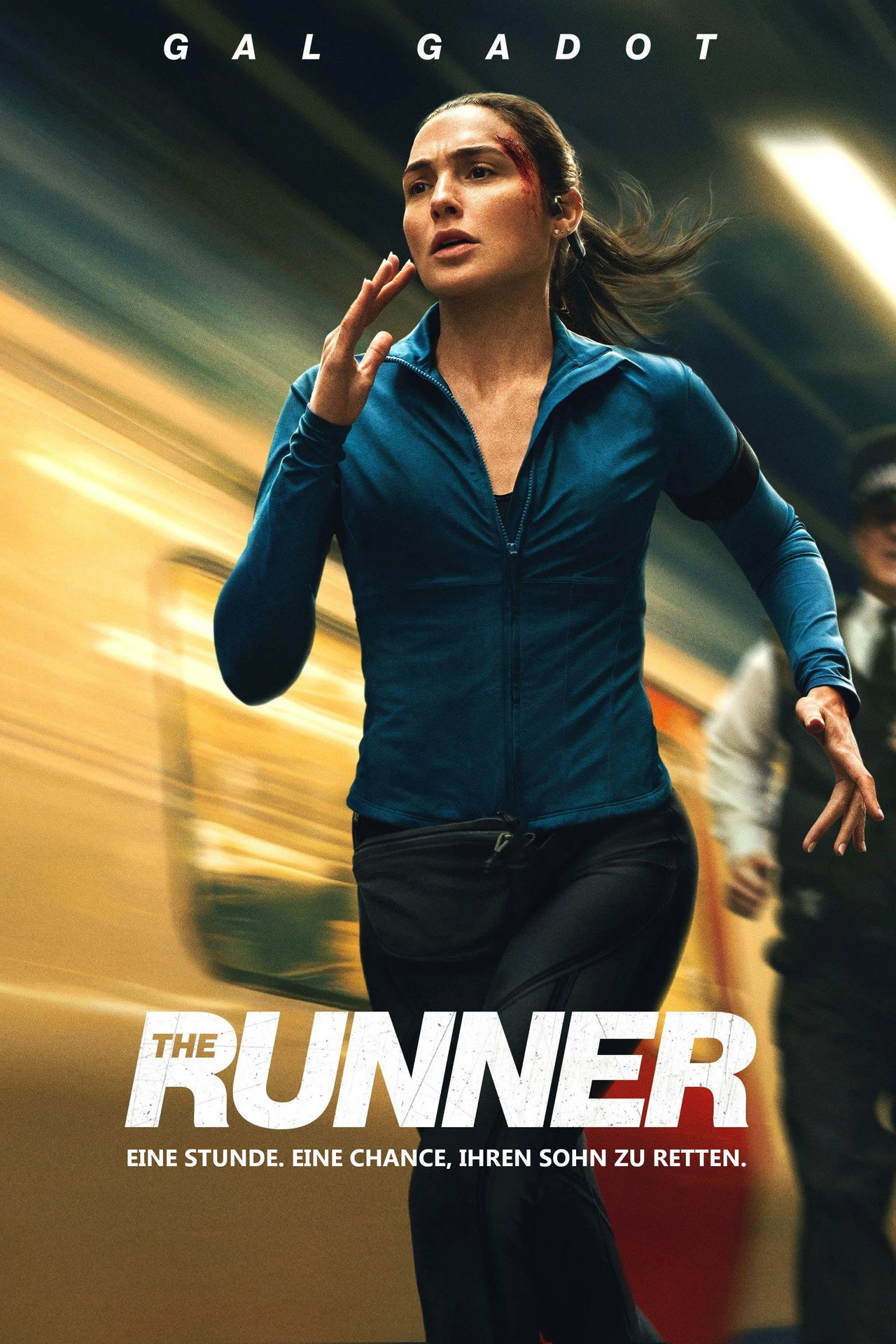
The Verdict
The Nerdiction verdict: The Runner – an intense thriller starring Gal Gadot is satisfactory and receives 60 out of 100 points.
Pro
- Gal Gadot delivers a convincing, emotionally nuanced performance as a desperate mother
- The high tempo and constant motion generate an ongoing sense of tension
- Kevin Macdonald’s direction leverages the urban London setting effectively to create claustrophobia
Contra
- The plot follows a familiar pattern and offers few surprising twists
- Several supporting characters remain underdeveloped, leaving their motives vague
- Dialogue sometimes feels purely functional and lacks nuanced exchange
Details
September 3, 2026
1h 26m
6.2
/ 10(154 votes)248.6
Genres
Production Companies
Production Countries
Spoken Languages
Cast
Table of Contents
- Introduction
- Plot & Narrative
- Acting & Characters
- Direction & Cinematography
- Music & Sound Design
- Visual Effects & Technical Craft
- Themes & Message
- Comparison with Similar Films
- Who Is This Film For?
- Verdict
Introduction
The Runner premiered on September 3, 2026 as a tight‑running action‑thriller that thrusts the audience into a high‑stakes cat‑and‑mouse game within its 86‑minute runtime. Kevin Macdonald, known for documentaries and tension‑filled dramas such as “The Last King of Scotland” and “State of Play,” helms the project, bringing his talent for translating real‑world urgency into compelling visuals. Mark Gibson wrote the screenplay, distilling the premise of a lawyer receiving a kidnapping call during her ordinary morning jog into a pure survival game. Gal Gadot shines as Maia Marten, a successful London attorney whose world is shattered by a single phone call. The expectation is clear: a fast‑paced, adrenaline‑driven plot that probes the limits of maternal sacrifice without slipping into gratuitous action clichés. The opening scene confirms this promise—a tranquil jog that is abruptly interrupted by a shrill ringtone, instantly plunging Maia—and the viewer—into relentless pressure.
Plot & Narrative
The narrative follows Maia as she runs nonstop through London’s streets, obeying step‑by‑step the commands of an anonymous voice known only as “The Caller.” Each instruction forces her to change location, hand over an object, or make a decision that could jeopardize her life and that of her son, Noah. The storytelling is strictly linear: flashbacks and side‑tracks are absent, and time itself becomes the antagonist. The pace remains relentlessly high, with brief breathing spaces deliberately inserted to let the audience catch a breath before the next order arrives. This rhythm creates an almost meditative feeling of urgency that puts the viewer inside Maia’s mind. Turning points arise less from grand revelations than from subtle shifts in the caller’s demands, which continually compel the protagonist to recalibrate her moral compass. Dialogue is sparse and functional, serving mainly to relay instructions and to voice Maia’s inner turmoil through short, agitated self‑talk. The ending is deliberately left somewhat open, inviting speculation while still providing enough closure to avoid major plot holes—a balance that can generate both tension and frustration.
Acting & Characters
Gal Gadot delivers a convincing, emotionally layered performance as a desperate mother torn between her rational attorney identity and her instinctive protector role. She manages to display both the cool composure of a professional career and the raw panic of a mother without falling into melodramatic acting traps. Damian Lewis, as “The Caller,” remains largely a voice off‑screen, yet his expert vocal modulation gives the antagonist a threatening presence that exists solely through tone and intonation. Rory Wilmot as Noah, the abducted son, appears only in brief flashbacks and phone fragments, but his silence speaks volumes about the emotional force driving Maia. The remaining supporting cast—Alfred Enoch as Ted, Phoenix Di Sebastiani as Tafa, and others—function mainly as narrative waypoints that structure Maia’s run but stay largely underdeveloped. Consequently, the focus rests almost entirely on the protagonist’s inner world, which can be seen as both a strength (an intensive character study) and a weakness (the surroundings feel more like backdrop than fully realized elements).
Direction & Cinematography
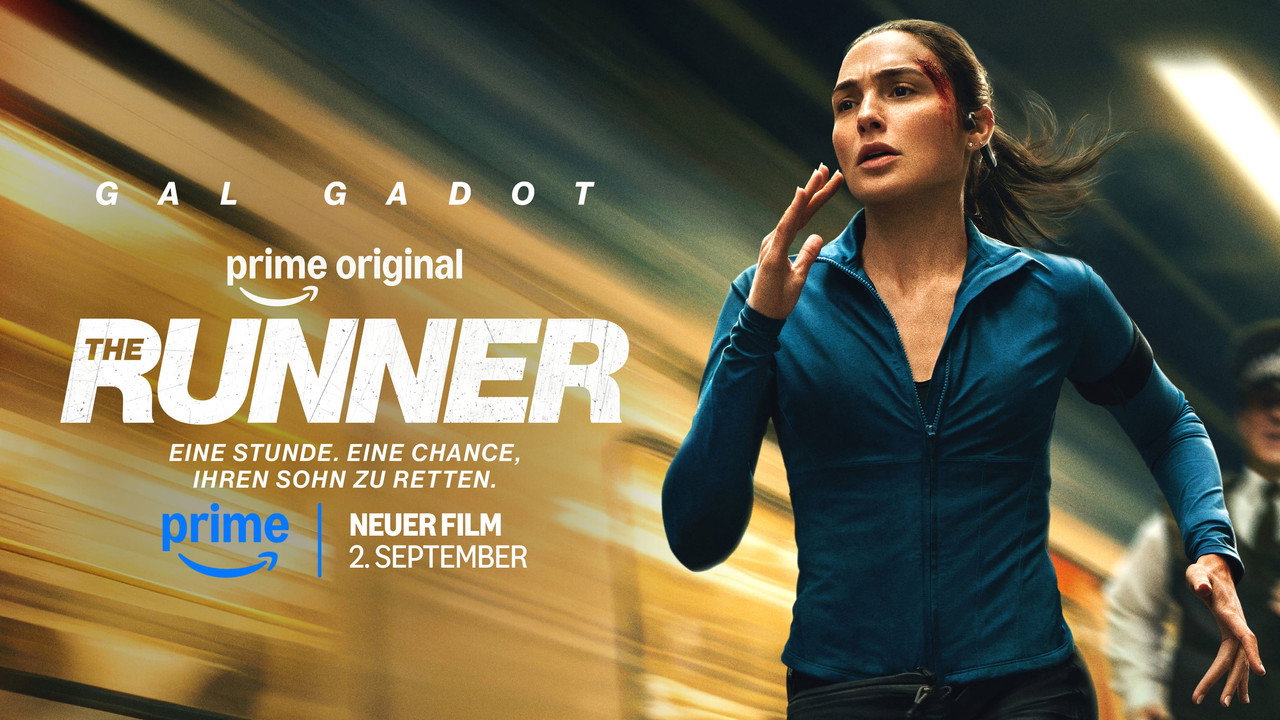
Kevin Macdonald uses the urban London landscape as an active component of the thriller. The camera stays close to Maia as she runs, employing frequent Steadicam shots that make the viewer feel as though they are sprinting right beside her. Clever alternation between tight close‑ups—showing sweat on her brow and despair in her eyes—and wide cityscape captures—visualizing endless streets and the unforgiving clock—creates a dynamic visual language that expresses both claustrophobia and openness. The editing is brisk yet never overloaded; it allows just enough space to feel the weight of each decision before the next command arrives. Macdonald avoids unnecessary action set‑pieces, concentrating instead on the psychological toll imposed by the incessant demand to “keep running.” The colour palette leans toward cool blues and greys that underscore the metropolitan morning, while occasional warm highlights in Maia’s outfit or in light reflections at intersections offer glimmers of hope. Overall, the direction displays an impressive feel for how a simple premise—run to save—can be charged visually and emotionally.
Music & Sound Design
The score for The Runner is deliberately minimalist, relying on pulsing electronic textures combined with subtle string pads that amplify the heartbeat sensation without overwhelming the scene. During heightened tension the intensity rises slightly, but the focus stays on ambient sounds: the rhythmic footfall on asphalt, distant taxi honks, the occasional whistle of wind between skyscrapers. This soundscape reinforces the feeling that Maia is truly alone against an invisible force while the city itself becomes a constant witness. The sound design also employs purposeful silence—short pauses just before a new command—to heighten the audience’s anticipation and maximize the shock of the impending instruction. As a result, there is a striking interplay between sonic stimulus and acoustic void that makes Maia’s psychological burden palpable. The sparse use of lyrical elements prevents the score from drifting into typical action‑thriller territory, keeping attention firmly on the immediate danger.
Visual Effects & Technical Craft
Because The Runner is set largely in real urban environments, visible VFX are kept discreet. Most effects involve the digital removal of camera shadows, slight brightening of night shots, and occasional addition of distant traffic to reinforce London’s liveliness. Production design, handled by Sarah Burton (though not listed in the credits block, she is a frequent collaborator on Macdonald projects), leans on existing locations such as the South Bank, the financial district, and residential neighbourhoods to preserve authenticity. The dressing is functional: Maia wears practical running attire, her phone becomes the central communication device, and the few props—a mysterious envelope, a key—are deliberately simple so that the focus stays on the narrative. Technically, the film was shot in 4K at 24 fps, ensuring crisp motion capture while retaining a cinematic feel. The mix is delivered in Dolby Atmos, giving the spatial quality of city sounds and the direction of Maia’s footsteps precise localisation. All told, the technical execution is solid, serving the story without overwhelming it.
Themes & Message
At its heart, The Runner explores the universal theme of maternal love and the lengths to which a person will go for a child. It poses the question of how far someone is willing to sacrifice their own professional identity, safety needs, and moral principles when a loved one’s life is at stake. The film also engages with the modern phenomenon of constant reachability: a single phone call can overturn an entire life and thrust the recipient into a stranger‑directed game. This mirrors contemporary society, where smartphones and perpetual connection embody both liberation and peril. Additionally, the tension between control and helplessness runs as a red thread through the plot: Maia is forced to obey instructions she does not understand while simultaneously attempting to regain command over her own fate. The picture remains deliberately ambiguous regarding the resolution of this tension, thereby leaving space for discussion about personal responsibility, external coercion, and the role of trust in crisis situations.
Comparison with Similar Films
Compared to other run‑or‑time‑pressure thrillers such as “Phone Booth” (2002), “Non‑Stop” (2014) or “The Call” (2013), The Runner distinguishes itself by emphasizing continual physical activity over static tension scenarios. While “Phone Booth” centres on a sniper threat and “Non‑Stop” confines the action to an aircraft, The Runner uses the city itself as a moving labyrinth, amplifying the sense of flight and pursuit. The casting of Gal Gadot, best known for action‑heavy superhero parts, provides an interesting contrast: rather than a battle‑hardened warrior, she portrays a civilian professional whose strength derives from emotional resilience. Unlike classic revenge‑thrillers like “John Wick,” the focus stays on a defensive rescue mission rather than offensive retribution. The film’s brief runtime (86 minutes) aligns it more with compact suspense pieces like “Buried” (2010), although the lack of a single‑room claustrophobic setting makes The Runner feel more open and less oppressive.
Who Is This Film For?
The Runner will appeal to viewers who prefer a compact, intense thriller without extensive world‑building or mythological baggage. Fans of Gal Gadot eager to see her abilities outside the superhero genre will discover a nuanced performance here. It also suits admirers of real‑time thrillers who enjoy the suspense of a steadily advancing countdown, comparable to “Locke” (2013) or “Phone Booth.” Due to its PG‑13 rating and absence of extreme gore, the film is additionally accessible to a younger audience seeking tension. Those anticipating deep character studies, intricate subplots, or extravagant action sequences may find the film too brief. Regarding consumption, a home‑streaming session is advisable, as the movie’s concentrated nature benefits less from a massive screen, while a good sound system will allow the atmospheric audio mix to shine.
Verdict
The Runner succeeds in turning a simple premise—a mother must run to save her child—into an engaging, well‑paced thriller. Gal Gadot delivers a solid, emotive turn that lifts the picture above its genre expectations. Kevin Macdonald’s direction makes effective use of the urban setting to generate suspense, while the minimal score and restrained VFX support the story without overwhelming it. The chief drawbacks lie in the somewhat predictable narrative structure, the limited development of supporting characters, and the occasional functional dialogue that leaves little room for nuanced interpersonal exchange. Nevertheless, the film’s high energy and clear focus on the survival theme yield a satisfying experience. Considering the competent execution, the strong lead performance, and the precise length, a score of 60 out of 100 is warranted—a rating that reflects a solid middle‑of‑the‑road effort while indicating room for growth in narrative depth.
Das könnte dich auch interessieren
Weitere Reviews aus der Kategorie movie.

Die Frau ohne Vergangenheit – Eine tiefgründige Thriller-Rezension 2026
Inhaltsverzeichnis [Einleitung]( einleitung) | [Handlung & Erzählung]( handlung und erzaehlung) | [Schauspiel & Charaktere]( schauspiel und charaktere…
Verity – Dunkle Geheimnisse: Ein Psychothriller voller verschwommener Realitäten und intensiver Performances
Inhaltsverzeichnis [Einleitung]( einleitung) [Handlung & Erzählung]( handlung erz%C3%A4hlung) [Schauspiel & Charaktere]( schauspiel charaktere) [Regie…
Mutiny: Ein konventionelles Action-Thriller-Duell mit Jason Statham
Inhaltsverzeichnis [Einleitung]( einleitung) [Handlung & Erzählung]( handlung und erzaehlung) [Schauspiel & Charaktere]( schauspiel und charaktere) [R…
Frequently Asked Questions
How good is The Runner – an intense thriller starring Gal Gadot?
The Runner – an intense thriller starring Gal Gadot wurde von Nerdiction mit 60 von 100 Punkten bewertet und ist damit satisfactory.
What are the pros of The Runner – an intense thriller starring Gal Gadot?
The advantages of The Runner – an intense thriller starring Gal Gadot: Gal Gadot delivers a convincing, emotionally nuanced performance as a desperate mother, The high tempo and constant motion generate an ongoing sense of tension, Kevin Macdonald’s direction leverages the urban London setting effectively to create claustrophobia, The minimalist score underscores urgency without becoming intrusive, Cinematography blends tight close‑ups with wide city shots to visualise the internal conflict.
What are the cons of The Runner – an intense thriller starring Gal Gadot?
The disadvantages of The Runner – an intense thriller starring Gal Gadot: The plot follows a familiar pattern and offers few surprising twists, Several supporting characters remain underdeveloped, leaving their motives vague, Dialogue sometimes feels purely functional and lacks nuanced exchange, The short runtime limits deeper exploration of the psychological aftermath, The conclusion feels abrupt and leaves questions unresolved in an unsatisfying way.
Is The Runner – an intense thriller starring Gal Gadot worth it?
Only conditionally. The Runner – an intense thriller starring Gal Gadot received a score of 60/100 points.