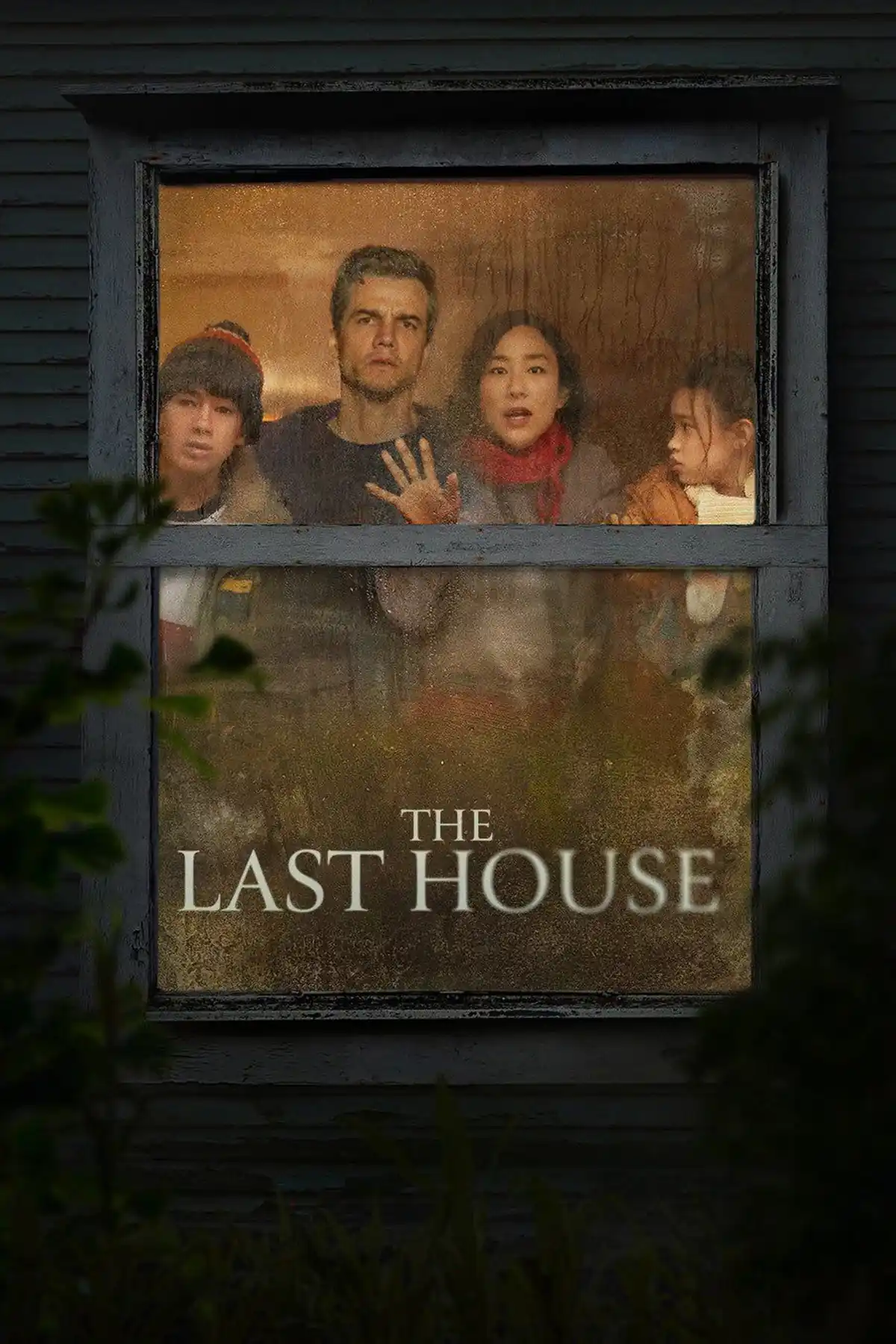
The Verdict
The Nerdiction verdict: The Last House – A Claustrophobic Parable on Isolation and Survival is excellent and receives 82 out of 100 points.
Pro
- Outstanding atmosphere forged through subtle visual and auditory details
- Powerful, nuanced performances from the entire cast
- Intelligent and trusting narrative approach that treats ambiguity as strength
Contra
- The deliberate pacing requires significant patience from the viewer
- The intentional absence of explanations may frustrate those seeking resolution
- Lack of clear antagonists may lead some to feel that "not enough happens"
Details
1h 50m
290.8
Genres
Table of Contents
- Genre Context
- Plot Without Spoilers
- Themes and Symbolic Layer
- Direction and Vision
- Cinematography, Look, and Production Design
- Acting Performance
- Pacing and Rhythm
- Sound Design and Music
- Target Audience
- Strengths and Weaknesses
- Detailed Verdict
Genre Context
The Last House situates itself at the intersection of psychological horror, science-fiction thriller, and existential drama. While it clearly draws inspiration from works like The Shining, The Thing, and Annihilation, it deliberately avoids direct imitation by focusing less on external monsters or technological explanations and more on the internal unraveling of its characters. The film belongs to a growing subcategory of genre cinema that favors slow-building dread over jump scares, existential despair over spectacle, and the erosion of reason under extreme pressure. What it achieves is rare: an atmosphere that feels both real and surreal—as if the boundaries between psychosis and objective threat are intentionally blurred. This ambiguity is not a flaw; it is a central stylistic choice that elevates the film above conventional genre entries.
Plot Without Spoilers
The story follows a family of four—two parents and their two children—who suddenly and inexplicably find themselves unable to leave their home. Doors only lead back inside. Windows no longer show the familiar outside world but instead display looping, distorted versions of the surroundings, as if reality itself has begun to repeat. No signal reaches the outside: phones, radios, and internet are dead. Supplies dwindle. Tensions rise. And strange phenomena begin to manifest: time stretches or collapses, sounds emerge from nowhere, and shadows move against their light sources. What first seems like a technical failure or shared delusion gradually reveals itself as something far deeper—a challenge not only to their survival, but to their understanding of reality, time, and the bonds that hold them together.
Crucially, the film never attempts to fully explain the cause of the phenomenon. Instead, it remains deliberately in the realm of suggestion, making the experience more immersive because the audience, like the characters, is left in the dark. This narrative restraint is a bold move—but it works precisely because the focus is never on solving the mystery, but on enduring it: on how people behave when stripped of certainty, comfort, and hope.
Themes and Symbolic Layer
Beyond its surface as a survival thriller, The Last House engages with fundamental human experiences: the fragility of civilization, the illusion of control, and how quickly social structures collapse when the foundations of daily life vanish. The house becomes a metaphor for the inner psyche—each room a state of mind, each hallway a corridor of memory, each locked door a repressed trauma. Particularly compelling is the film’s exploration of parenthood under duress. The parents are not heroic or infallible; they are exhausted, fearful, sometimes contradictory—and that is what makes them believable. Their conflicts arise not from malice, but from the impossible task of protecting others while losing control over themselves.
Time also plays a central role—not as a sci-fi gadget, but as a psychological burden. What does it mean when the future offers no hope and the past only brings pain? The film suggests that true horror does not come from monsters, but from the realization that some situations offer no escape—and that sometimes, the worst fate is not death, but endless endurance in a condition from which there is no exit.
Direction and Vision
The film is directed by a relatively unknown but distinctly talented filmmaker, previously noted in short films for an extraordinary ability to build mood. Here, they demonstrate mastery of minimal means: no elaborate action sequences, no expensive CGI creatures—instead, the film relies on long, insistent shots that force the viewer to watch dread creep in slowly. The camera often lingers in corners, as if observing without being able to intervene—a technique that mirrors the helplessness of both characters and audience.
Equally impressive is the director’s use of silence. There are scenes with little to no dialogue where tension still mounts—through body language, breath sounds, the creak of a floorboard, or the sudden absence of a noise that had been constant. This acoustic void is used as deliberately as loud shocks—and often lingers longer.
Compositional choices are equally thoughtful: symmetries are deliberately broken, reflections show subtly warped realities, and color shifts occur so gradually that they are only noticeable in retrospect—a sign that the world is changing beyond the characters’ awareness before they notice it themselves.
Cinematography, Look, and Production Design
Cinematography is a key strength. Shot in natural light with a restrained, almost documentary-like aesthetic, everything feels utterly authentic—except for the subtle distortions that generate unease. There are few sweeping camera movements or dramatic pans; instead, much of the film uses static shots that resemble surveillance footage—reinforcing the idea that the family might be watched, or that their behavior is part of an experiment.
The production design of the house is intentionally ordinary: a typical 2000s suburban home with worn carpet, slightly frayed furniture, and children’s toys scattered in the living room. This familiarity makes the horror more potent—because the terror does not arise in a gothic castle or high-tech lab, but in a setting anyone recognizes. Small details—a slowly shifting stain on the wall, a toy found in a new place—become significant without ever being explained.
The look evolves over time: beginning warm and domestic, it grows progressively colder, bluer, drained of color—a visual correlative to the characters’ emotional and physical decline. This shift is never abrupt, but almost imperceptible—like the gradual clouding of a glass of water over days.
Acting Performance
The ensemble delivers uniformly strong work, with the two parents standing out. They avoid melodrama—no hysterical screaming for its own sake, no stubborn heroism defying reason. Instead, they portray the nuanced despair of people slowly realizing their usual coping mechanisms no longer work. Small gestures—a gaze held a fraction too long, a near-imperceptible lip twitch, the avoidance of eye contact—often speak louder than monologues.
The children’s performances are notably naturalistic; they do not act “childlike,” but like real children confronted with a situation they cannot comprehend—making their reactions all the more unsettling. Their behavior shifts between childlike adaptation and sudden, almost adult-like awareness of danger—a psychological duality that feels deeply authentic.
It is striking how the cast portrays the growing estrangement within the family: how touch becomes rare, how smiles turn forced, how shared meals become silent ordeals. This erosion of bond is never stated outright—but it is constantly present, and all the more disturbing for being so convincingly rendered.
Pacing and Rhythm
The film walks a fine line: it is neither too slow nor too rushed. The first twenty minutes feel almost mundane—which makes the later shift all the more powerful. Then begins a slow, inexorable rise in tension—not driven by action, but by accumulating unease. There are no clear three-act turns; instead, a wave-like progression: periods of relative stability are repeatedly interrupted by small escalations, each pushing the situation into a new threshold of the impossible.
This structured unease resembles the breathing pattern during a panic attack: brief moments of relief, then the anxiety returns—each time slightly stronger than before. The film avoids a climactic third-act showdown; instead, it builds toward a series of decisions that are less spectacular than they are irreversible. The ending does not arrive with a bang, but with a sigh—and is all the more lasting for it.
Sound Design and Music
The sound design is perhaps the film’s strongest technical element. It thrives on subtlety: the hum of a refrigerator, the tick of a clock, the distant groan of a beam—ordinary sounds that become threatening through their presence or sudden absence. Particularly effective is the use of infrasound-like frequencies in certain scenes—inaudible on a conscious level, but capable of inducing physical discomfort—a technique known in horror, here applied with remarkable restraint.
The music, composed by an artist equally understated and effective, relies almost entirely on minimal soundscapes: low strings, distorted piano tones, sustained textures that are felt more than heard. There is little melody—instead, the score feels like an emotional undercurrent, constantly flowing beneath the surface. In moments of peak tension, the music often withdraws entirely—leaving only the characters’ breath and the viewer’s own heartbeat.
This reduction to the essentials makes the soundtrack one of the film’s greatest assets: it does not comment—it resonates.
Target Audience
The Last House is not for viewers who expect horror to be loud, fast, and explanatory. It is aimed at those willing to sit with a slow-burning dread—those who can tolerate ambiguous narratives that ask more than they answer. Fans of Hereditary, The Witch, It Comes at Night, or Under the Skin will find much to recognize here—not in plot, but in posture: the willingness to endure discomfort rather than immediately relieve it.
Also likely to appreciate it are fans of psychological drama and existential sci-fi (à la Solaris or Stalker), since the film is less about aliens or technology and more about the human response to the incomprehensible.
Less suited are those who demand clear explanations, crave action, or struggle with open endings. But precisely this selectivity is the film’s strength: it remains true to its vision instead of diluting itself for broad appeal.
Strengths and Weaknesses
Strengths:
- Exceptionally dense and credible atmosphere built through subtle means
- Strong, nuanced performances from an ensemble that convincingly portrays familial unraveling
- Intelligent use of space, light, and sound as narrative drivers
- A boldly ambiguous storytelling approach that places trust in the audience
- Rich thematic undercurrents inviting reflection on fear, control, and family bonds
- A look that begins familiar and slowly turns uncanny without resorting to cliché
Weaknesses:
- The deliberate lack of explanation may frustrate viewers seeking narrative closure
- The slow build demands patience; rewards come cumulatively, not immediately
- Few clearly defined external threats may leave some feeling that "not enough happens"—though this is intentional
- The ambiguity risks being perceived as incoherence or vagueness by less patient viewers
Detailed Verdict
The Last House is an impressive demonstration of how horror and science fiction can work not through spectacle, but through penetration—the slow, inescapable seepage of dread into the everyday. It refuses explanation because it knows: the worst thing is not the unknown itself, but the realization that some questions may never be answered—and yet, we must go on.
The film achieves something rare: a story that does not only affect you while watching, but lingers afterward—like a bad dream that won’t fully shake loose. It does not force you to feel afraid; it creates the conditions in which fear arises naturally—from your own imagination, from the memory of what once felt safe, and from the dread that it may never be so again.
In an era when many genre films rely on volume and velocity, The Last House is a welcome countercurrent: a film that speaks softly but cuts deep. It is not flawless—but it is honest. And sometimes, that is the scariest thing of all.
With its deep emotional resonance, masterful mood-making, and courage to embrace ambiguity, The Last House deserves more than attention—it deserves to linger. For anyone willing to undertake a journey inward—not just into the house, but into the self—it is a necessary contribution to modern psychological horror.
Final Score: 82/100
Das könnte dich auch interessieren
Weitere Reviews aus der Kategorie movie.
Review: The End of Oak Street – Wenn die Normalität zerbricht
Inhaltsverzeichnis\n\n1. [Einleitung & Einordnung]( einleitung)\n2. [Die Handlung: Jenseits der Vorstadtidylle]( handlung)\n3. [Thematische Tiefe: Men…
The Devil's Mouth – Der Teufelsschlund: Eine detaillierte Filmkritik
Inhaltsverzeichnis 1. [Einordnung]( einordnung) 2. [Handlung ohne Spoiler]( handlung ohne spoiler) 3. [Themen]( themen) 4. [Inszenierung]( inszenierun…
Das Ende der Sterne – Ridley Scotts stille Apokalypse im Test
Inhaltsverzeichnis [Einleitung]( einleitung) [Handlung & Erzählung]( handlung und erzaehlung) [Schauspiel & Charaktere]( schauspiel und charaktere) [R…
Frequently Asked Questions
How good is The Last House – A Claustrophobic Parable on Isolation and Survival?
The Last House – A Claustrophobic Parable on Isolation and Survival wurde von Nerdiction mit 82 von 100 Punkten bewertet und ist damit excellent.
What are the pros of The Last House – A Claustrophobic Parable on Isolation and Survival?
The advantages of The Last House – A Claustrophobic Parable on Isolation and Survival: Outstanding atmosphere forged through subtle visual and auditory details, Powerful, nuanced performances from the entire cast, Intelligent and trusting narrative approach that treats ambiguity as strength, Effective thematic depth exploring family, control, and existential dread, A visual strategy that transforms the familiar into the uncanny without cliché.
What are the cons of The Last House – A Claustrophobic Parable on Isolation and Survival?
The disadvantages of The Last House – A Claustrophobic Parable on Isolation and Survival: The deliberate pacing requires significant patience from the viewer, The intentional absence of explanations may frustrate those seeking resolution, Lack of clear antagonists may lead some to feel that "not enough happens", The film’s ambiguity risks being mistaken for incoherence by less attentive audiences.
Is The Last House – A Claustrophobic Parable on Isolation and Survival worth it?
Yes. The Last House – A Claustrophobic Parable on Isolation and Survival received a score of 82/100 points and is excellent.
Diskussion
Ich finde die Bewertung von 82 nachvollziehbar. Die Atmosphäre und die schauspielerische Tiefe sind wirklich beeindruckend, obwohl der langsame Aufbau manchmal nervt.
Die Parabel über Isolation hat mich tief berührt. Besonders die subtilen visuellen Details und die vertrauensvolle Erzählweise machen das Stück einzigartig. Ich verstehe die Kritik am fehlenden Antagonisten – für mich wirkt das manchmal wie ein Mangel an Spannung. Trotzdem überzeugt die thematische Tiefe über Familie und Existenzangst. Ich würde dem Film 90 geben, wenn die Ambiguität etwas klarer wäre.
Hat jemand bemerkt, wie die fehlenden Erklärungen die Spannung erhöhen? Ich fand das Fehlen von klaren Antagonisten zwar verwirrend, aber es hat mich dazu gebracht, die Handlung selbst zu interpretieren. Was meint ihr?
Ich fand die Atmosphäre in *The Last House* herausragend. Die subtilen Visuals und Sounds machen die Isolation spürbar –Total immersiv! Der Score von 82 passt perfekt dazu. Ein Musterfall für Filme, die uns in der Stille an die Grenzen bringen.
Der langsame Aufbau hat mich kept. Ich verstehe, warum jemand frustriert ist, wenn nichts explizit erklärt wird. Aber vielleicht ist die Absicht, die Zuschauer aktiv zu beschäftigen? Leider habe ich hohen Erwartungswerten hinterfallen.
Die Schauspielerei überzeugt komplett. Jeder Charakter wirkt authentisch, sogar in Der Einsamkeit. Das Ensemble Boer ich detener decoded Hollywood-Standard – eine Seltenheit, die man sich merken sollte!
Die Ambiguität stört mich nicht so sehr.むしろ, sie macht den Film interessanter. Aber einige Rezensenten kritisieren sie als einakselig. Wie genau soll man das Kosmos verstehen, wenn das Was nicht klar ist?
Ich fühle mich, als fehle mir 'etwas', das als klares Hindernis dienen könnte. Ohne Antagonisten wirkt der Konflikt Trotz – obwohl das vielleicht die Aussage ist. Mir hat es aber keine Spannung gegeben.
Die thematische Tiefe zu Familie und Kontrolle ist gemein. Der Film fragt, ob wir wirklich einander überleben oder nur uns selica gefedium. Das ist nicht leicht fassbar, aber äußerst wertvoll.
Der Look, der Heimlichkeit in Unheimlichkeit verwandelt, ist brillant. Die Kameraführung malt Vertraute Orte unheimlich – ein Genie, das man selten sieht. Ein Hauch unnötiger clarification? Nein, das war{purpose}.
War ein kluger Film, aber ich war manchmal ratlos. Die Ambiguität funktioniert, wenn man sie liebt. Für andere ist sie eine Schwäche. Habe ich ihn gemocht? Ja, aber nicht unkritisch – genau wie das Leben.