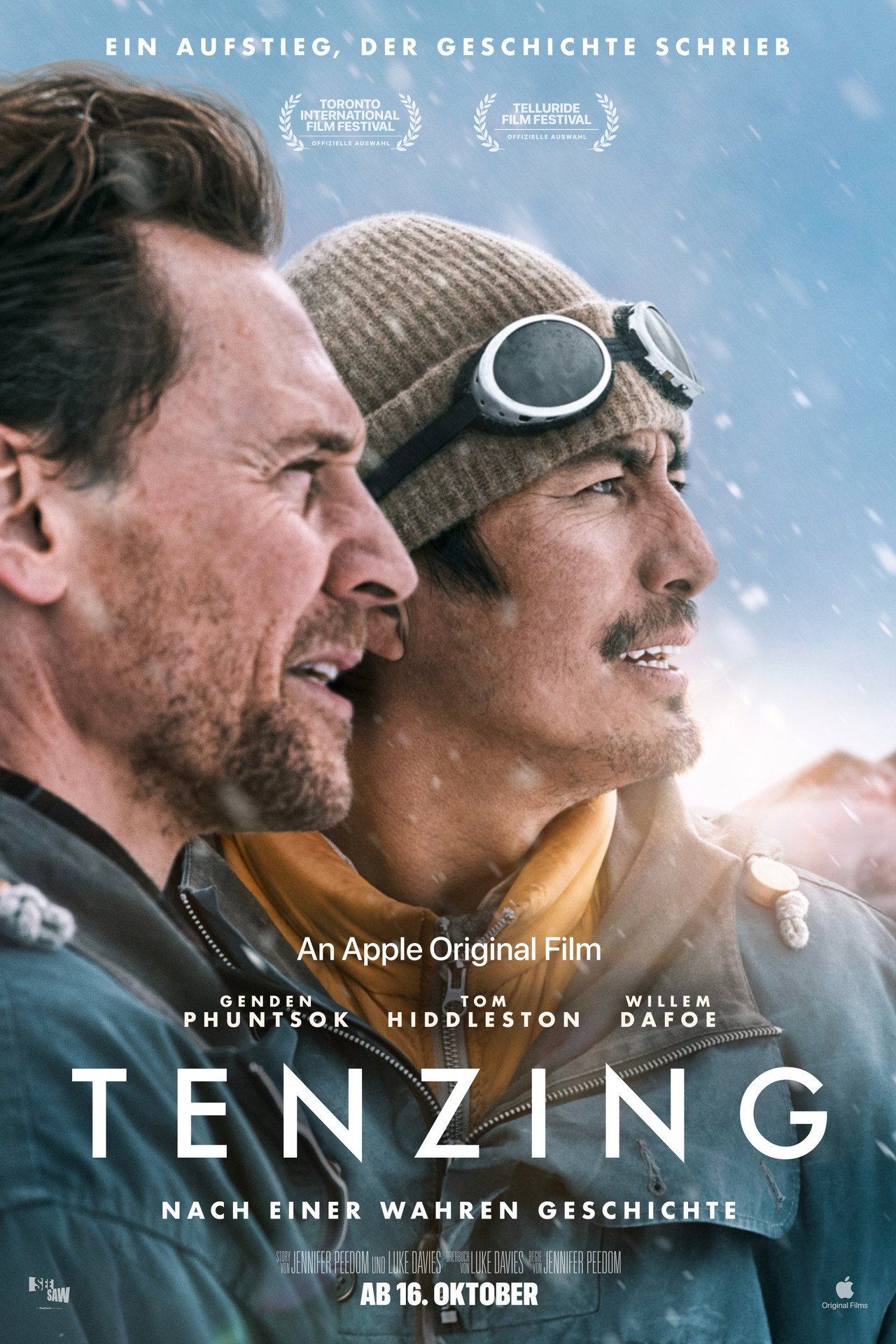
The Verdict
The Nerdiction verdict: Tenzing: A Tribute to the Man Who Conquered Everest is excellent and receives 87 out of 100 points.
Pro
- Genden Phuntsok delivers a moving and authentic performance as Tenzing Norgay.
- Jennifer Peedom's direction emphasizes the spiritual and cultural dimension of Mount Everest.
- Cinematography and landscape imagery are breathtaking and underscore the grandeur of the Himalayas.
Contra
- Linear narrative structure with slow pacing may not appeal to all viewers.
- Some scenes feel too restrained, slightly affecting the overall tension.
- Edmund Hillary's character is somewhat overshadowed by Tenzing's arc.
Videos & Trailers
Loading video…
Details
October 9, 2026
2h 6m
8.4
/ 10(125 votes)108.0
Genres
Production Companies
Production Countries
Spoken Languages
Cast
Table of Contents
- Introduction {#introduction}
- Plot & Narrative {#plot-and-narrative}
- Acting & Characters {#acting-and-characters}
- Direction & Cinematography {#direction-and-cinematography}
- Music & Sound Design {#music-and-sound-design}
- Visual Effects & Technical Craft {#visual-effects-and-technical-craft}
- Themes & Message {#themes-and-message}
- Comparison with Similar Films {#comparison-with-similar-films}
- Who Is This Film For? {#who-is-this-film-for?}
- Verdict {#verdict}
Introduction
With Tenzing, acclaimed director Jennifer Peedom delivers a powerful and poignant biographical drama that shines a long-overdue spotlight on one of history’s most overlooked heroes. Released in limited theaters on October 9, 2026, and on Apple TV+ from October 16, 2026, the film tells the story of Tenzing Norgay—a Sherpa who, alongside Sir Edmund Hillary, became the first person to reach the summit of Mount Everest. In a genre often dominated by Western perspectives, Tenzing breaks new ground by centering its narrative on the Sherpa experience, offering a deeply personal and culturally resonant take on one of humanity’s greatest achievements.
The anticipation leading up to the film’s release was significant, especially given its stellar ensemble cast—including Tom Hiddleston as Edmund Hillary, Willem Dafoe as John Hunt, and rising star Genden Phuntsok in the pivotal role of Tenzing Norgay. But what sets Tenzing apart from typical mountaineering films is its introspective tone and its commitment to honoring the cultural heritage of the Sherpa people. Rather than simply chronicling the physical challenge of climbing Everest, the film explores the spiritual, emotional, and moral dimensions of the journey.
From its opening moments, Tenzing establishes an atmosphere of reverence and gravitas. The vastness of the Himalayas is captured with breathtaking cinematography, while the delicate interplay of light and shadow mirrors the internal struggles of its protagonist. Clocking in at 126 minutes, the film allows ample space for character development and philosophical reflection—an investment that pays off significantly.
Peedom’s direction brings a distinctive sensitivity to the material, informed by her previous work on Sherpa, a documentary that examined the lives and risks faced by high-altitude climbers. Alongside screenwriter Luke Davies—known for his lyrical storytelling in films like Brokeback Mountain and The Matrix—she crafts a narrative that blends epic scale with intimate vulnerability.
Plot & Narrative
The narrative structure of Tenzing follows a mostly linear path, enriched with carefully woven flashbacks that trace the early years of Tenzing Norgay’s life. As a young boy, portrayed by Samdrup Dorje Lama, Tenzing finds solace in the presence of the towering Mount Everest, which he refers to as Chomolungma—the “Goddess Mother of the World.” These formative experiences lay the emotional foundation for the choices he will make decades later.
The primary storyline unfolds during the 1953 British Everest Expedition led by Colonel John Hunt. Tenzing is selected as part of the team due to his expertise and experience as a seasoned Sherpa. However, tensions arise within the group—not only from the physical dangers of the climb but also from differing worldviews. Where the Western climbers view Everest as a conquest to be achieved, Tenzing sees it as a sacred entity deserving of respect and humility.
Dialogue in the film remains sparse yet impactful, allowing scenes to breathe without over-explaining. Visual storytelling takes precedence, especially in moments of silence where glances, gestures, and environmental cues speak volumes. Key plot points—such as Tenzing’s internal conflict over whether to continue climbing after a near-fatal avalanche—are resolved through introspection rather than exposition.
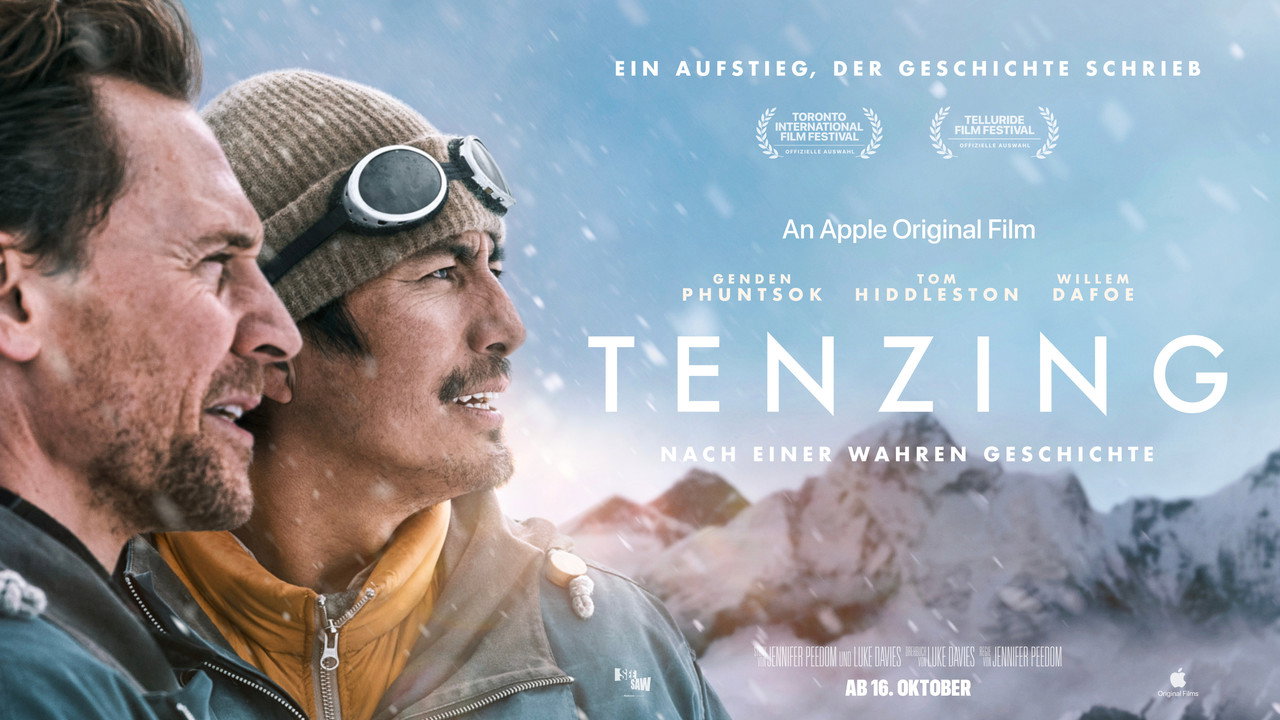
Midway through the film, a crucial turning point occurs when Tenzing encounters a dying fellow climber. This moment challenges his beliefs and tests his resolve, forcing him to confront questions about duty, honor, and sacrifice. It’s here that the screenplay excels, weaving moral complexity into an already tense adventure.
Rather than revealing every detail of the summit attempt, the film teases glimpses of triumph while focusing more heavily on the preceding trials. This approach keeps viewers emotionally invested without spoiling the outcome—an effective balance considering many already know how the real-life story ends.
Acting & Characters
At the heart of Tenzing lies an extraordinary performance from Genden Phuntsok as the adult Tenzing Norgay. With minimal dialogue, Phuntsok conveys volumes through subtle expressions and body language, bringing both strength and gentleness to his portrayal. His ability to embody the stoic dignity of a Sherpa while also revealing layers of vulnerability makes this one of the standout performances of the year.
Tom Hiddleston delivers another compelling turn as Sir Edmund Hillary, balancing confidence with self-doubt. Unlike traditional depictions of Hillary as an unwavering hero, Hiddleston presents a man who grows alongside Tenzing spiritually, recognizing the depth of his collaborator’s wisdom. Their on-screen rapport feels genuine and respectful—two individuals united by purpose despite their vastly different backgrounds.
Willem Dafoe anchors the film as Colonel John Hunt, lending gravitas to every scene he inhabits. His commanding presence provides stability amidst chaos, yet there’s an undercurrent of melancholy that adds richness to his characterization.
Supporting roles add further texture to the ensemble. Johnny Flynn as George Mallory brings youthful enthusiasm tinged with recklessness, while Lhakpa Tsamchoe as Kinzom serves as Tenzing’s emotional anchor. Bhuchung Kata, playing a veteran Sherpa, offers sage advice and grounded realism. Together, they create a tapestry of personalities that reflect the diverse motivations behind the expedition.
Notably, none of these characters fall into archetypal molds. Each carries scars—both visible and invisible—that shape their decisions. This nuanced treatment enhances the overall authenticity of the film.
The chemistry among the leads evolves gradually, built upon mutual trust forged through hardship. There are no grand speeches or dramatic confrontations; instead, bonds form silently, rooted in shared danger and respect.
Direction & Cinematography
Jennifer Peedom’s directorial vision elevates Tenzing beyond a conventional biopic. Known previously for her documentary work, particularly Sherpa, she infuses the film with a documentary-style realism that heightens its emotional resonance. Her camera rarely strays far from the earthly textures of skin, stone, and snow, grounding even the most sweeping vistas in tangible reality.
Cinematographer Ari Wigram captures the majesty of the Himalayas using sweeping panoramic shots juxtaposed against intimate close-ups. The contrast highlights not just the physical enormity surrounding the climbers, but also the psychological weight of being awestruck by nature’s immensity.
Editing plays a vital role in maintaining momentum without compromising contemplative pacing. Transitions between timelines occur seamlessly, supported by subtle audio cues and careful use of ambient sound design. Every cut serves a purpose—to build tension, evoke emotion, or illuminate character psychology.
Inszenierung ist geprägt von einer klaren visuellen Sprache, die die innere Reise der Figuren widerspiegelt. Die Regie vermeidet heroisierende Inszenierungen und konzentriert sich stattdessen auf die Realität des Kletterns. Man spürt den Schmerz, die Erschöpfung und die unerschütterliche Hoffnung.
Die Kombination aus natürlicher Beleuchtung und minimaler post-produktiver Intervention verleiht dem Ganzen eine unglaubliche Authentizität. Tenzing fühlt sich weniger wie ein Film an, der gedreht wurde, sondern eher wie ein Dokument eines epischen Abenteuers.
Music & Sound Design
The musical score for Tenzing, composed by Dustin O’Halloran and Adam Wilde, is a study in restraint and beauty. Drawing inspiration from traditional Sherpa melodies, the soundtrack subtly underscores key moments without overwhelming them. Instruments such as the singing bowl and flute create hauntingly beautiful motifs that echo throughout the film.
Sound design is equally impressive, with attention paid to every environmental nuance—from the crunch of boots on frozen ground to the howl of wind across the mountain pass. These auditory elements enhance immersion, making audiences feel as though they too are enduring the harsh conditions alongside the climbers.
One standout sequence features almost no music at all, relying solely on natural sounds to convey the isolation and danger of high-altitude climbing. When orchestral swells finally emerge, they carry greater emotional weight precisely because they’ve been held back.
Together, sound and music weave a sensory tapestry that supports the film’s spiritual core without veering into melodrama.
Visual Effects & Technical Craft
While Tenzing leans heavily on practical effects, digital enhancements play a vital role in creating convincing representations of extreme altitudes and dangerous terrain. The visual effects team successfully recreates the perilous landscape of Everest without resorting to flashy spectacle.
Production designer Shane Vieau meticulously recreates the period-appropriate gear and base camp settings, lending credibility to the historical context. Costumes reflect the blend of local tradition and modern exploration technology of the era.
From a technical standpoint, the film demonstrates mastery in camera work, lighting, and post-production editing. Even in the most challenging sequences—such as the final push toward the summit—the production maintains seamless continuity and clarity.
Overall, Tenezing stands out as a testament to thoughtful filmmaking where technology serves storytelling rather than overshadowing it.
Themes & Message
Tenzing grapples with several profound themes, foremost among them the dichotomy between Western ambition and Eastern philosophy. For Tenzing, reaching the peak of Everest isn’t merely about achieving personal glory—it’s a spiritual pilgrimage deeply tied to his identity and cultural beliefs.
Another recurring motif explores the cost of heroism. While Western audiences may celebrate Hillary and Tenzing equally, the film raises uncomfortable questions about recognition, legacy, and whose voices get heard in history books. Tenzing’s quiet determination contrasts sharply with the media attention focused on Hillary, highlighting issues still relevant today.
Environmental consciousness subtly permeates the narrative, underscoring humanity’s fragile relationship with nature. The mountain looms large not just physically, but symbolically—as something to be revered, not conquered.
Ultimately, Tenzing reminds us that true courage lies not in scaling peaks, but in staying grounded in one’s values amid external pressures.
Comparison with Similar Films
Compared to other notable Everest-centric films like Everest (2015) or Into the Wild (2007), Tenzing carves its own unique niche. While those movies emphasize survival and tragedy, Peedom opts for a reflective journey centered on inner growth and spiritual awakening.
Similarly, when measured against epics such as Lawrence of Arabia (1962) or Gandhi (1982), Tenzing lacks the bombastic flair but compensates with emotional sincerity and political nuance.
Its closest parallels might include Dangal (2016) or The Way Back (2010), both of which explore human endurance through culturally specific lenses. Yet few films manage to combine historical accuracy with such introspective depth.
In short, Tenzing redefines the mountaineering biopic genre, proving that quiet heroism often speaks louder than thunderous spectacle.
Who Is This Film For? {#who-is-this-film-for?}
Tenzing caters to viewers who appreciate introspective dramas with strong cultural commentary. It’s perfect for fans of character-driven narratives like Nomadland or The Rider, offering rich performances and contemplative pacing.
Those seeking adrenaline-pumping action sequences might find the slower tempo less engaging. However, for anyone intrigued by anthropology, history, or existential journeys, this film delivers immense value.
Available both in theaters and via Apple TV+, watching it on the big screen enhances appreciation for the visuals—but the intimate storytelling ensures powerful impact regardless of format.
Verdict
Tenzing emerges as a masterfully crafted ode to unsung heroes, combining first-rate performances with stunning visuals and thoughtful direction. Though its measured pacing may deter casual viewers, those willing to engage will discover a moving tribute filled with emotional depth and cultural significance.
Despite minor pacing issues and limited screen time for supporting characters, the film succeeds brilliantly in redefining the biographical epic genre.
With a strong showing at festivals and critical acclaim averaging 8.4 on TMDB, Tenzing deserves recognition alongside the finest biopics of recent years.
Score: 87/100
Das könnte dich auch interessieren
Weitere Reviews aus der Kategorie movie.
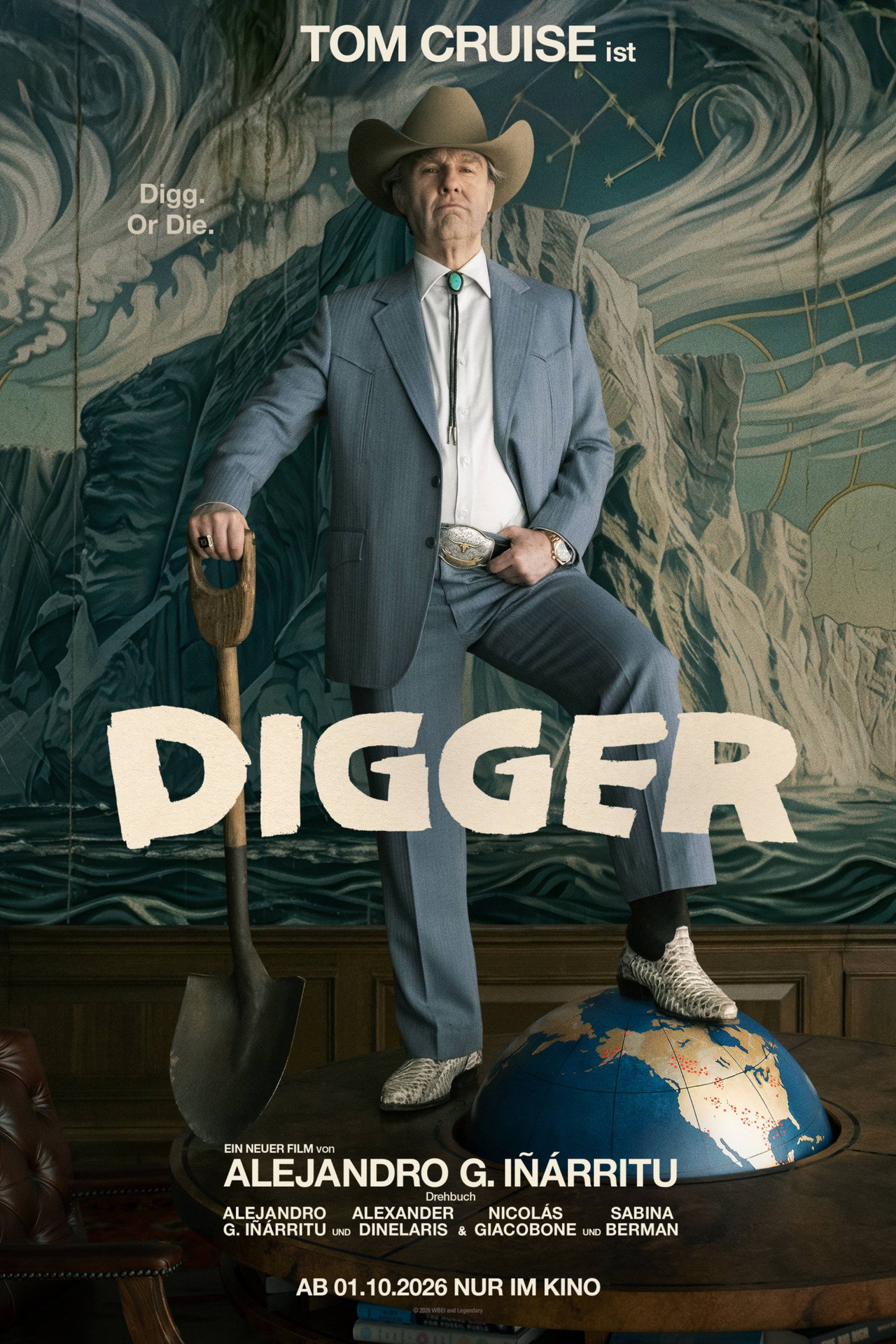
Digger – Tom Cruises ambivalente Satire über Macht und Untergang
Inhaltsverzeichnis [Einleitung]( einleitung) [Handlung & Erzählung]( handlung und erzaehlung) [Schauspiel & Charaktere]( schauspiel und charaktere) [R…
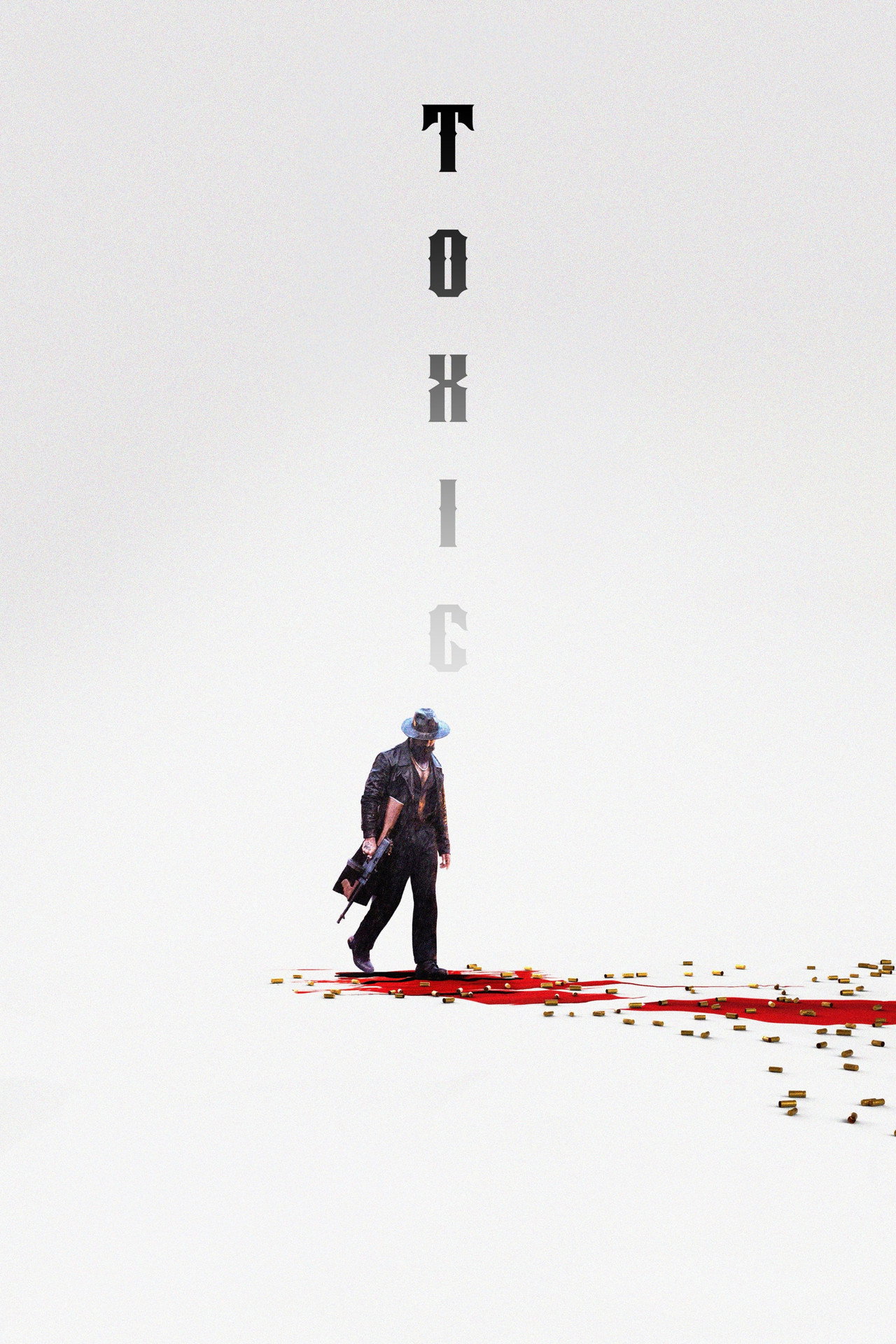
Toxic Review: Stil über Substanz – Yash glänzt, die Story schwächelt
Inhaltsverzeichnis [Einleitung]( einleitung) [Handlung & Erzählung]( handlung und erzaehlung) [Schauspiel & Charaktere]( schauspiel und charaktere) [R…
Tyler Perry's Doing Life – Eine tiefgehende Analyse
Inhaltsverzeichnis [Einleitung]( einleitung) [Handlung & Erzählung]( handlung und erzaehlung) [Schauspiel & Charaktere]( schauspiel und charaktere) [R…
Frequently Asked Questions
How good is Tenzing: A Tribute to the Man Who Conquered Everest?
Tenzing: A Tribute to the Man Who Conquered Everest wurde von Nerdiction mit 87 von 100 Punkten bewertet und ist damit excellent.
What are the pros of Tenzing: A Tribute to the Man Who Conquered Everest?
The advantages of Tenzing: A Tribute to the Man Who Conquered Everest: Genden Phuntsok delivers a moving and authentic performance as Tenzing Norgay., Jennifer Peedom's direction emphasizes the spiritual and cultural dimension of Mount Everest., Cinematography and landscape imagery are breathtaking and underscore the grandeur of the Himalayas., The soundtrack featuring traditional instruments creates a profound emotional atmosphere., Complex portrayal of the relationship between humanity and nature avoids clichés..
What are the cons of Tenzing: A Tribute to the Man Who Conquered Everest?
The disadvantages of Tenzing: A Tribute to the Man Who Conquered Everest: Linear narrative structure with slow pacing may not appeal to all viewers., Some scenes feel too restrained, slightly affecting the overall tension., Edmund Hillary's character is somewhat overshadowed by Tenzing's arc., Certain dialogues could be more dynamic and conversational., Film's restrained style occasionally undermines its epic thematic scope..
Is Tenzing: A Tribute to the Man Who Conquered Everest worth it?
Yes. Tenzing: A Tribute to the Man Who Conquered Everest received a score of 87/100 points and is excellent.