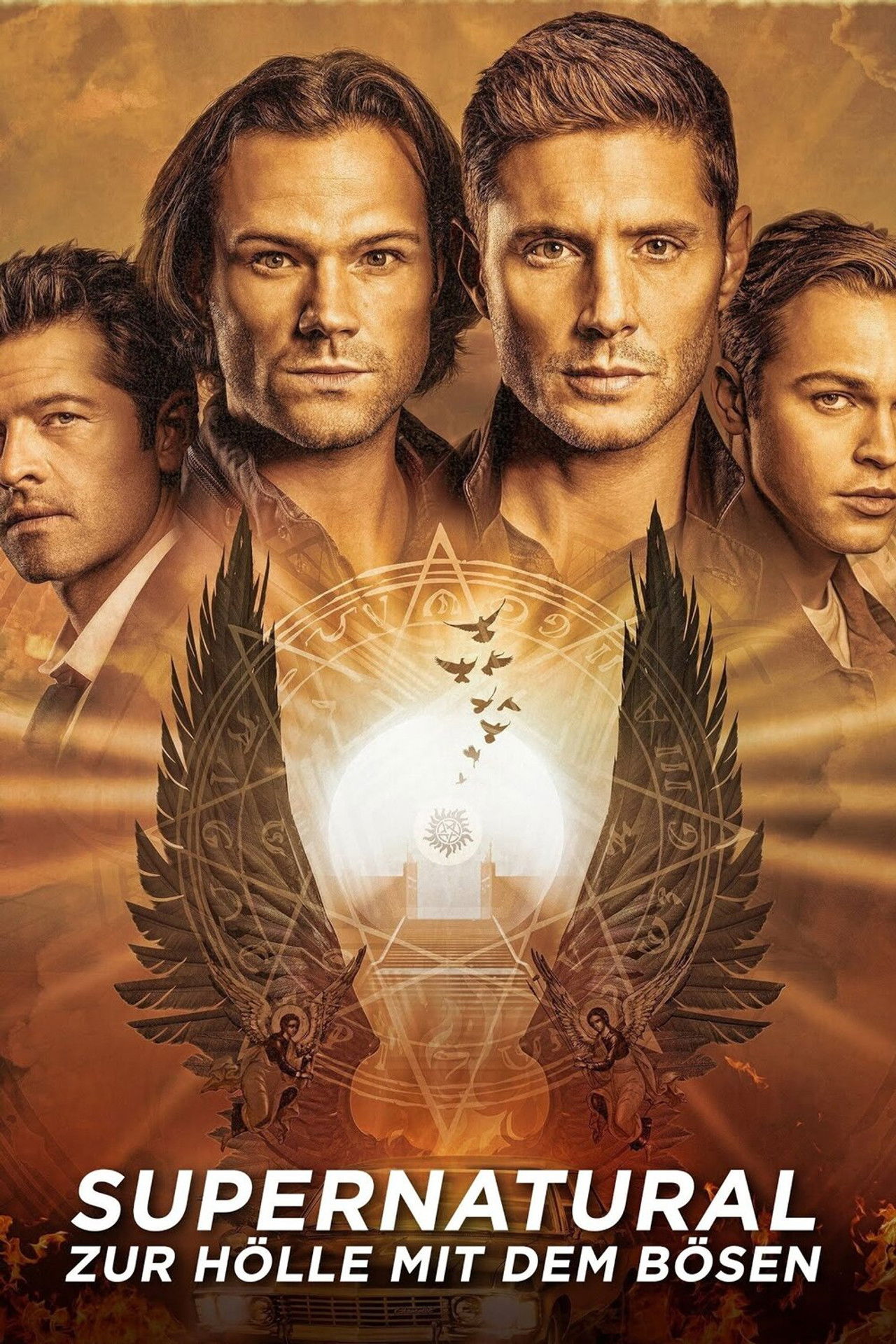
The Verdict
The Nerdiction verdict: Supernatural - The Epic Conclusion of a Legendary Horror Series is excellent and receives 85 out of 100 points.
Pro
- Exceptional chemistry between lead actors over 15 years
- Innovative meta-textuality and experimental episodes
- Complex, well-developed mythology based on various cultural traditions
Contra
- Quality fluctuations between seasons, especially in the middle run
- Occasional narrative inconsistencies due to long runtime
- Excessive use of character deaths and resurrections
Details
September 13, 2005
15
327
8.3
/ 10(8,145 votes)236.7
Genres
Production Companies
Production Countries
Spoken Languages
Supernatural - The Epic Conclusion of a Legendary Horror Series
Table of Contents
- Introduction
- Plot and Mythology
- Character Development
- Series Structure and Evolution
- Direction and Atmosphere
- Soundtrack and Music
- Cultural Impact
- Conclusion
Introduction
After 15 years and 327 episodes, an era ended in 2020 that fundamentally shaped the horror genre on television. "Supernatural" by Eric Kripke began as a seemingly simple monster-of-the-week series and evolved into one of the most ambitious mythological narratives in television history. The story of the Winchester brothers Sam (Jared Padalecki) and Dean (Jensen Ackles) became a cultural phenomenon that radiated far beyond genre boundaries.
Plot and Mythology
The premise of "Supernatural" is elegant in its simplicity: two brothers travel across America fighting supernatural creatures. But what began as a road movie with horror elements unfolded into a complex mythology encompassing angels, demons, gods from various cultures, and ultimately God himself.
Kripke originally conceived a five-season story that would culminate with the apocalypse. These first five seasons indeed form a nearly perfect narrative arc, ranging from character introduction through revelation of their destiny to the epic confrontation between Heaven and Hell. The way the series merges biblical mythology with American urban legend culture is remarkably original.
The later seasons, though varying in quality, continuously expanded the universe and dared to tackle increasingly larger metaphysical concepts. From Leviathans through alternate realities to confrontation with the Creator himself - "Supernatural" never shied away from breaking its own boundaries.
Character Development
The heart of the series beats in the relationship between Sam and Dean Winchester. Jared Padalecki and Jensen Ackles developed chemistry over 15 years that radiates authentic brotherhood. Dean, the older brother, embodies the protector archetype - cynical, loyal, and ready to sacrifice everything for his family. Sam, on the other hand, represents the hope bearer, the intellectual who strives for a normal life but is caught up by his destiny.
Character development occurs organically over the years. Both brothers experience highs and lows, die multiple times and return, lose and find their humanity repeatedly. This cyclical nature reflects both the strengths and weaknesses of the series - it enables deep emotional moments but also occasionally leads to narrative exhaustion.
Supporting characters like the angel Castiel (Misha Collins) or the demon Crowley (Mark Sheppard) significantly enriched the ensemble. Castiel's evolution from emotionless heavenly warrior to the most human character in the series is particularly noteworthy and demonstrates the writers' ability to develop characters originally planned for just a few episodes into central elements.
Series Structure and Evolution
The structure of "Supernatural" is based on a hybrid approach of episodic and serial elements. The famous "monster-of-the-week" episodes served not just as filler between mythological climaxes, but often as experimental ground for creative storytelling techniques. Episodes like "The French Mistake," "Mystery Spot," or "Scoobynatural" show a series willing to play with its own format.
This meta-textuality became a trademark of the series. "Supernatural" developed an awareness of its own fiction and fan community that is unparalleled in the television landscape. The series regularly broke the fourth wall and commented on itself without losing its emotional core.
Quality fluctuated significantly over the years. While seasons 1-5 and 11-15 are considered highlights, the middle seasons are often criticized. Nevertheless, the series maintained its identity and repeatedly found its way back to its original strength: the relationship between the brothers.
Direction and Atmosphere
Visually, "Supernatural" established a distinctive aesthetic. The dark, often underlit shots created an atmosphere of permanent threat. Canada as filming location provided the perfect backdrop for the series' Americana-infused horror vision. Abandoned highways, run-down motels, and fog-shrouded forests became recurring visual motifs.
Special effects evolved with the series' budget. While early episodes relied on practical effects and clever camera work, later seasons allowed for more elaborate CGI sequences. Particularly the portrayal of angels and demons became increasingly spectacular over the years without losing the series' earthy basic mood.
Direction changed frequently, but regular directors like Robert Singer, Phil Sgriccia, and later Jensen Ackles himself sustainably shaped the visual style. The series developed its own visual language for various supernatural phenomena that remains a reference for other productions today.
Soundtrack and Music
Music plays a central role in "Supernatural" that extends far beyond typical series music. Classic rock, particularly from the 70s and 80s, became the DNA of the series. Dean's Impala and its cassette collection established Kansas' "Carry On Wayward Son" as the unofficial series anthem.
Jay Gruska and Christopher Lennertz created with their compositions an emotional map ranging from tender family moments to apocalyptic battles. The music not only reinforces atmosphere but often becomes a narrative element - whether through Dean's air guitar or emotional climaxes regularly underscored by iconic rock songs.
Cultural Impact
The cultural impact of "Supernatural" can hardly be overestimated. The series created one of the most active and creative fan communities in television history. "Supernatural" was early present on social media and maintained a direct relationship with its fans, manifested in numerous conventions and fan projects.
The series significantly influenced subsequent horror and fantasy productions. The concept of "found family," the mixture of humor and horror, and the meta-textual approach can be found in many modern series.
Furthermore, "Supernatural" contributed to normalizing fan culture. The series not only acknowledged fan fiction, shipping, and other fan activities but integrated them into its own narrative. This was revolutionary for a mainstream television production.
Conclusion
"Supernatural" is more than just a television series - it's a cultural phenomenon that blurred the lines between creators and audience. Over 15 years, Eric Kripke and his team created a universe characterized by deep humanity, even though it was populated by monsters and gods.
The series is not flawless. Plot lines were dropped, characters inconsistently developed, and length occasionally led to narrative exhaustion. But these weaknesses fade in light of the emotional truth that "Supernatural" told about family, loss, love, and sacrifice.
The series finale, though controversially discussed, brought the story to a conclusion that remained true to the series' core: it was always a story about two brothers who would do anything for each other. In a time when series often compete with spectacular twists, "Supernatural" reminds us that the strongest stories are those told by the human heart - even when that heart beats in a world full of monsters.
Das könnte dich auch interessieren
Weitere Reviews aus der Kategorie series.
The East Palace (동궽): Eine faszinierende Mischung aus Mystik und Politik
Inhaltsverzeichnis Serien Einordnung und Produktionshintergrund Prämisse ohne Spoiler Charaktere und ihre Entwicklung Erzählstruktur und Pacing Inszen…
Lanterns: Eine dunkle, introspektive DC-Serie mit grandioser Schauspielerei
Lanterns: Eine dunkle, introspektive DC Serie mit grandioser Schauspielerei Inhaltsverzeichnis [Einleitung]( einleitung) [Handlung & Setting]( handlun…
Nur für dein Leben
Ein Vater wird fälschlicherweise wegen Mordes an seinem Sohn inhaftiert. Als er erfährt, dass der noch leben könnte, begibt er sich auf eine verzweife…
Frequently Asked Questions
How good is Supernatural - The Epic Conclusion of a Legendary Horror Series?
Supernatural - The Epic Conclusion of a Legendary Horror Series wurde von Nerdiction mit 85 von 100 Punkten bewertet und ist damit excellent.
What are the pros of Supernatural - The Epic Conclusion of a Legendary Horror Series?
The advantages of Supernatural - The Epic Conclusion of a Legendary Horror Series: Exceptional chemistry between lead actors over 15 years, Innovative meta-textuality and experimental episodes, Complex, well-developed mythology based on various cultural traditions, Strong emotional moments and authentic family dynamics, Influential fan culture and direct community engagement.
What are the cons of Supernatural - The Epic Conclusion of a Legendary Horror Series?
The disadvantages of Supernatural - The Epic Conclusion of a Legendary Horror Series: Quality fluctuations between seasons, especially in the middle run, Occasional narrative inconsistencies due to long runtime, Excessive use of character deaths and resurrections, Some plot lines were not satisfactorily concluded, Repetitive elements in later seasons.
Is Supernatural - The Epic Conclusion of a Legendary Horror Series worth it?
Yes. Supernatural - The Epic Conclusion of a Legendary Horror Series received a score of 85/100 points and is excellent.