The Verdict
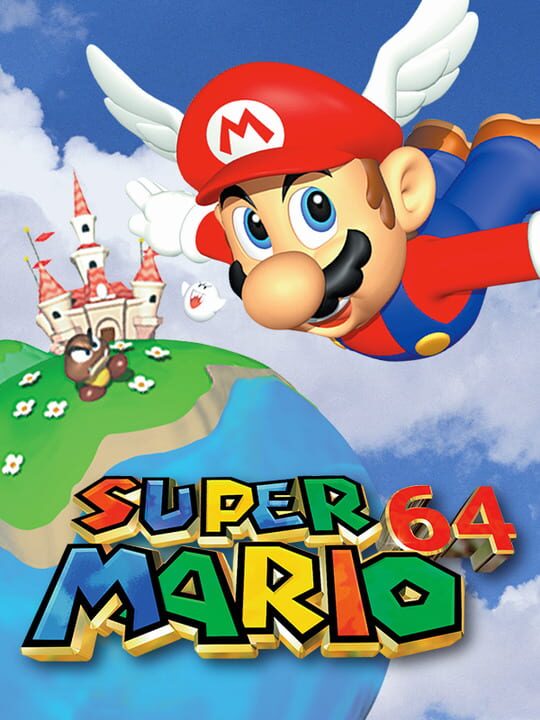
The Nerdiction verdict: Super Mario 64: The Revolutionary Leap into the Third Dimension is outstanding and receives 92 out of 100 points.
Pro
- Revolutionary 3D controls with analog stick
- Timeless, creative level design with great variety
- Excellent soundtrack by Koji Kondo
Contra
- Camera controls sometimes clunky and awkward
- Some stars require frustrating precision
- Graphics appear dated by today's standards
Super Mario 64: The Revolutionary Leap into the Third Dimension
Table of Contents
- Introduction: A Gaming History Milestone
- Revolutionary 3D Controls and Gameplay
- World Design and Level Architecture
- Graphics and Technical Performance
- Audio and Soundtrack
- Collectibles and Long-term Motivation
- Impact on the Gaming Industry
- Conclusion
Introduction: A Gaming History Milestone
On June 23, 1996, Nintendo forever changed the video game world with Super Mario 64. As a launch title for the Nintendo 64, this platforming giant set new standards for 3D gameplay and proved that the transition from 2D to 3D could be not just possible, but spectacular. Developed under the direction of Shigeru Miyamoto, Super Mario 64 represents one of the most important turning points in video game history.
Revolutionary 3D Controls and Gameplay
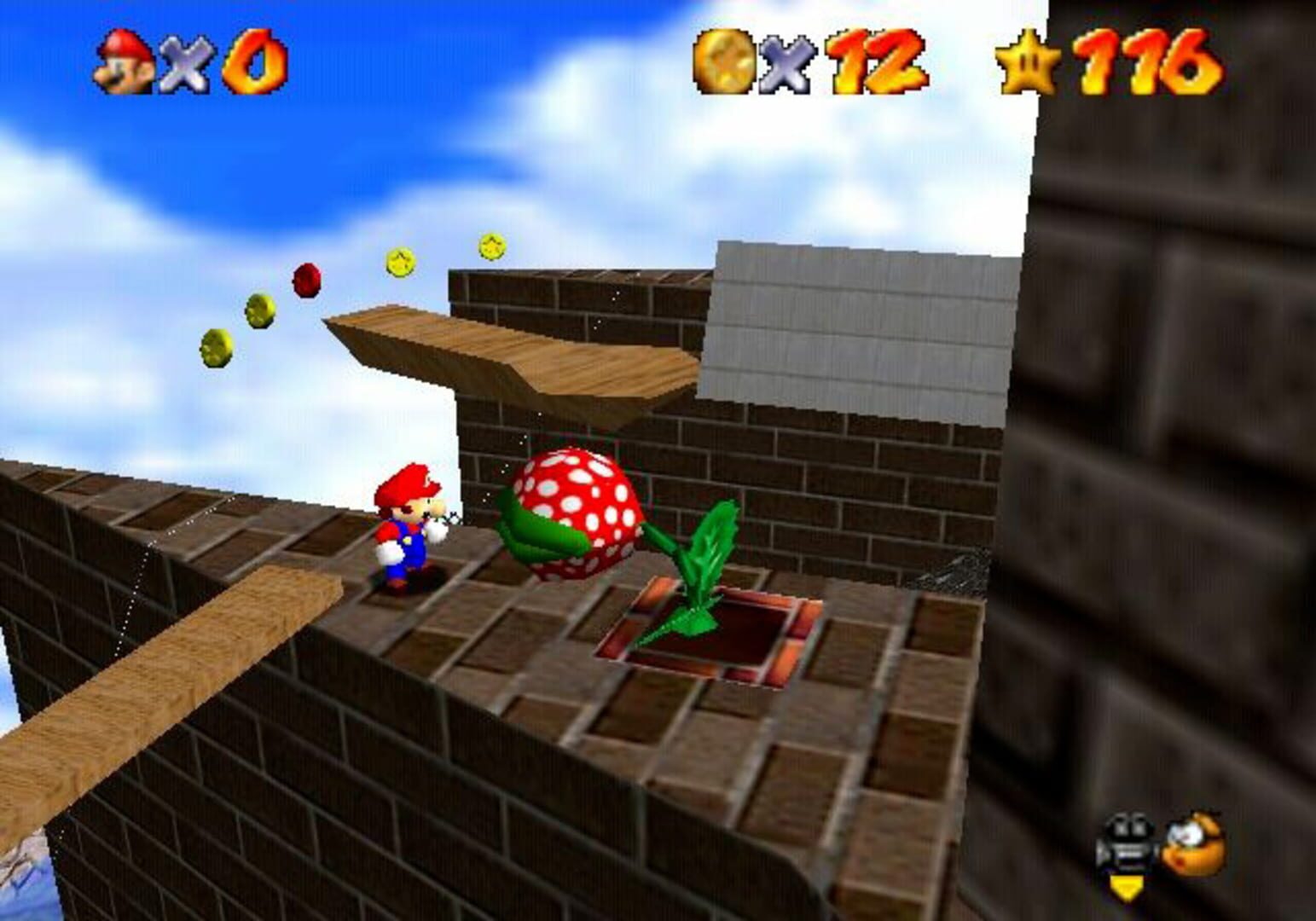
The heart of Super Mario 64 lies in its innovative control scheme. The N64 controller's analog stick enabled precise 360-degree movement in a 3D environment for the first time. Mario can run, tiptoe, crawl, swim, and execute a variety of jumps – all controlled fluidly and intuitively.
The camera system, controlled through the C-buttons, was revolutionary for its time, even if it feels somewhat cumbersome today. The intelligent camera system automatically follows Mario but can be manually adjusted at any time, which was groundbreaking for 1996.
World Design and Level Architecture
Princess Peach's castle serves as the central hub world, from which Mario can travel through paintings into 15 different main worlds. Each world is uniquely designed and offers six different stars plus a seventh star for collecting 100 coins.
From the idyllic Bob-omb Battlefield to the slippery Penguin Slide to the treacherous Rainbow Road – each world tells its own story and presents unique gameplay challenges. The level design is timeless and accommodates both linear and exploratory approaches.
Graphics and Technical Performance
For 1996, Super Mario 64 was a graphical marvel. The polygonal character models, especially Mario himself, were full of personality and charm. Mario's facial animations on the title screen playfully demonstrated the new hardware's capabilities.
The worlds are colorfully and diversely designed, with each possessing its own visual identity. While textures appear low-resolution by today's standards, the artistic design was so strong that the game remains visually appealing even now.
Audio and Soundtrack
Koji Kondo's soundtrack for Super Mario 64 is a masterpiece of orchestral video game music. The dynamic music adapts to each situation – from the majestic castle melody to the playful level themes to the menacing Bowser battles.
Particularly noteworthy are the sound effects: Mario's voice, spoken by Charles Martinet, gives the character more personality than ever before. Every jump, every impact, and every interaction was lovingly crafted with sound.
Collectibles and Long-term Motivation
With 120 stars to collect, Super Mario 64 offers enormous replay value. While 70 stars are sufficient to defeat Bowser, the additional challenges motivate perfectionists to hundreds of hours of gameplay.
The various caps (Wing Cap, Metal Cap, and Vanish Cap) add strategic elements and open up new gameplay possibilities. Each star feels like a meaningful achievement.
Impact on the Gaming Industry
Super Mario 64 laid the foundation for virtually all subsequent 3D platform games. The control principles, camera system, and hub world structure have been copied and refined by countless games. Without Super Mario 64, games like Banjo-Kazooie, Spyro, or modern 3D Mario titles would be unthinkable.
Conclusion
Super Mario 64 is more than just a video game – it's a cultural phenomenon and a technical milestone. Even over 25 years after its release, it continues to captivate through timeless gameplay, charming presentation, and innovative game mechanics. Despite minor weaknesses in camera control and occasional control inaccuracies, it remains a masterpiece that every gamer should experience at least once.
System Requirements
Minimum
Recommended
Das könnte dich auch interessieren
Weitere Reviews aus der Kategorie game.
GridBeat! – Rhythmische Hack & Slash‑Abenteuer im Mainframe
Inhaltsverzeichnis [Einleitung]( einleitung) [Gameplay & Mechaniken]( gameplay mechaniken) [Grafik & Sound]( grafik sound) [Story & Atmosphäre]( story…

Ranger’s Path: National Park Simulator – Ein tiefgehender Review
Inhaltsverzeichnis\n [Einleitung]( einleitung)\n [Gameplay & Mechaniken]( gameplay mechaniken)\n [Grafik & Sound]( grafik sound)\n [Benutzeroberfläche…

Forsaken Realms: Vahrin's Call Review: Ausführlicher Test
Inhaltsverzeichnis Einleitung Gameplay, Spielgefühl und Kernsysteme Welt, Struktur, Umfang und Wiederspielwert Technik, Präsentation, Kritik und Fazit…
Frequently Asked Questions
How good is Super Mario 64: The Revolutionary Leap into the Third Dimension?
Super Mario 64: The Revolutionary Leap into the Third Dimension wurde von Nerdiction mit 92 von 100 Punkten bewertet und ist damit outstanding.
What are the pros of Super Mario 64: The Revolutionary Leap into the Third Dimension?
The advantages of Super Mario 64: The Revolutionary Leap into the Third Dimension: Revolutionary 3D controls with analog stick, Timeless, creative level design with great variety, Excellent soundtrack by Koji Kondo, Enormous replay value with 120 stars, Pioneering gameplay for future 3D platform games.
What are the cons of Super Mario 64: The Revolutionary Leap into the Third Dimension?
The disadvantages of Super Mario 64: The Revolutionary Leap into the Third Dimension: Camera controls sometimes clunky and awkward, Some stars require frustrating precision, Graphics appear dated by today's standards, Some movements can be imprecise, Limited number of lives can interrupt progress.
Is Super Mario 64: The Revolutionary Leap into the Third Dimension worth it?
Yes. Super Mario 64: The Revolutionary Leap into the Third Dimension received a score of 92/100 points and is outstanding.
Diskussion
Ich finde die Bewertung von 92 ist absolut gerechtfertigt. Die 3D-Steuerung mit dem analogen Stick war damals ein echter Gamechanger und hat das Genre nachhaltig geprägt.
Besonders beeindruckt hat mich die Vielfalt der Level. Jeder Bereich fühlt sich einzigartig an, und die kreativen Herausforderungen halten das Spiel über Jahre hinweg spannend. Der Soundtrack von Koji Kondo trägt dabei zu einer unvergesslichen Atmosphäre bei.
Ich erinnere mich noch gut an die ersten Male, als ich die 120 Sterne sammeln musste. Die Präzision, die manche Sterne verlangen, kann frustrierend sein, aber gerade das macht den Wiederspielwert so hoch. Die Kamera kann manchmal stören, aber das ist ein kleiner Preis für die damalige Innovation.
Hat jemand die Kamera in den späteren Levels als besonders schwierig empfunden? Ich hatte immer das Gefühl, dass die Perspektive manchmal die Sprünge erschwert.
Als ich 1996 zum ersten Mal Mario 64 spielte, war ich völlig überwältigt. Die analoge Steuerung war neu, die Level waren voller Überraschungen und der Soundtrack hat mich bis heute begleitet. Ich habe das Spiel immer wieder neu entdeckt, weil jedes Level ein kleines Abenteuer ist.
Die Kritik an der begrenzten Anzahl an Leben ist nachvollziehbar, aber für mich war das ein Teil des Charmes. Es zwingt zum strategischen Denken und erhöht die Spannung.
Ich finde die Bewertung von 92 ein bisschen zu hoch, weil die Grafik heute schon veraltet wirkt.
Obwohl die 3D-Steuerung revolutionär war, hat die Kamera mich oft frustriert. Besonders in den höheren Levels, wo die Perspektive plötzlich wechselt, fällt es schwer, präzise Sprünge zu setzen. Das macht das Sammeln der letzten Sterne zu einer echten Herausforderung.
Ich war überrascht, wie gut die Level-Designs noch heute funktionieren. Die Vielfalt reicht von klassischen Plattform-Elementen bis hin zu Rätseln, die man erst nach mehreren Durchläufen versteht. Das macht das Spiel nicht nur nostalgisch, sondern auch aktuell.
Super Mario 64 bleibt ein Meilenstein. 92 Punkte sind fair.