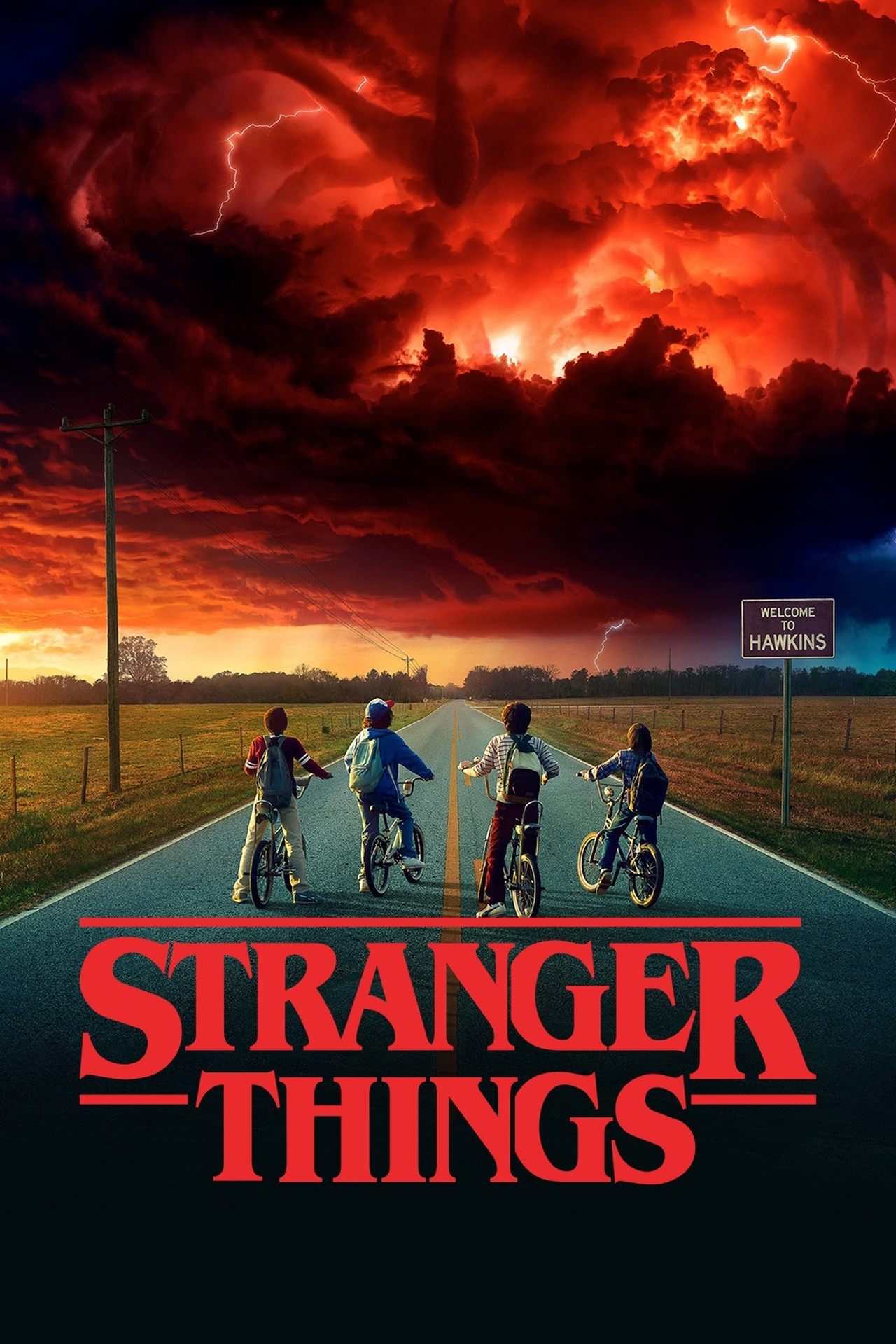
The Verdict
The Nerdiction verdict: Stranger Things: A Nostalgic Masterpiece of Science Fiction Horror is excellent and receives 87 out of 100 points.
Pro
- Masterful combination of nostalgia and modern storytelling techniques
- Exceptionally strong character development and authentic performances
- Atmospherically dense staging with perfect 80s aesthetic execution
Contra
- Later seasons occasionally suffer from pacing issues and narrative stretching
- Increasing complexity can sometimes feel overwhelming for casual viewers
- Some subplots feel less developed compared to the main storyline
Details
July 15, 2016
5
42
8.6
/ 10(20,049 votes)1433.5
Genres
Production Companies
Production Countries
Spoken Languages
Stranger Things: A Nostalgic Masterpiece of Science Fiction Horror
Table of Contents
- Introduction
- Plot and World Building
- Character Development
- Direction and Staging
- Visual Design and Cinematography
- Music and Sound Design
- Nostalgic References and 80s Aesthetic
- Series Structure and Pacing
- Social Commentary and Themes
- Conclusion
Introduction
Since its debut in July 2016, "Stranger Things" by the Duffer Brothers has evolved into a cultural phenomenon that has permanently shaped the streaming landscape. The series masterfully combines nostalgic 80s aesthetics with modern storytelling, captivating both younger and older audiences alike. With its unique blend of science fiction, horror, and coming-of-age drama, this Netflix production has set new standards for the genre.
Plot and World Building
The story begins with the mysterious disappearance of twelve-year-old Will Byers in the fictional small town of Hawkins, Indiana. What initially appears to be an ordinary missing person case quickly reveals itself as a gateway to a parallel dimension - the "Upside Down." The Duffer Brothers have created a fascinating mythology with this concept, linking secret government experiments with supernatural phenomena.
The world-building of "Stranger Things" is impressively coherent and multi-layered. Hawkins National Laboratory, the Upside Down, and various monsters form a connected universe that expands and deepens with each season. Particularly successful is how the series weaves real historical events and conspiracy theories from the 80s into its fictional narrative.
Character Development
One of the series' greatest strengths lies in its authentic and nuanced character development. The four main protagonists - Mike, Lucas, Dustin, and Will - authentically embody the dynamics of a friend group in the 80s. Their character development across seasons is organic and relatable.
Particularly noteworthy is Millie Bobby Brown's performance as Eleven. Her portrayal of a traumatized girl with telekinetic abilities is both powerful and vulnerable. The relationship between Eleven and Mike forms the emotional heart of the series and is developed with remarkable sensitivity.
The adult characters, especially Joyce Byers (Winona Ryder) and Jim Hopper (David Harbour), are also multi-dimensionally crafted. Ryder's intense portrayal of a desperate mother and Harbour's complex embodiment of the cynical yet ultimately caring police chief give the series emotional depth.
Direction and Staging
The Duffer Brothers demonstrate an extraordinary sense of atmosphere and tension. Their direction is characterized by a perfect balance between horror elements and emotional moments. They understand how to stage both intense action sequences and intimate character moments with equal conviction.
Particularly remarkable is their ability to work with young actors and elicit authentic, unaffected performances from them. The dialogue feels natural and age-appropriate without being childish or exaggerated.
Visual Design and Cinematography
Visually, "Stranger Things" is a true feast for the senses. The cinematography skillfully uses light and shadow to create moods and visualize the threat of the Upside Down. The characteristic color palette with warm orange tones for the real world and cold blue tones for the Upside Down creates a clear visual separation between dimensions.
The special effects are consistently convincing without appearing overloaded. The design of the Demogorgon and other creatures is both original and frightening. Particularly successful is the portrayal of Eleven's telekinetic abilities, which appear both spectacular and believable.
Music and Sound Design
Kyle Dixon and Michael Stein's soundtrack is an integral part of the "Stranger Things" experience. Their synthwave-inspired compositions perfectly capture the 80s atmosphere while simultaneously enhancing the emotional and suspenseful moments of the series.
The sound design contributes significantly to the eerie atmosphere. The sounds of the Upside Down, the characteristic crackling of lights, and the acoustic signals of monsters have become sonic trademarks immediately associated with the series.
Nostalgic References and 80s Aesthetic
"Stranger Things" is a love letter to 80s pop culture. The numerous references to films like "E.T.," "The Goonies," "Poltergeist," and works by Stephen King and John Carpenter are skillfully woven into the plot without being intrusive.
The production design, from clothing to furnishings to technology, is authentic down to the smallest detail. Walkmans, Dungeons & Dragons, arcade games, and VHS tapes are not mere decoration but integral components of the narrative.
Series Structure and Pacing
With currently four completed seasons and an announced fifth final season, "Stranger Things" shows a well-thought-out series structure. Each season functions as a self-contained story while simultaneously developing the overarching mythology.
The series' pacing is mostly excellent, although later seasons occasionally suffer from some stretching. The eight-episode structure of most seasons allows for balanced development of plot and characters.
Social Commentary and Themes
Behind the nostalgic facade lies a quite socially critical series. Themes like government conspiracies, Cold War tensions, social outsiders, and coming of age are treated with depth. The series uses its science fiction elements to reflect relevant social questions.
Particularly successful is the portrayal of friendship and family as ultimate strengths against darkness. The series conveys a hopeful message about the power of community and solidarity.
Conclusion
"Stranger Things" is more than just another retro series. It's a lovingly crafted work of art that combines nostalgic reverence with modern storytelling. While not all seasons reach the quality of the first two, the series remains an extraordinary television experience that will endure both as entertainment and as a cultural phenomenon.
The Duffer Brothers have proven with "Stranger Things" that original science fiction on television is not only possible but can also be commercially successful. The series has permanently shaped the genre and will undoubtedly enter television history as one of the milestones of the streaming era.
Das könnte dich auch interessieren
Weitere Reviews aus der Kategorie series.
TOUGEN ANKI: Moderne Oni-Jagd trifft auf episches Storytelling
TOUGEN ANKI Review Inhaltsverzeichnis 1. [Einleitung]( einleitung) 2. [Handlung und Weltaufbau]( handlung und weltaufbau) 3. [Charakterentwicklung]( c…
Pluribus Review: Eine brillante Dekonstruktion des Glücksbegriffs
Pluribus Review: Eine brillante Dekonstruktion des Glücksbegriffs Inhaltsverzeichnis 1. [Einleitung]( einleitung) 2. [Handlung und Konzept]( handlung …
Robin Hood (2025) - Eine moderne Neuinterpretation der Sherwood-Legende
Robin Hood (2025) Serienreview Inhaltsverzeichnis 1. [Einleitung]( einleitung) 2. [Handlung und Setting]( handlung und setting) 3. [Charakterentwicklu…
Frequently Asked Questions
How good is Stranger Things: A Nostalgic Masterpiece of Science Fiction Horror?
Stranger Things: A Nostalgic Masterpiece of Science Fiction Horror wurde von Nerdiction mit 87 von 100 Punkten bewertet und ist damit excellent.
What are the pros of Stranger Things: A Nostalgic Masterpiece of Science Fiction Horror?
The advantages of Stranger Things: A Nostalgic Masterpiece of Science Fiction Horror: Masterful combination of nostalgia and modern storytelling techniques, Exceptionally strong character development and authentic performances, Atmospherically dense staging with perfect 80s aesthetic execution, Coherent and fascinating world-building around the Upside Down concept, Outstanding soundtrack and atmospheric sound design throughout.
What are the cons of Stranger Things: A Nostalgic Masterpiece of Science Fiction Horror?
The disadvantages of Stranger Things: A Nostalgic Masterpiece of Science Fiction Horror: Later seasons occasionally suffer from pacing issues and narrative stretching, Increasing complexity can sometimes feel overwhelming for casual viewers, Some subplots feel less developed compared to the main storyline, Occasional character clichés in supporting character development, High expectations after early seasons become increasingly difficult to meet.
Is Stranger Things: A Nostalgic Masterpiece of Science Fiction Horror worth it?
Yes. Stranger Things: A Nostalgic Masterpiece of Science Fiction Horror received a score of 87/100 points and is excellent.