The Verdict
The Nerdiction verdict: Sakamoto Days: When Hitman Meets Family Man – A Masterpiece of Action and Heart is excellent and receives 84 out of 100 points.
Pro
- Perfect balance between action and comedy without quality loss
- Outstanding animation from TMS Entertainment with creative fight choreography
- Strong character development and emotional depth despite absurd premise
Contra
- Some supporting characters could use more development time
- Occasionally predictable plot twists in later episodes
- Sakamoto's silent communication might initially confuse some viewers
Videos & Trailers
Loading video…
Loading video…
Details
January 11, 2025
1
22
8.1
/ 10(282 votes)30.3
Genres
Production Companies
Production Countries
Spoken Languages
Table of Contents
- Introduction
- Plot and Premise
- Character Development
- Animation and Visual Design
- Action Choreography
- Humor and Timing
- Series Structure and Pacing
- Soundtrack and Audio Design
- Thematic Depth
- Conclusion
Introduction
"Sakamoto Days" enters the 2025 anime landscape with a premise that appears simple on the surface but reveals itself as a multilayered masterpiece. TMS Entertainment, renowned for their outstanding work on "Lupin III" and "Dr. Stone," delivers a series that effortlessly balances explosive action with heartwarming family comedy.
The adaptation of Yuto Suzuki's manga of the same name promises a unique blend of John Wick-esque brutality and slice-of-life charm – a promise the series fulfills with remarkable finesse.
Plot and Premise
The story of Taro Sakamoto, the former "God of Killers" who now leads a quiet family life as an overweight convenience store owner, is brilliant in its simplicity. When his past catches up with him and both old enemies and organized crime threaten his newfound idyll, Sakamoto must dust off his legendary skills.
What makes the series special is its ability to underpin this seemingly absurd premise with surprising emotional depth. Each episode skillfully balances between extremes: brutal fight scenes seamlessly alternate with heartwarming family moments without either level losing credibility.
Character Development
Sakamoto himself is a fascinating protagonist – a man who consciously left his deadly past behind but simultaneously shows that true strength doesn't lie solely in physical dominance. His silent communication (a clever narrative device) paradoxically amplifies his expressiveness.
The supporting characters, especially his family and partner Shin, are more than mere stereotypes. Each character receives sufficient room for development, with the dynamic between former killers and their attempt to lead normal lives being particularly captivating.
Animation and Visual Design
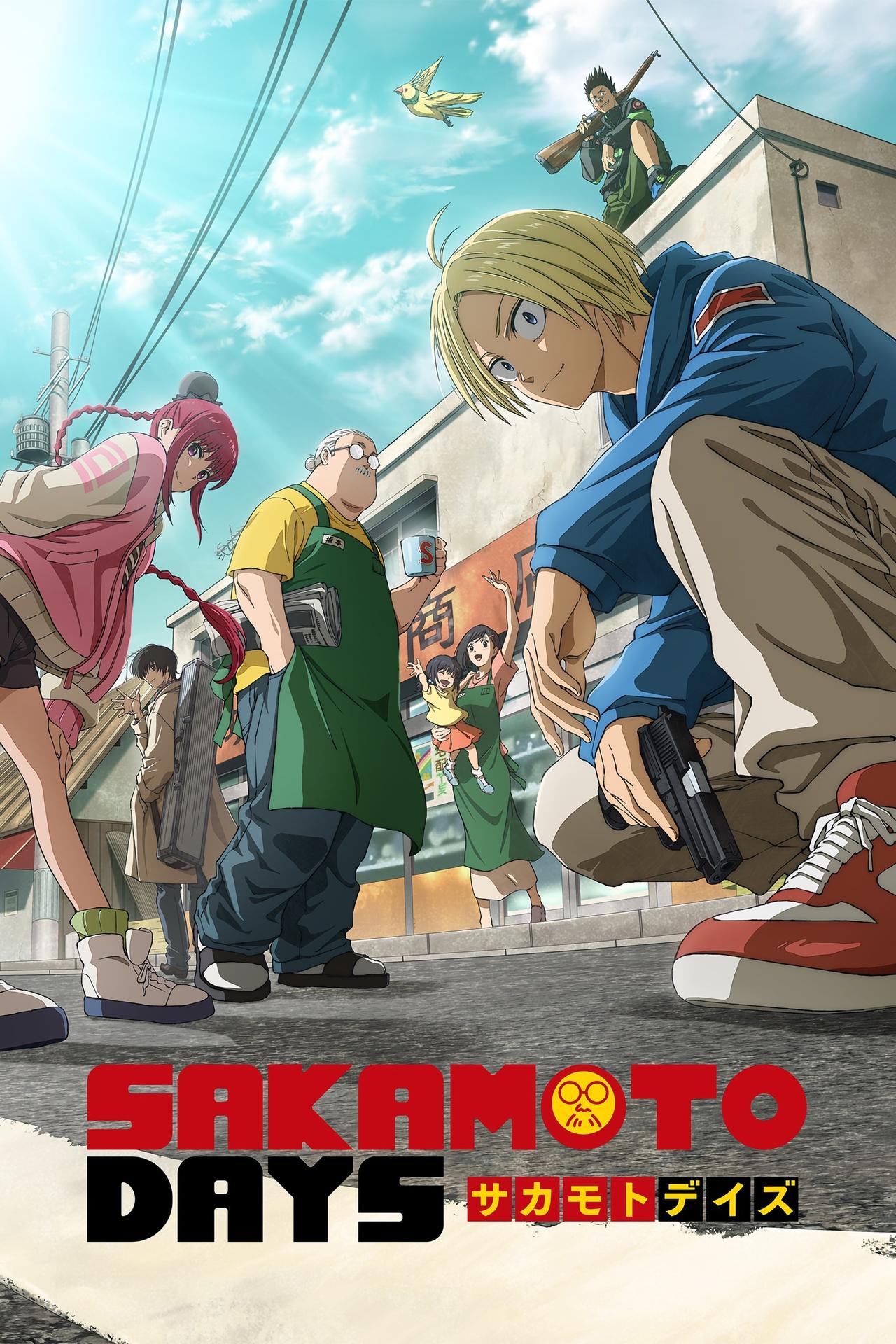
TMS Entertainment demonstrates their full prowess here. The character designs remain faithful to the manga while simultaneously creating a distinct visual identity. Particularly impressive is the contrast between Sakamoto's everyday, comfortable appearance and the explosive dynamics of his fight scenes.
The color palette skillfully shifts between warm, inviting tones for family scenes and cooler, sharper nuances during action sequences. This visual language perfectly supports the series' emotional roller coaster.
Action Choreography
This is where "Sakamoto Days" shows its true strength. The fight scenes are not only spectacularly staged but also narratively significant. Every movement tells a story – whether it's Sakamoto's effortless elegance despite his physical changes or his opponents' desperate struggles.
The creativity in portraying everyday objects as deadly weapons is remarkable and gives the series a distinctive style that sets it apart from other action anime.
Humor and Timing
The humor in "Sakamoto Days" is never forced or disruptive. Instead, it emerges organically from situations and character interactions. The comedy often lies in the contrast between expectation and reality – a fearsome killer now concerned with preparing the perfect bento for his family.
Timing is crucial here: the series knows exactly when to get serious and when to lighten the tension through humor.
Series Structure and Pacing
With 22 episodes, "Sakamoto Days" has sufficient space to develop both episodic adventures and an overarching narrative. The pacing is nearly perfect – never too hectic but never boring. Each episode feels complete while remaining part of a larger whole.
Soundtrack and Audio Design
The soundtrack brilliantly supports the series' duality. Calm, family-friendly melodies contrast with pulsating action themes, with transitions so smooth they perfectly accompany the viewer's emotional journey.
The sound design, especially in fight scenes, is precise and impactful without being excessive.
Thematic Depth
Beneath the action-comedy surface, "Sakamoto Days" addresses deeper themes: redemption, the power of love, fatherhood, and the possibility of personal transformation. These themes are never clumsily presented but elegantly woven into the narrative.
Conclusion
"Sakamoto Days" is a rare gem in the anime cosmos – a series that manages to master multiple genres without losing its identity. TMS Entertainment has created not just a great manga adaptation but a standalone work of art that will captivate both action fans and lovers of character-driven storytelling.
The first season lays a solid foundation for what will hopefully become a long and successful series. "Sakamoto Days" proves that anime can still surprise and move audiences in 2025.
Das könnte dich auch interessieren
Weitere Reviews aus der Kategorie series.
Chainsmoker Cat Review – Eine tiefgehende Analyse der skurrilen Anime-Serie
Inhaltsverzeichnis [Einleitung]( einleitung) [Handlung & Setting]( handlung und setting) [Charaktere & Schauspiel]( charaktere und schauspiel) [Staffe…
Die Kunst der Disziplin: Eine Analyse von 'Teach You a Lesson'
Teach You a Lesson (참교육) – Review Inhaltsverzeichnis 1. [Einleitung & Serien Einordnung]( einleitung) 2. [Die Prämisse: Gerechtigkeit jenseits des Leh…
Among Us
Exzentrische, einfarbige Besatzungsmitglieder eines Mülltransport Raumschiffes müssen einen Verräter enttarnen, bevor sie selbst Opfer seines mörderis…
Frequently Asked Questions
How good is Sakamoto Days: When Hitman Meets Family Man – A Masterpiece of Action and Heart?
Sakamoto Days: When Hitman Meets Family Man – A Masterpiece of Action and Heart wurde von Nerdiction mit 84 von 100 Punkten bewertet und ist damit excellent.
What are the pros of Sakamoto Days: When Hitman Meets Family Man – A Masterpiece of Action and Heart?
The advantages of Sakamoto Days: When Hitman Meets Family Man – A Masterpiece of Action and Heart: Perfect balance between action and comedy without quality loss, Outstanding animation from TMS Entertainment with creative fight choreography, Strong character development and emotional depth despite absurd premise, Intelligent humor that emerges organically from situations, Excellent pacing across 22 episodes with consistently high quality.
What are the cons of Sakamoto Days: When Hitman Meets Family Man – A Masterpiece of Action and Heart?
The disadvantages of Sakamoto Days: When Hitman Meets Family Man – A Masterpiece of Action and Heart: Some supporting characters could use more development time, Occasionally predictable plot twists in later episodes, Sakamoto's silent communication might initially confuse some viewers, Violence depiction could be too intense for younger audiences despite humor, Sometimes uneven distribution between action and daily life scenes.
Is Sakamoto Days: When Hitman Meets Family Man – A Masterpiece of Action and Heart worth it?
Yes. Sakamoto Days: When Hitman Meets Family Man – A Masterpiece of Action and Heart received a score of 84/100 points and is excellent.
Diskussion
84 Punkte? Ich bin total begeistert! Die Balance zwischen Action und Komödie ist wirklich gelungen. Die Animation von TMS Entertainment sieht fantastisch aus. Ich kann die Serie nur empfehlen.
Was mir besonders aufgefallen ist, ist die kreative Kampf-Choreographie. Jede Szene wirkt dynamisch, ohne dabei die emotionale Tiefe zu verlieren. Der Humor kommt organisch aus den Situationen heraus, was die Serie noch unterhaltsamer macht. Ich finde die Charakterentwicklung solide, obwohl einige Nebencharaktere mehr Zeit brauchen würden. Insgesamt ein Meisterwerk, das sowohl Actionfans als auch Familien anspricht. Die Animation bleibt konstant hochwertig, und das Pacing über die 22 Episoden ist bemerkenswert gleichmäßig. Manchmal sind die Plot-Wendungen vorhersehbar, aber das beeinträchtigt die Gesamtwirkung kaum. Ich würde die Serie jedem empfehlen, der nach einer Mischung aus Herz und Action sucht.
Wie empfindest du die stumme Kommunikation von Sakamoto? Ich fand sie anfangs etwas verwirrend, aber später hat sie einen eigenen Charme entwickelt. Gibt es ähnliche Beispiele in anderen Serien, die du empfehlen könntest?
Ich habe die Serie mit meiner Familie geschaut, und obwohl die Gewalt manchmal intensiv wirkt, hat der Humor die Stimmung gemildert. Die emotionale Tiefe hat uns besonders berührt, und die Action-Szenen waren spektakulär. Für jüngere Zuschauer würde ich jedoch die ersten beiden Episoden vorab anschauen, um sicherzugehen, dass sie nicht zu schockierend sind.