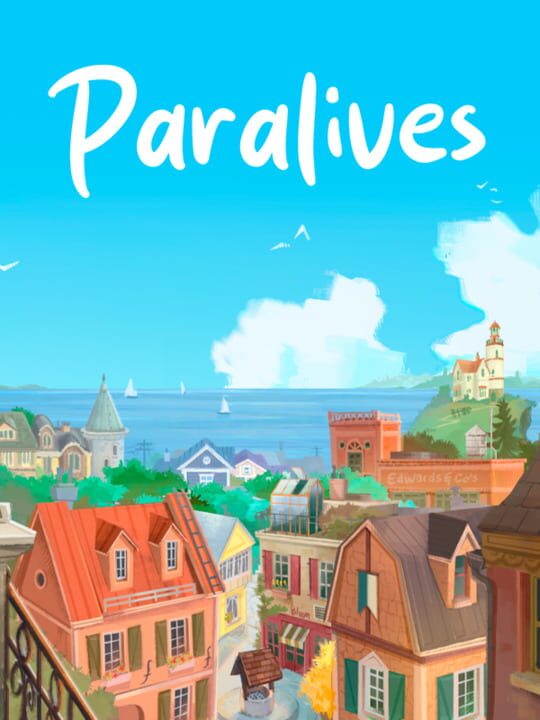
The Verdict
The Nerdiction verdict: Paralives: The Evolution of Life Simulation – A Milestone for Creativity? is outstanding and receives 92 out of 100 points.
Pro
- Revolutionary grid-free build system with maximum flexibility
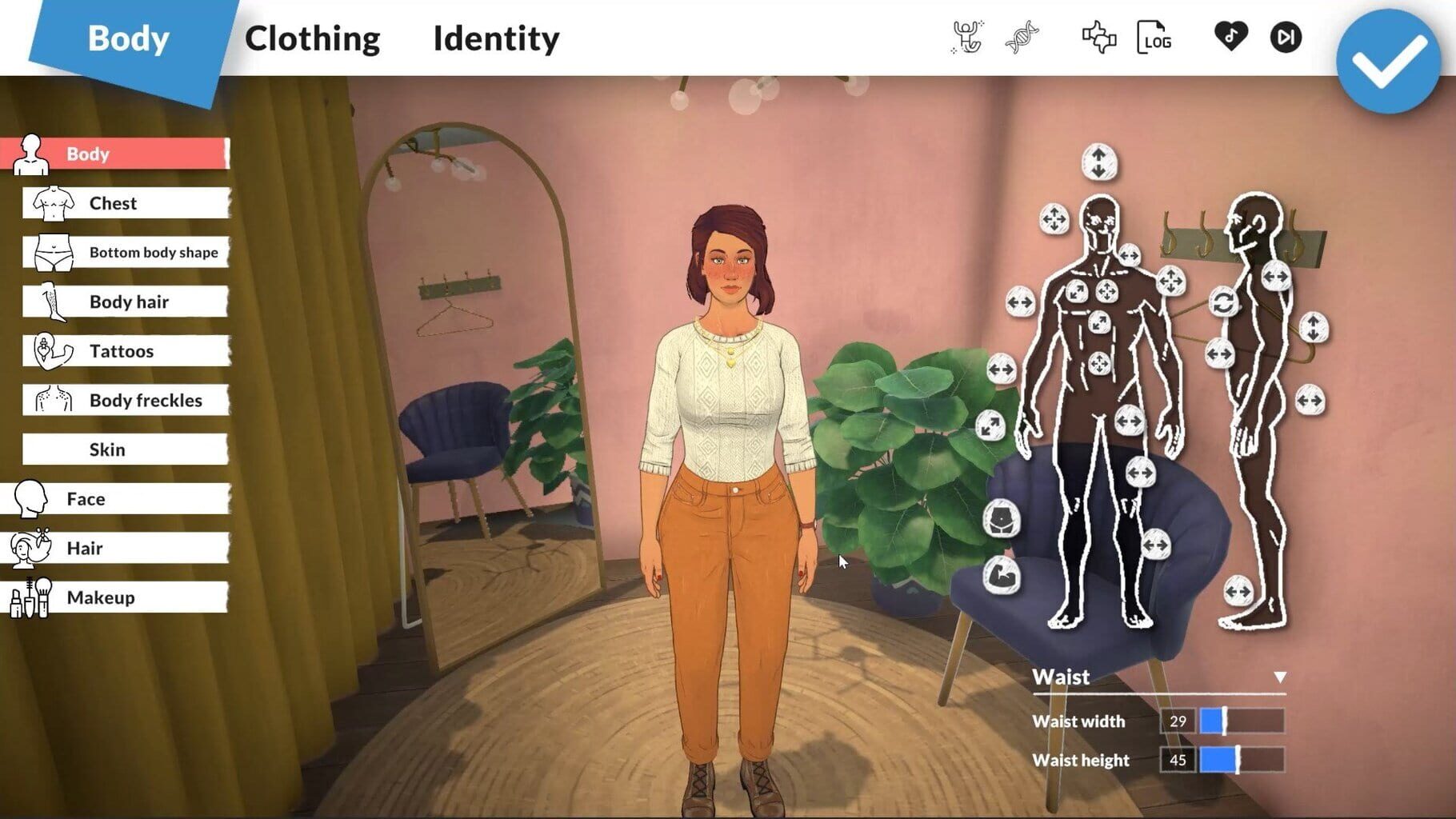
- Deep character customization via dynamic color pickers and scaling
- Authentic, organic social interactions without rigid menus
Contra
- Potential for overwhelm due to the immense number of options
- Occasionally erratic AI decisions by the characters
- Lack of strict objectives for players who require structure
Videos & Trailers
Loading video…
Loading video…
Loading video…
Paralives: The Evolution of Life Simulation
Table of Contents
- Introduction
- Genre and Market Context
- Core Gameplay: Living and Shaping
- The Art of Building: A Revolutionary Approach
- Interactions and Social Dynamics
- Progression and Life Cycle
- Tech, Performance, and Art Style
- Sound Design and Atmosphere
- Scope and Replayability
- Accessibility and Quality of Life
- Target Audience and Criticism
- Comparison and Verdict
<a name="introduction"></a>
Introduction
"You live, and then you die. But at least do it in a nice house!" This provocative, almost stoic motto perfectly captures the essence of Paralives. In a world where life simulations have been dominated by a single giant for years, Alex Massé enters with a vision that demands nothing less than the liberation of creative control. Paralives is not just a game; it is a digital experiment on how we project our idealized lives and spaces. As experts from Nerdiction, we have analyzed this project intensely to determine if the promises of indie development can meet the community's high expectations.
<a name="genre"></a>
Genre and Market Context
Paralives sits at the heart of the life simulation genre. For years, this genre was characterized by rigid grids, limited color palettes, and predefined object sizes. The market is starving for an alternative that focuses less on microtransactions and more on organic growth and artistic freedom. Here, Paralives positions itself as the "People's Sim." It is an indie title that dares to push the boundaries of customization. In a market increasingly leaning toward casual gaming, Paralives emphasizes depth, attention to detail, and an almost manic passion for architecture and character design.
<a name="gameplay"></a>
Core Gameplay: Living and Shaping
The gameplay of Paralives can be divided into two main pillars: the simulation of life and the design of the environment. At the center are the so-called "ParaLives" – characters with their own needs, personalities, and ambitions. The player acts as a sort of invisible hand, capable of steering but also observing.
The special part is the decoupling from rigid presets. While other simulations channel the player into specific paths, Paralives allows for an experimental approach. Whether you climb the corporate ladder, stage a romantic tragedy, or simply create the perfect minimalist loft in a bustling city – freedom is the priority. Time management is intuitive, with the focus being less on the stressful "checking off" of needs and more on the development of relationships and the personal growth of the character.
<a name="build"></a>
The Art of Building: A Revolutionary Approach
If there is one area where Paralives makes the competition look obsolete, it is the build mode. The end of the "grid tyranny" is the core promise here. Walls can be moved to the centimeter, windows and doors are freely placeable and scalable. This changes the entire approach to level design within the game. You are no longer building from prefabricated blocks; you are designing architecture.
The integration of color wheels for nearly every object in the game is a game-changer. The ability to dynamically adjust textures and materials allows players to translate real-world design trends into the game. From Scandinavian minimalism to opulent Baroque, everything is possible. The feeling of creating truly original designs, rather than just placing catalog furniture, gives the player a deep emotional bond with the home they have crafted.
<a name="interactions"></a>
Interactions and Social Dynamics
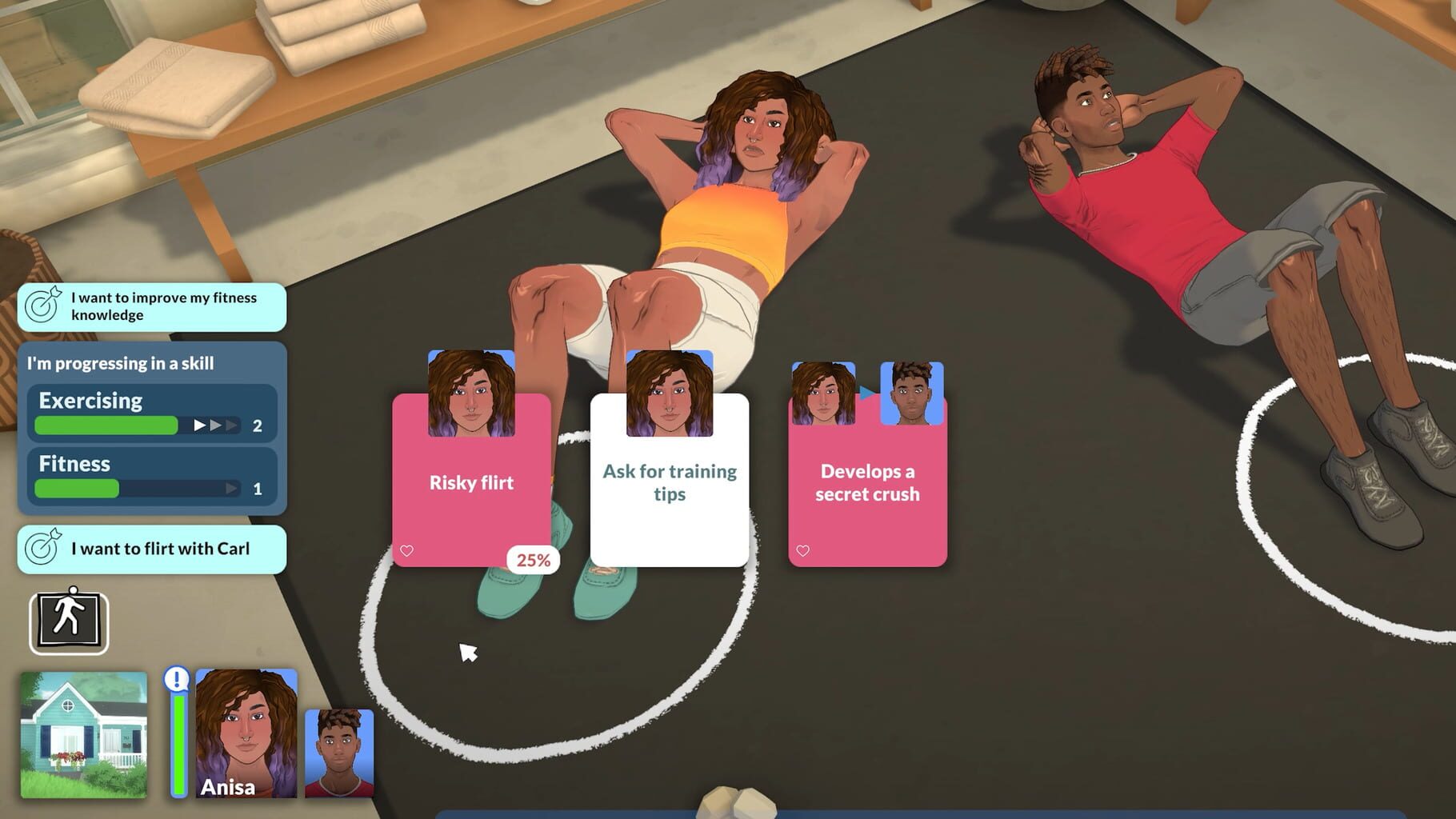
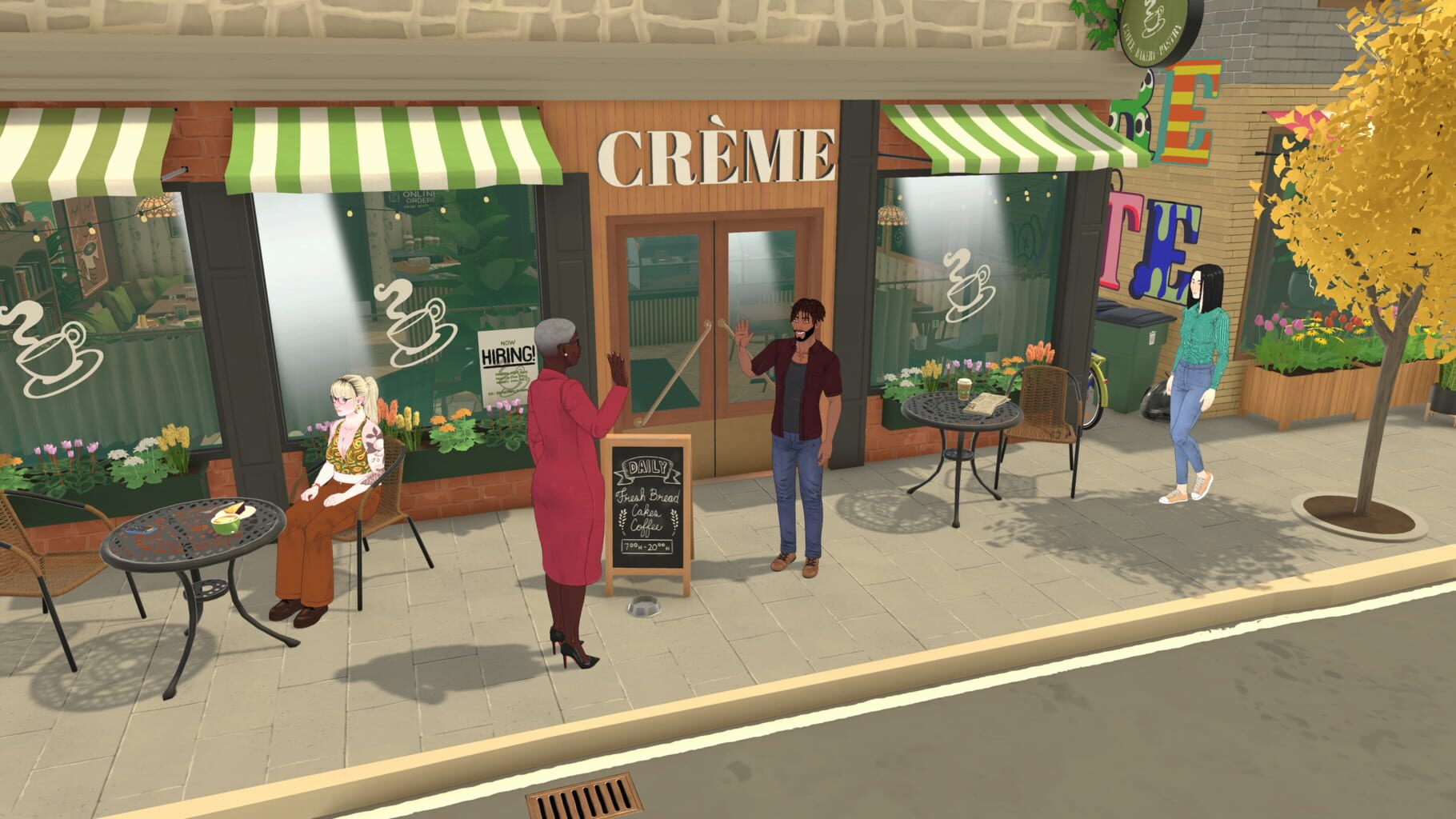
The interaction system breaks away from classic "conversation-based" menus. Interactions feel more natural, supported by an isometric perspective that maintains an overview of the social dynamics in the room. Characters react organically to their environment and the presence of others. A key aspect here is the development of personalities. A shy ParaLive will behave differently at a party than an extroverted one. These nuances make the simulation feel alive and prevent characters from seeming like mere puppets. Social progression is not linear; friendships can crumble, passions can ignite, and everything is based on a complex matrix of traits and preferences.

<a name="progression"></a>
Progression and Life Cycle
Progression in Paralives does not necessarily mean climbing a skill tree, but rather the evolution of a life. The journey from young adulthood to old age is a central theme. Death, as the slogan suggests, is not an abrupt end but part of the cycle. The legacy a character leaves behind – be it a magnificent house or a large family – forms the foundation for future generations.
Career paths are diverse and allow players to define the balance between work and private life. There is no "right" way to play the game. Progression is thus a narrative journey that the player writes together with their characters. The challenge lies in satisfying the emotional needs of the Paras while simultaneously realizing architectural dreams.
<a name="tech"></a>
Tech, Performance, and Art Style
Technically, Paralives is an impressive example of indie ambition. The art style is a wonderful hybrid of stylized aesthetics and functional detail. Colors are warm, animations are fluid, and the isometric view ensures excellent clarity. In terms of performance, the game shows remarkable stability, especially considering how many dynamic objects must be calculated simultaneously when a user fully exploits the freedom of the build mode.
There are no artificial restrictions, which means that hardware is pushed when dealing with extremely complex structures. Nevertheless, the gameplay experience remains consistent. The user interface is modern, clean, and intuitively operable despite the enormous variety of functions. It is evident that UX design was handled with care to avoid overwhelming the player with options.
<a name="sound"></a>
Sound Design and Atmosphere
The acoustic accompaniment of Paralives supports the relaxed, almost meditative atmosphere of the game. The background music is unobtrusive and adapts to the mood – whether it is the quiet of a rainy afternoon in the house or the hustle and bustle of a city view. The sound effects during building – the clicking of elements, the gentle sliding of walls – provide haptic feedback that enhances the satisfaction of creating. It is not an orchestral epic, but that is exactly right. The sound recedes into the background, leaving room for the player's own imagination.
<a name="scope"></a>
Scope and Replayability
The scope of Paralives is theoretically infinite due to its sandbox nature. Since the player's creativity is the only limit, there is no classic "endgame" content. Replayability stems from the desire to try out new scenarios again and again. One time a wealthy family in a villa, the next time an artistic collective in a renovated warehouse. The sheer amount of customization ensures that no two playthroughs are the same. Community integration will be a key factor here, as sharing builds and characters will expand the content pool exponentially.
<a name="accessibility"></a>
Accessibility and Quality of Life
Special praise is due to the implementation of quality-of-life features. The controls are flexible, and there are numerous options to adapt the interface to individual needs. The fact that the game is optimized for both PC and Mac opens it to a broad user base. The operation in build mode is designed to be extremely efficient through smart shortcuts, meaning even complex operations are completed with a few clicks. Accessibility is treated not as a chore, but as an integral part of the design process.
<a name="target"></a>
Target Audience and Criticism
Paralives is primarily aimed at simulation lovers, architecture enthusiasts, and people seeking a creative escape from daily life. It is the perfect game for "Digital Architects."
There are, however, points of criticism: the immense freedom can be overwhelming at first. Players who prefer clear goals or a strict quest structure might feel lost in the openness. Additionally, the simulation of social interactions, however deep, is always a balancing act between predictability and chaos. Occasionally, the AI decisions of the Paras seem a bit erratic, though in this genre, that almost becomes a charm factor.
<a name="verdict"></a>
Comparison and Verdict
Compared to other titles in the genre, Paralives feels like a liberation. Where others rely on monetization and rigid systems, this indie gem offers pure passion and technical innovation in building. It is not just a competitor to existing simulations, but redefines the genre by shifting the focus from "managing" to "creating."
Verdict: Paralives is a triumphant love letter to creativity. It proves that a small team with a clear vision can change the rules of an established genre. Despite minor weaknesses in AI logic, the experience of building one's absolute dream world without compromise is unprecedented. Anyone looking for a game where they don't just simulate a life, but create a vision, cannot overlook Paralives.
Recommendation: An absolute must for every sim fan and architecture lover. It's time to leave the grid!
System Requirements
Minimum
Recommended
Das könnte dich auch interessieren
Weitere Reviews aus der Kategorie game.

Megastore Simulator: Das ultimative Einzelhandels-Management-Erlebnis
Inhaltsverzeichnis 1. [Einleitung]( einleitung) 2. [Gameplay Mechaniken]( gameplay mechaniken) 3. [Visuelle Gestaltung und Atmosphäre]( visuelle gesta…

Project F.A.L.S.E. Review: Ausführlicher Test
Inhaltsverzeichnis Einleitung Gameplay, Spielgefühl und Kernsysteme Welt, Struktur, Umfang und Wiederspielwert Technik, Präsentation, Kritik und Fazit…

Cleaning Simulator Test: Putzen als therapeutisches Gaming-Erlebnis
Cleaning Simulator Review Inhaltsverzeichnis 1. [Einleitung]( einleitung) 2. [Gameplay und Mechaniken]( gameplay und mechaniken) 3. [Grafik und Präsen…
Frequently Asked Questions
How good is Paralives: The Evolution of Life Simulation – A Milestone for Creativity??
Paralives: The Evolution of Life Simulation – A Milestone for Creativity? wurde von Nerdiction mit 92 von 100 Punkten bewertet und ist damit outstanding.
What are the pros of Paralives: The Evolution of Life Simulation – A Milestone for Creativity??
The advantages of Paralives: The Evolution of Life Simulation – A Milestone for Creativity?: Revolutionary grid-free build system with maximum flexibility, Deep character customization via dynamic color pickers and scaling, Authentic, organic social interactions without rigid menus, Excellent, stylized art style with high visual consistency, Consistent focus on player freedom instead of monetization.
What are the cons of Paralives: The Evolution of Life Simulation – A Milestone for Creativity??
The disadvantages of Paralives: The Evolution of Life Simulation – A Milestone for Creativity?: Potential for overwhelm due to the immense number of options, Occasionally erratic AI decisions by the characters, Lack of strict objectives for players who require structure, High hardware demands for extremely complex architectural builds.
Is Paralives: The Evolution of Life Simulation – A Milestone for Creativity? worth it?
Yes. Paralives: The Evolution of Life Simulation – A Milestone for Creativity? received a score of 92/100 points and is outstanding.
Diskussion
Endlich mal ein Spiel, das nicht auf Raster setzt! Das Bausystem klingt absolut revolutionär und ist genau das, was dem Genre gefehlt hat. 92 Punkte sind absolut verdient.
Klingt super, aber die hohen Hardware-Anforderungen machen mir etwas Sorgen. Ich hoffe, dass mein PC auch bei komplexen Häusern nicht in die Knie geht.
Ich stimme dem Review zu: Die Freiheit ist toll, aber ich glaube, ich werde mich anfangs echt überfordert fühlen. Gibt es im Spiel vielleicht Tutorials für die vielen Optionen?
Ein Meilenstein für Kreativität trifft es perfekt. Besonders die dynamischen Farbwähler bei der Charakteranpassung sind ein riesiger Sprung nach vorne!
Die organischen Interaktionen klingen spannend, aber sprunghafte KI-Entscheidungen können in Lebenssimulationen echt nerven. Hoffentlich wird das mit Patches gefixt.
Danke für die ehrliche Review. Dass auf Monetarisierung verzichtet wird, ist heutzutage leider die Ausnahme und macht das Spiel für mich direkt viel attraktiver.
92 Punkte sind fast schon zu hoch. Für Leute wie mich, die klare Ziele und Struktur brauchen, klingt das Spiel fast zu offen. Wo bleibt der Drive?
Der stilisierte Artstyle sieht auf den ersten Screenshots schon klasse aus. Schön, dass hier auf visuelle Konsistenz geachtet wurde statt auf plumpen Realismus.
Rasterfrei bauen? Endlich! Ich kann es kaum erwarten, meine eigenen Entwürfe ohne diese starren Kästchen umzusetzen. Das wird ein Gamechanger.
Interessante Analyse. Ich bin gespannt, ob die Tiefe der Charakteranpassung wirklich so einen Unterschied im Gameplay macht oder ob es nur optisches Beiwerk ist.