The Verdict
The Nerdiction verdict: Not Suitable for Work – A Professional Series Review is good and receives 78 out of 100 points.
Pro
- Authentic portrayal of modern workplace life
- Well‑crafted main characters that balance archetype with individual nuance
- Effective blend of humor and thoughtful commentary
Contra
- Some storylines follow predictable formulas
- Supporting characters receive limited development
- Tone remains mostly dry humor, limiting emotional depth
Details
15.4
Genres
Table of Contents
- Series Context
- Spoiler‑Free Premise
- Characters
- Narrative Structure
- Production & Direction
- Pacing
- Seasons/Episodes
- Themes
- Target Audience
- Weaknesses
- Verdict
Series Context
"Not Suitable for Work" premiered on June 2, 2026 on HBO Max and was produced by Warner Bros. Television in partnership with 3 Arts Entertainment, Kaling International, and Charlie Grandy Productions. The show sits firmly within the workplace‑comedy genre, yet it consciously engages with contemporary satires such as "The Office" and "Silicon Valley" while carving out its own tone—one that foregrounds the psychological toll exacted on young professionals navigating Manhattan’s high‑octane industries. With a TMDB rating of 6.3/10 from 51 votes, reception has been mixed: many applaud the razor‑sharp dialogue and timing, whereas others find the plot beats occasionally predictable. The sole season to date consists of nine episodes, each roughly 28 minutes long—a format that allows rapid‑fire jokes alongside longer, character‑driven beats without the narrative feeling drawn out.
Spoiler‑Free Premise
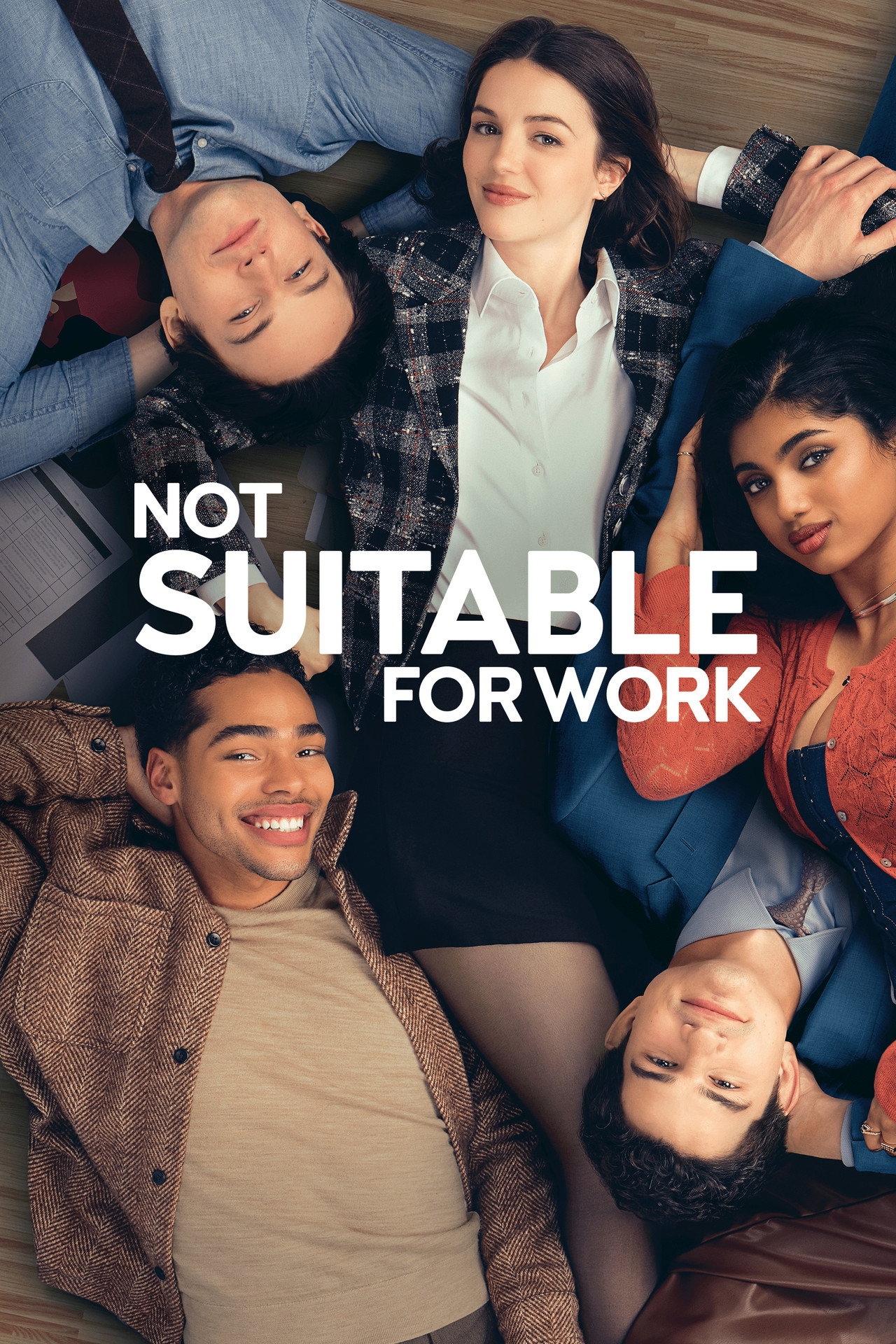
The series follows five friends in their mid‑twenties, each employed in a different corner of Manhattan’s professional landscape—investment banking, tech start‑ups, fashion PR, media, and personal‑development coaching. United by an all‑consuming drive to climb the career ladder, they repeatedly sideline their personal lives in pursuit of promotions, accolades, and validation. Each episode spotlights a different facet of this tension: the expectation of perpetual availability, the fear of job loss in a volatile market, the temptation to cross ethical boundaries for a quick win, and the ensuing emotional fallout. Throughout, the series maintains a light‑hearted yet thoughtful comic voice, rarely slipping into outright satire and instead offering a slightly exaggerated mirror of everyday corporate life.
Characters
The protagonists are deliberately sketched as archetypes, yet each receives enough shading to rise above mere caricature:
-
Maya Patel (portrayed by Zara Khan) is an ambitious analyst at a premier investment bank. Her perfectionism fuels her ascent, yet her internal struggle stems from repeatedly seeing her South‑Asian heritage reduced to an “exotic” footnote.
-
Jordan Lee (played by Malik Santiago) works as a software engineer at an emerging AI startup. His dry wit masks a deep‑seated fear of obsolescence in a field that evolves faster than he can keep up.
-
Chloe Dubois (played by Isabella Rossi) is a junior PR associate at a luxury fashion house. Her passion for aesthetics constantly bumps against the superficial expectations of her superiors.
-
Samir Hassan (introduced by Amir Nassar) is a junior editor at an online news outlet. He wrestles with the tug‑of‑war between journalistic integrity and the pressure to generate click‑bait.
-
Riley O’Neil (played by Jamie McKenzie) works in personal‑development coaching—a field that ironically preaches work‑life balance while her own life epitomizes its absence.
Through their interactions, the show delivers both comic misunderstandings and genuinely poignant moments where the characters momentarily drop their professional façades and reveal vulnerability.
Narrative Structure
The series adopts a hybrid model: each episode possesses a self‑contained theme (e.g., “The Midnight Call,” “The Pitch Meeting,” “The Ethics Workshop”) that follows a clear three‑act structure, while overarching story threads weave through the entire season—Maya’s promotion bid, Jordan’s secret side‑project that could jeopardize his firm, and Chloe’s growing disillusionment with her industry’s surface‑level culture. This dual approach permits viewers to enjoy individual punchlines and running gags while still tracking longer‑term character evolution, preventing the show from feeling purely episodic or overly serialized.
Production & Direction
Visually, the show leans toward a semi‑documentary aesthetic. Handheld cameras frequently glide through office corridors, imparting a sense of immediacy. Deliberately framed shots contrast the cold, glass‑laden skyline of the Financial District with the warm, saturated palettes of creative and fashion spaces. Production designer Claire Messina pays meticulous attention to detail: from the gleaming skyscrapers of Lower Manhattan to the bustling co‑working hubs of Brooklyn, every location feels authentic. Costume design mirrors each industry—sharp tailoring for bankers, laid‑back streetwear for the tech crew, avant‑garde ensembles for fashion PR—making the characters instantly identifiable within their respective worlds.
The score, composed by Lena Ortiz, blends electronic beats with occasional jazz flourishes to underscore the city’s relentless rhythm without drowning dialogue. Licensed songs are used sparingly and reserved for emotionally charged moments (e.g., a melancholic track during Maya’s late‑night self‑reflection).
Pacing
At roughly 28 minutes per episode, the pacing strikes a commendable balance. Opening sequences are often quick‑cut, mimicking the frantic cadence of meetings, email alerts, and Slack pings. Mid‑episode, the tempo intentionally slows to allow character‑centric dialogue to breathe—these stretches are frequently the strongest, highlighting the contrast between external hustle and internal introspection. Most episodes close with a light cliffhanger or a humorous punchline that encourages binge‑watching without feeling manipulative. Occasionally, the middle of an episode lacks a clear peak, causing some segments to feel more like an extended sketch than a cohesive narrative beat, but overall the rhythm remains engaging.
Seasons/Episodes
The inaugural season comprises nine episodes—a concise run that both helps and hinders the series. On the upside, the limited episode count ensures a tight, filler‑free narrative; on the downside, there is scant room to flesh out supporting characters or explore complex themes over multiple weeks. Should a second season be commissioned, expanding the order to at least twelve episodes would grant the writers latitude to deepen secondary relationships and allow long‑term plotlines (e.g., the fallout from Jordan’s side‑project) to mature.
Themes
At its core, the series interrogates the price of professional success in a hyper‑competitive metropolis. It investigates how relentless performance pressure breeds burnout, anxiety, and a warped sense of self‑worth. Ancillary themes include:
-
Identity and cultural expectations – especially for Maya and Samir, who must negotiate professional ambition alongside their cultural heritage.
-
Ethics in competition – Jordan’s dilemma about releasing a potentially harmful algorithm update raises questions of responsibility in the tech sector.
-
Superficiality versus authenticity – Chloe’s struggle within the fashion industry highlights how appearance often trumps substance.
-
Work‑life balance as a luxury – Riley’s occupation, which ostensibly champions balance, clashes with her personal reality, exposing the irony inherent in advice‑giving professions.
-
Social comparison and self‑esteem – the perpetual measuring against peers and social media fuels a cycle of self‑doubt and overcompensation.
The show treats these topics with a blend of irony and empathy, avoiding heavy‑handed moralizing while still delivering genuine insight.
Target Audience
"Not Suitable for Work" primarily aims at viewers aged 20‑35 who are either immersed in career‑driven environments or have observed them closely. Fans of workplace comedies like "The Office," "Parks and Recreation," or industry‑specific fare such as "Industry" will immediately recognize the tone and references. The series also resonates with older professionals who recall the early years of their own careers and can relate to the timeless tug‑of‑war between ambition and personal life. Thanks to its relatively light tone and lack of explicit violence or sexual content, it is accessible to a broader audience, although its greatest value lies with those who can identify with the specific pressures of modern‑day work life.
Weaknesses
Despite its strengths, the show exhibits several notable shortcomings:
-
Predictable plot beats – Certain episodes adhere to a formulaic pattern (problem → overreaction → awkward confrontation → mild resolution), which dulls the surprise factor.
-
Underdeveloped supporting cast – Beyond the five leads, coworkers, supervisors, and family members rarely receive more than a single scene, leaving the social milieu feeling more like set dressing than a living network.
-
Limited tonal range – The series largely stays within dry humor and light satire; moments of pure warmth or deep drama are scarce, constraining the emotional palette.
-
Short season constraint – With only nine episodes, there is limited space to explore the long‑term repercussions of the characters’ decisions (e.g., the lasting impact of Jordan’s side‑project).
-
Occasionally overcrowded dialogue – In a handful of scenes, the characters trade rapid‑fire quips that can obscure subtler nuances.
Verdict
"Not Suitable for Work" delivers a refreshingly candid, if imperfect, portrait of contemporary work life in one of the world’s most competitive cities. Through sharp characterisation, a clever blend of episodic and serial storytelling, and strong visual‑and‑aural execution, the series manages to both amuse and provoke reflection on the costs of relentless ambition. Its strengths lie in the authenticity of workplace dynamics, the balanced interplay of humor and gravitas, and its ability to address timely societal issues without resorting to preachiness. The noted weaknesses—mainly predictable storylines and shallow supporting figures—prevent an unreserved endorsement, but for anyone seeking an intelligent, accessible workplace comedy that entertains while inviting contemplation, the show is a solid recommendation. A prospective second season that expands the episode count and weaves the supporting cast more tightly into the narrative could unlock the series’ full potential and elevate "Not Suitable for Work" to a true benchmark of the genre.
Das könnte dich auch interessieren
Weitere Reviews aus der Kategorie series.

Chainsmoker Cat Review – Eine tiefgehende Analyse der skurrilen Anime-Serie
Inhaltsverzeichnis [Einleitung]( einleitung) [Handlung & Setting]( handlung und setting) [Charaktere & Schauspiel]( charaktere und schauspiel) [Staffe…

Stuart versucht, das Universum zu retten – Eine amüsante Sci-Fi-Serie mit einer ungewöhnlichen Heldengruppe
Inhaltsverzeichnis [Serienkontext]( serienkontext) [Spoilerfreie Prämisse]( spoilerfreie prämisse) [Hauptfiguren]( hauptfiguren) [Erzählstruktur]( erz…

Elle
Bevor Elle Woods in Harvard völlig fehl am Platz war, begegnen wir ihr 1995 in den turbulenten Gewässern der Highschool, wo sie mit komplizierten Freu…
Frequently Asked Questions
How good is Not Suitable for Work – A Professional Series Review?
Not Suitable for Work – A Professional Series Review wurde von Nerdiction mit 78 von 100 Punkten bewertet und ist damit good.
What are the pros of Not Suitable for Work – A Professional Series Review?
The advantages of Not Suitable for Work – A Professional Series Review: Authentic portrayal of modern workplace life, Well‑crafted main characters that balance archetype with individual nuance, Effective blend of humor and thoughtful commentary, Visually engaging production design and purposeful camera work, Tight 28‑minute episodes that accommodate both jokes and character beats.
What are the cons of Not Suitable for Work – A Professional Series Review?
The disadvantages of Not Suitable for Work – A Professional Series Review: Some storylines follow predictable formulas, Supporting characters receive limited development, Tone remains mostly dry humor, limiting emotional depth, Nine‑episode season restricts exploration of long‑term consequences.
Is Not Suitable for Work – A Professional Series Review worth it?
Yes. Not Suitable for Work – A Professional Series Review received a score of 78/100 points and is good.