Watch
Videos & Trailers
All attached clips stay close to the review for quick context before or after reading.
Loading video...
Available at
Table of Contents
- Introduction
- Gameplay, Game Feel and Core Systems
- World, Structure, Scope and Replayability
- Tech, Presentation, Criticism and Verdict
- Verdict
Introduction
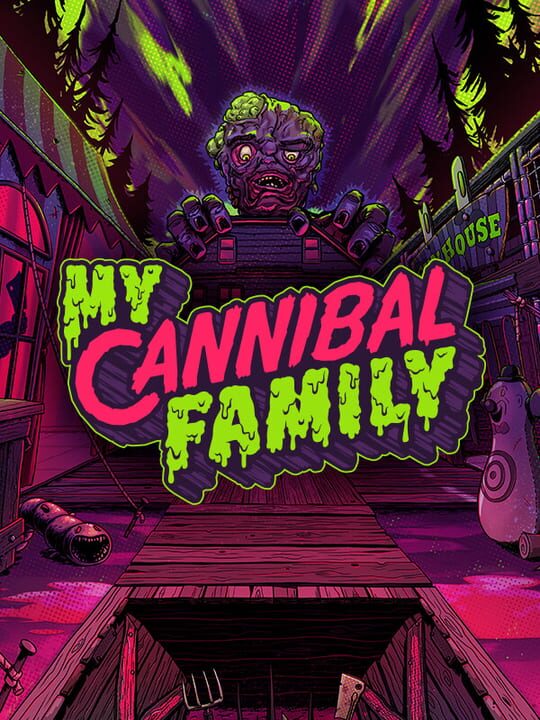
You are the lurking terror in My Cannibal Family, a gloriously grotesque monster horror sim. Build a twisted theme park, then use traps and stealthy attacks to harvest guests within a deadly sandbox of your own creation!
The Synergy of Park Management and Predation
The core gameplay of "My Cannibal Family" is a fascinating, albeit macabre, blend of a classic tycoon management simulation and a stealth-horror experience. The player assumes the role of a monstrous entity that not only manages the infrastructure of a theme park but primarily utilizes this park as a giant lure for human visitors. This duality defines the entire game feel: on one hand, one must master logistics to attract guests, and on the other, one must perfect the role of the predator to harvest these guests efficiently. The gameplay loop is stringently structured: Build, Attract, Hunt, Consume, and Upgrade.
The management system is intentionally designed so that it is not about monetary profit, but about optimizing the "flow" of victims. You place attractions, paths, and decorations not to maximize guest satisfaction, but to funnel them into specific zones where hunting is most effective. This psychological aspect of level design constitutes the core of the strategic gameplay. You quickly learn that an overly attractive attraction in the wrong place can shift visitor traffic in a way that renders prepared traps useless.
The Mechanics of Trapping and Stealth
A central system is the construction and placement of traps. These range from subtle tripwires and complex mechanical devices to organic, grotesque obstacles integrated directly into the environment. Placing these traps requires a deep understanding of the visitor AI routines. Guests follow specific paths and react to visual stimuli, allowing the player to create precise "kill zones."
The stealth system complements the static traps with active hunting mechanics. When moving through the world, the player must account for visitor sightlines and acoustic perception. The feeling of striking from the shadows is implemented with satisfying haptic feedback. The controls are precise, although the monster's movement possesses a certain weight that reflects the protagonist's massive physique. Sneaking feels menacing, as the camera is often positioned lower, showing the environment from a predator's perspective, which significantly enhances immersion. The tension arises from the risk of being discovered before the killing blow is delivered, turning the park visit into a nightmare for the victims.
Interaction Systems and the "Harvest"
Interaction with the victims is the climax of every hunting sequence. The game utilizes a detailed system for the "harvest," where the method of attack influences the quality of the resources gained. It is not a simple click on an enemy; rather, there are various attack animations and interaction possibilities that vary depending on the positioning and state of the victim. These resources are essential for progression, used both for expanding the park and for the biological evolution of the monster.
The feel of executing these actions is intentionally visceral and grotesque. Sound effects emphasize the brutality of the scenes without descending into absurdity. Interaction with the environment is also profound; many objects in the park can be used to manipulate victims or drive them into traps. For instance, you can turn off light sources or imitate sounds to lure guests into dark alleys. This systemic interaction ensures that no two hunts are the same and rewards creative approaches to designing your own death-trap park.
Progression and Biological Evolution
Progression in "My Cannibal Family" is closely linked to the consumption of victims. Instead of a traditional skill tree, there is a system of biological evolution. By consuming specific types of guests or reaching milestones in park management, the player unlocks new physical abilities. These can range from improved stealth capabilities and increased movement speeds to entirely new types of attacks.
This evolution directly affects the game feel. At the beginning, the monster feels rather clumsy and limited, increasing the reliance on traps. However, as the game progresses, active hunting becomes more dominant and powerful. The learning curve is gentle but steady. The player is gradually introduced to more complex management tasks while hunting mechanics become increasingly refined. The synergy between expanding the park and improving one's own physical form creates a strong motivation to find ever more efficient ways to control visitor flows.
Controls and User Interface
The controls are intuitive and optimized for the respective modes (Build Mode vs. Hunt Mode). In Build Mode, the handling resembles classic city-builders, with a clear menu structure and smooth camera movement. The transition into the monster's active perspective is seamless, with the controls shifting to prioritize precise movement and timing. The key mapping is logical and leaves little room for error, even in hectic moments when multiple victims panic simultaneously.
The User Interface (UI) is thematically integrated into the grotesque setting. The menus appear organic and dark without sacrificing functionality. Particularly noteworthy is the park statistics overview, which tracks not only visitor numbers but also "harvest efficiency." This information is critical for identifying weaknesses in the park layout. However, there are occasional moments where the information density in Build Mode becomes too high, requiring a short period of adjustment to fully grasp all parameters of trap efficiency.
Daily Game Feel and Loop Dynamics
In daily play, a hypnotic routine establishes itself. A session often begins with the analysis of the previous hunting night, adjusting trap placements, and then building a new attraction to attract more people. This shift between strategic planning and visceral action prevents the gameplay from feeling repetitive. The sense of power the player exerts over their small "guests" is a central psychological driver of the game.
The sandbox nature also allows for different philosophies. Some players prefer a highly efficient "industrial park" where victims are almost automatically guided into slaughterhouses. Others focus on the pure horror of hide-and-seek, building labyrinthine structures where the hunt is the main event. This freedom in approach ensures that the game feel remains individual and rewards experimentation. The atmosphere is maintained by a constant tension that remains palpable even during the quiet management phases.
Visitor AI and Its Influence on Systemics
A critical point for the success of the core systems is the visitor AI. The guests in "My Cannibal Family" are not mere static objects but react dynamically to their surroundings. They possess different personality types—from gullible tourists to suspicious skeptics. This variation forces the player to adapt their strategies. A tourist might walk blindly into an obvious trap, while a skeptical guest only falls for it if the environment is perfectly camouflaged.
The panic system is especially noteworthy here. When a guest sees a victim or triggers a trap, panic spreads through the park in waves. This can either be a hindrance, as guests react unpredictably and break out of planned zones, or it can be used as a tactical tool to drive a herd of people into a prepared death zone. This emergent gameplay is one of the strongest elements of the game, as it breaks the rigid systems of park management and introduces chaos that the player must control.
Summary of Core Systems and Learning Curve
The learning curve of "My Cannibal Family" is masterfully calibrated. You start as a clumsy hunter in a small garden and end up managing a complex ecosystem of death. The systems interlock seamlessly: without a well-functioning park, there is no food for evolution, and without evolution, one cannot overcome the more complex security measures or suspicious guests of the later game stages.
The game feel is a constant balance between the feeling of total control (in Build Mode) and animalistic intensity (in Hunt Mode). This tension keeps the gameplay fresh and motivating. Despite the macabre theme, the focus remains on the mechanical perfection of one's own system. Those who enjoy optimizing, experimenting, and appreciate a touch of black humor will find deep satisfaction in the systemics of this game. The combination of sandbox freedom and strict resource cycles makes "My Cannibal Family" a unique representative of its genre.
The Architecture of Dread: World Building and Atmosphere
The world of My Cannibal Family is a fascinating paradox, blending the colorful allure of theme park attractions with deep, visceral horror. Instead of being thrust into a pre-defined narrative, the player is given a blank canvas intended to be transformed into a nightmare of flesh and steel. The world-building focuses primarily on the design of the player's own park, where the environment oscillates between claustrophobic corridors and expansive, open plazas. The visual design masterfully employs contrast: on one side are the friendly, almost naive facades of the rides, and on the other are the dark tunnels, hidden vents, and blood-splattered hiding spots where the monster lurks. This duality creates a constant state of tension, as the player must perpetually shift between the role of a park manager and that of a predator. The surroundings react dynamically to the placement of objects, supported by a subtle soundscape that heightens the anticipation of the next strike.
The Anatomy of the Sandbox: Level and Mission Design
The design of My Cannibal Family adheres to a strict sandbox principle, where player creativity is the primary tool. There are no traditional levels in the form of linear stages; instead, all gameplay unfolds within the park created by the player. The mission design is organically integrated into the gameplay loop: the goal is the efficient "harvesting" of guests. This forces the player to plan their level architecture strategically. Where should the most attractive rides be placed to lure the crowds? Where should traps be installed so that victims do not realize they are walking into a deadly dead-end?
The challenge lies in optimizing the visitor flow. A poorly planned park results in guests finding the exit too quickly or clustering in areas that are difficult for the player to access. At this point, the game becomes a macabre variation of a management simulator, where logistics serve hunger rather than profit. The placement of stealth points, such as ventilation shafts or fake walls, adds a vertical dimension to the gameplay, turning the park into a three-dimensional hunting ground. This design encourages iterative testing, as the player must constantly refine the environment to maximize the lethality of their traps.
Pacing and Game Rhythm: The Cycle of Construction and Hunt
The pacing of My Cannibal Family is characterized by a rhythmic alternation between two entirely different phases: the construction phase and the hunting phase. During the construction phase, the tempo is slow and deliberate. The player plans, builds, and optimizes. It is an almost meditative process, brooding over the optimal placement of a death trap. However, as soon as the park gates open and the first guests arrive, the pacing shifts abruptly. The tranquility is replaced by nerve-wracking tension.
The transition from the management perspective to stealth action is seamless. The hunting phase requires quick reflexes, precise timing, and a comprehensive overview of the victims' positions. This shift prevents the gameplay from becoming monotonous. Once the harvest is complete and the park has been cleared, the player returns to the calm of planning, often with new resources or upgrades derived from the victims. This loop of preparation and execution creates a high emotional dynamic and keeps the player in a state of constant anticipation, mirroring the predatory nature of the protagonist.
Scope and Content Depth
In terms of scope, My Cannibal Family offers remarkable depth for a simulator title. The number of available building blocks, traps, and attractions is extensive. It is not merely about placing simple traps but designing complex chain reactions. The synergy between different objects—such as an attraction that disorients guests followed by a trap that immobilizes them—demonstrates a profound system design.
Furthermore, the scope extends to a comprehensive upgrade system for the monster itself. By harvesting specific types of guests, new abilities can be unlocked, which in turn open up new possibilities in park design. For instance, an improved camouflage ability might allow the player to operate in brighter areas of the park, making the placement of attractions in open spaces more viable. Progression is thus tightly linked to the physical expansion of the park, providing a sense of steady growth and increasing power. The game does not rely on fillers but ensures that every new unlock fundamentally changes how the player interacts with their world.
Replayability and Long-term Motivation
The replayability of My Cannibal Family stems primarily from the freedom of the sandbox. Since there is no predefined "correct" ending or single linear path, every playthrough becomes a new phase of experimentation. Players are encouraged to pursue entirely different strategies: while one player might focus on maximum efficiency and quick kills, another might concentrate on psychological horror and slow, agonizing trap constructions.
The challenge scales continuously as guests become "cautious" over time or as new security protocols are introduced into the park, forcing the player to constantly adapt their strategies and architecture. This dynamic difficulty prevents the game from feeling exhausted after a few hours. Additionally, the design invites the creation of various park themes—ranging from a classic carnival to a surreal, fleshy cathedral. The ability to build and optimize one's own "perfect" killing machines offers a nearly endless incentive, rooted in the human desire for system optimization and mastery.
Target Audience and Genre Classification
My Cannibal Family occupies a unique niche. It is a hybrid form of a Tycoon simulator, a stealth horror game, and a sandbox experiment. The primary target audience consists of players with a penchant for black humor, grotesque body horror, and complex management systems. It appeals to those who do not want to merely consume content but actively shape it, finding joy in manipulating the rules of an environment to achieve a specific (albeit macabre) goal.
The game deliberately breaks with the conventions of classic horror titles, where the player is usually the victim. By placing the player in the role of the perpetrator, it shifts the focus from the fear of the unknown to the pleasure of control. Thus, it positions itself as a "power-fantasy" simulator of dread, requiring both strategic thinking and a certain level of moral detachment. The classification as a simulation is accurate, as mechanical precision and system interactions are paramount, while the horror elements provide the atmospheric framework.
Structural Analysis of the Game Loop
Examining the structure in detail reveals a perfectly synchronized cascade. The loop begins with resource acquisition (building attractions), leads to the attraction of resources (guests), proceeds to the harvest (the hunt), and ends with reinvestment (upgrades). This structure is so stable that it would have functioned even with less content, but the variety of components turns it into a complex network of interdependencies.
The game structure avoids artificial barriers or unnecessary filler quests. Every action has a direct impact on the efficiency of the park. If a guest escapes, it is not just a loss of resources but a signal of a structural flaw in the level design. This transforms the game into a sort of puzzle, where the player must find the solution through architecture and stealth tactics. The structure is therefore not just a frame but an active part of the gameplay, constantly urging the player to question and improve their own creations, ensuring a deeply engaging and intellectual approach to horror.
Technical Analysis and Performance
The technical execution of My Cannibal Family across current-gen consoles and PC is an ambitious endeavor, primarily distinguished by its physics-based interactions. On the PlayStation 5 and Xbox Series X, the game runs stably, with the frame rate remaining consistent in most scenarios, provided the park size does not reach excessive proportions. However, it is noticeable that when a very high number of guests are present in the park—especially when complex trap chains are triggered—slight dips in the frame rate occur. These stutters are primarily due to the calculation of AI pathfinding and the simultaneous simulation of multiple physics objects. On PC, performance varies significantly depending on the hardware, though a solid SSD is strongly recommended to minimize loading times between the build mode and the hunting phase.
A noteworthy aspect of the technology is the implementation of sightlines and stealth mechanics. The way guests react to noise and visual stimuli feels consistent, although there are occasional absurd moments where an AI figure stands directly in front of a trap without noticing it. Collision detection is mostly precise, although in very densely built park areas, small clipping errors can occur, where the player's monstrosity slightly sinks into textures. Nevertheless, the overall experience remains fluid, and the controls are responsive, which is crucial in stealth passages to avoid premature detection.
Art Style and Visual Presentation
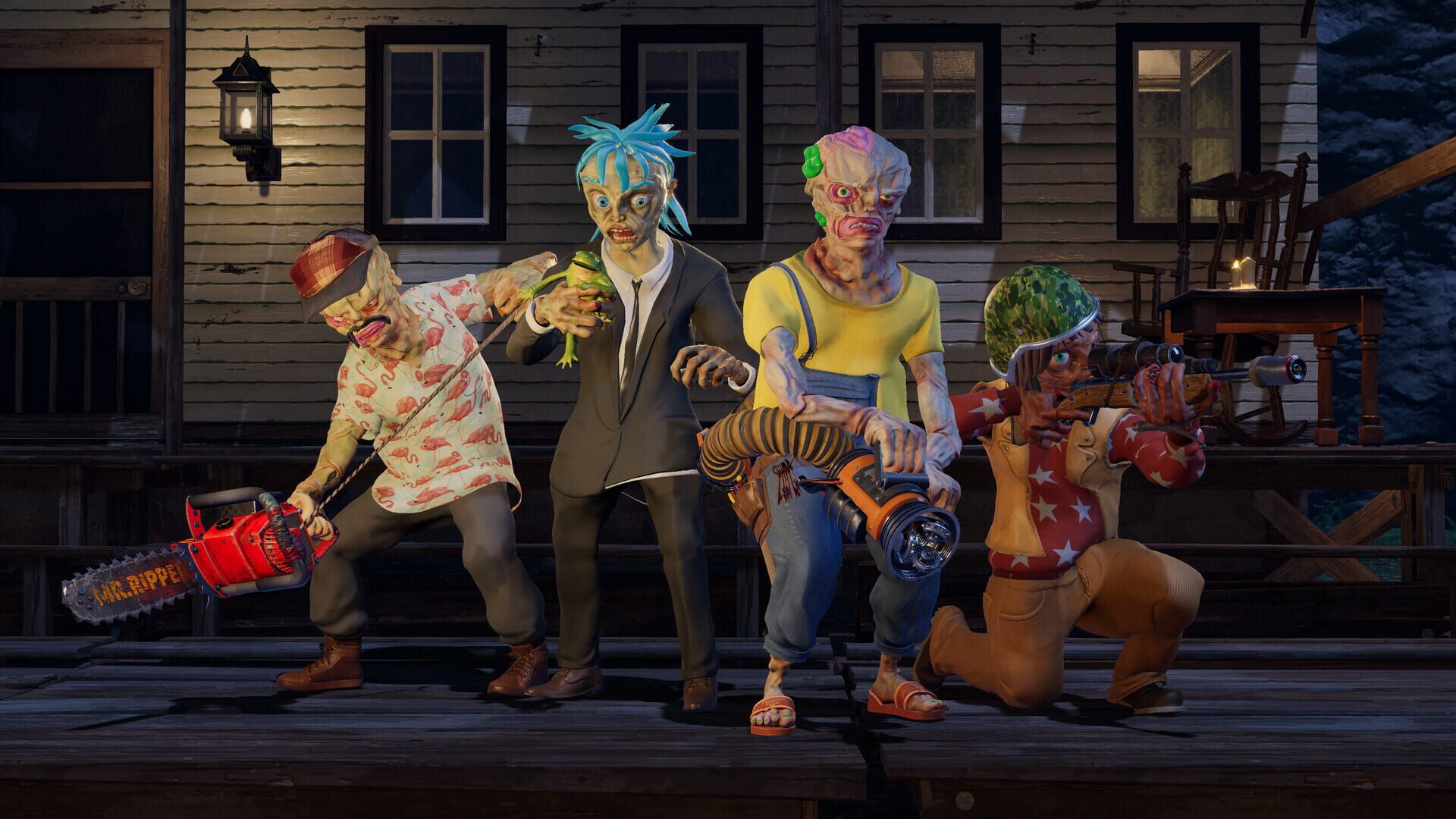
Visually, My Cannibal Family adopts a deliberately grotesque aesthetic, situated somewhere between a nightmare carnival and a body-horror museum. The color palette is dominated by sickly greens, deep blood red, and a contrasting, almost neon-like glow from the park lighting. This style perfectly underlines the morbid atmosphere. The textures of organic elements—especially the depiction of flesh, slime, and bone—are detailed and create an effective disgust factor that is essential for the genre. The architecture of the park feels intentionally unstable and distorted, reinforcing the feeling that one is in a world that does not follow the laws of logic.
The lighting plays a central role in the presentation. Shadows are deep and impenetrable, which supports the stealth elements not only mechanically but also visually. When the player creeps through the dark corridors of their own park, the sparse light sources create an oppressive mood. Particularly noteworthy is the design of the protagonist; the deformations and the grotesque anatomy of the monster are fluidly animated, making the movements feel threatening and unnatural. There is an interesting synergy between the bright, superficial look of the attractions and the horror lying beneath, which visually translates the game's satirical undertone.
Sound Design and Musical Accompaniment
The sound design is one of the strongest tools in My Cannibal Family. The acoustic backdrop is a disharmonious mixture of cheerful carnival music, played distorted and slowed down, and the gruesome sounds of the harvest. The screams of the victims, the rhythmic clicking of the traps, and the wet slurping of the monster create a dense, immersive atmosphere. Particularly effective is the spatial audio implementation; one can pinpoint exactly from which direction a guest is screaming or where a trap has just been triggered, which can be used strategically for the hunt.
The music changes dynamically depending on the game state. While in build mode, a grotesquely cheerful, almost circus-like music plays in the background, the mood shifts abruptly during the hunting phase. Here, deep bass frequencies and atonal strings dominate, increasing tension and conveying a sense of inevitability. Silence is used skillfully to lull the player into a false sense of security before a sudden sound peak initiates the attack. There are few redundant sound effects, which ensures that the acoustic experience does not become tiring even after many hours.
Comfort Features and User Interface
In terms of usability, the game offers a solid foundation, although there is room for improvement. The interface in build mode is intuitively designed, allowing quick access to various trap and attraction categories. The placement of objects is done via a grid system that, while functional, occasionally feels too rigid. A helpful feature is the ability to save and share park layouts, which significantly increases replay value by providing inspiration from other players. The controls transition seamlessly between the strategic bird's-eye view during construction and the immersive perspective during the hunt.
However, the menu navigation in the deeper settings is critical. Some control customization options are hidden, and the tutorial phase is too brief in some places, which can lead to frustration, especially with more complex trap combinations. The user interface during gameplay is kept minimalist to avoid breaking immersion, but the indicators for the monster's hunger status could be placed more prominently, as a sudden energy drop in a critical hunting phase often comes as a surprise. Nonetheless, general navigation is fluid and loading times on modern systems are pleasantly short.
Deep Dive Criticism: Mechanical Balance
A significant point of criticism lies in the balance between park attraction and trap efficiency. In the early game phase, progression feels rewarding, but in the later stages, guests tend to either die too quickly or completely ignore traps due to extremely unintelligent pathing. This leads to the sandbox elements losing depth, as certain strategies (such as mass harvesting through a single large trap) are far more effective than the subtle, strategic hunt the game actually promotes. The guest AI often acts too predictably, which reduces the challenge in the stealth phase.
Additionally, there is a certain redundancy in the available attractions. While the first five or six buildings are very different in function and appearance, later unlocks often feel like mere reskins that only offer minor statistical advantages. This takes the excitement out of the building aspect in the late game. There is a lack of deeper integration of park economics; money or resource management feels more like a pretext for unlocking upgrades rather than a real strategic hurdle. A more complex simulation of visitor flows could have been implemented here to increase the strategic content.
Genre Comparison
Compared to other management simulators or horror sandbox titles, My Cannibal Family occupies a very specific niche. It combines the creative freedom of a park builder with the brutality of a slasher movie. While games like Two Point Hospital derive humor from the absurdity of management, this title uses dark humor regarding consumption and human nature. The technical implementation is less polished than in AAA productions, but the creative courage and the consistent execution of the grotesque vision make it a unique experience.
In comparison to other stealth-horror games, it is noticeable that the power dynamics are reversed. You are not the victim, but the hunter. This perspective is technically well-supported, as the game uses the environment as a weapon. Where other horror games rely on jump scares, My Cannibal Family focuses on the anticipation and the planning of the horror. This differentiation in the genre makes the game feel fresh, even if the technical weaknesses in AI simulation remain visible compared to high-end titles.
Purchase Recommendation and Target Audience
My Cannibal Family is not a game for everyone. The explicit themes and grotesque depiction make it a title for an adult audience with a preference for dark humor and body horror. For players who enjoy building systems and then testing them in a controlled environment, the game offers enormous entertainment value. The mix of creative building and brutal execution works surprisingly well and provides a satisfying gameplay loop.
Anyone expecting a perfect, error-free simulation might be frustrated by the AI weaknesses and occasional performance dips. However, for those who appreciate the charm of a quirky indie project and have the desire to manage their own bloody theme park, this title is a highly recommended purchase. It is a game that convinces through its atmosphere and concept, even if it doesn't shine in every technical aspect.
Final Verdict
In summary, My Cannibal Family is a technically solid, visually impressive, and atmospherically dense title that hits its niche perfectly. The combination of management and horror is brave and consistently implemented. Despite some flaws in AI logic and late-game balance, the game remains a fascinating experiment in grotesque simulation. It proves that a strong artistic vision is often more important than technical perfection, as long as the core gameplay loop works and the presentation puts the player in the right mood. A macabre masterpiece for lovers of the unconventional.
Verdict
My Cannibal Family is most compelling for players who are looking for this particular blend of genre, presentation and gameplay systems. The final recommendation depends on how strongly the described strengths outweigh the noted limitations.
Hardware check
System Requirements
Minimum
Recommended
Das könnte dich auch interessieren
Weitere Reviews aus der Kategorie game.
Inhaltsverzeichnis 1. [Einleitung](einleitung) 2. [Gameplay und Mechaniken](gameplay-und-mechaniken) 3. [Visuelles Design und Atmosphäre](visuelles-...
Inhaltsverzeichnis\n- [Einleitung](einleitung)\n- [Gameplay & Mechaniken](gameplay--mechaniken)\n- [Grafik & Sound](grafik--sound)\n- [Benutzeroberfl...
Inhaltsverzeichnis - Einleitung - Gameplay, Spielgefühl und Kernsysteme - Welt, Struktur, Umfang und Wiederspielwert - Technik, Präsentation, Kritik...