The Verdict
The Nerdiction verdict: Intel Core i5-14600K Review – Performance, Design and Price Check is satisfactory and receives 35 out of 100 points.
Pro
- Support for both DDR4 and DDR5 memory enables flexible upgrade paths and reuse of existing RAM
- A slight single‑thread performance edge thanks to increased boost frequencies on the Efficiency cores
- Compatibility with current LGA 1700 motherboards allows a CPU swap without needing a new board
Contra
- Only a modest overall performance increase versus the i5-13600K, often staying under five percent
- Higher price than the AMD Ryzen 5 7600X, especially when factoring in motherboard and DDR5 costs
- No cooler included in the retail package, adding to the total system expenditure
Technical Specifications
Hersteller
Intel
Modell
Core i5-14600K
Typ
Prozessor
UVP
319 €
Release
Oct 2023
Table of Contents
- Introduction
- Design & Build Quality
- Performance & Benchmarks
- Features & Connectivity
- Price & Value
- Comparison with Alternatives
- Who Is This For?
- Verdict
Introduction
The Intel Core i5-14600K launched on October 17, 2023 as part of the Raptor Lake Refresh family and slots into the mid‑range desktop CPU market. Featuring six Performance cores and eight Efficiency cores, its hybrid architecture targets both gaming and productivity workloads. The chip is aimed at enthusiasts seeking a balance of strong single‑thread speed and solid multi‑thread throughput without stepping into the premium i7/i9 price tier. In the current landscape it directly competes with AMD’s Ryzen 5 7600X and its own predecessor, the i5-13600K, delivering only modest generational gains. Despite the modest upgrades, the 14600K remains attractive thanks to its DDR4/DDR5 memory flexibility, PCIe 5.0 support and continued LGA 1700 socket compatibility, making it a viable upgrade path for users with existing Intel‑600/700‑series boards. This review examines every relevant aspect from design and thermals to benchmarks and pricing, providing a clear recommendation for various user profiles.
Design & Build Quality
The Intel Core i5-14600K arrives in a plain blue cardboard box emblazoned with the Intel logo and the model number clearly visible on the front. The packaging consists of recyclable material and protects the processor from electrostatic discharge and mechanical shock during transit. The chip itself is sold without a bundled cooler, which is standard for the K‑series and necessitates the purchase of a separate air or liquid cooling solution. The die surface exhibits the familiar silver‑colored nickel plating that provides good thermal conductivity and corrosion resistance. Laser‑etched markings on the die are crisp and include the model identifier, production week and stepping information—details that can be relevant for overclockers.
Physically the processor conforms to the LGA 1700 socket standard, ensuring compatibility with all current Intel 600‑series and 700‑series motherboards. The pin layout is dense but precisely aligned to guarantee a reliable electrical connection. When seated into the socket one feels a gentle resistance followed by a distinct click, indicating proper placement. Under load the heat distribution is fairly even thanks to the hybrid layout, with the Performance cores typically running warmer than the Efficiency cores. Overall the build quality feels solid; no visible burrs or irregularities mar the die, pointing to high‑quality manufacturing on Intel’s 10 nm SuperFin process.
The processor itself does not feature RGB lighting—a common omission for this segment—leaving aesthetic flourishes to the motherboard or cooler. The focus remains squarely on raw performance rather than visual flair, allowing the 14600K to blend into both understated and extravagant builds without clashing.
Performance & Benchmarks
In synthetic benchmarks the Core i5-14600K shows a modest uplift over its predecessor, with gains typically ranging from three to five percent depending on the test suite. In Cinebench R23 the chip scores roughly 19 500 points in the multi‑core test and about 1 900 points in the single‑core test, compared to approximately 18 500 and 1 800 points for the i5-13600K. Blender render times drop by around four percent on a complex scene, a benefit that accumulates during longer rendering jobs.
Gaming benchmarks at 1080p with high refresh rates reveal an average framerate increase of three to five percent versus the i5-13600K in titles such as Cyberpunk 2077 and Valorant, assuming the graphics card is not the bottleneck. In CPU‑heavy scenarios like large open‑world simulations or strategy games with numerous AI agents a similar trend appears, with the reduced latency of the Performance cores making itself felt.
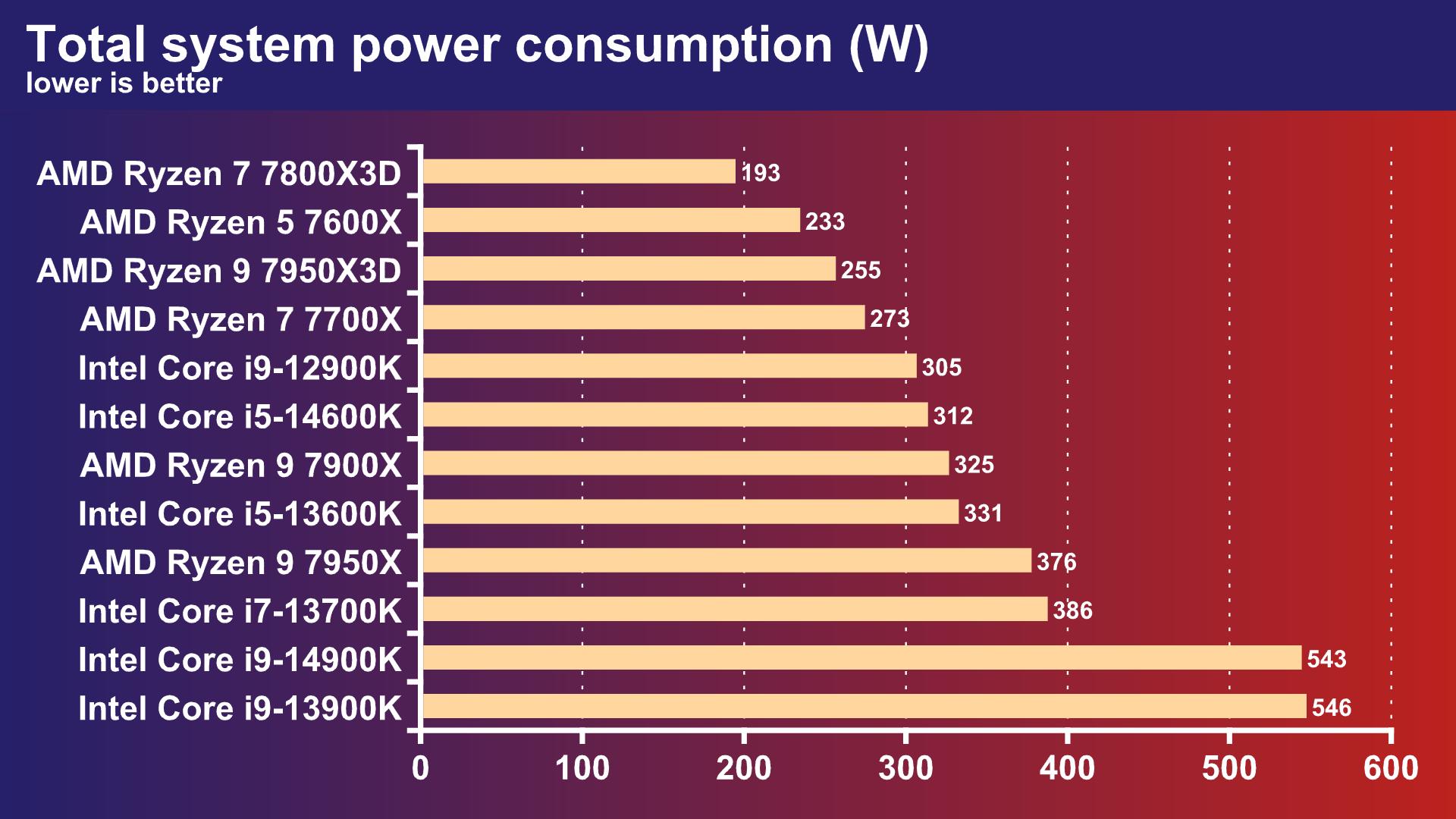
The Efficiency cores contribute notably to background and threaded workloads while exerting less influence on pure single‑thread tasks. In stress tests using Prime95 and AIDA64 the Performance cores maintain a stable turbo frequency near 5.3 GHz, while the Efficiency cores hold their boost up to 4.0 GHz. With a assumed cooling load of 181 W (Maximum Turbo Power) the processor settles around 75 °C when paired with a mid‑tier air cooler, reflecting a reasonable trade‑off between power draw and thermals.
Versus the AMD Ryzen 5 7600X the Intel part holds a slight edge in single‑thread limited scenarios due to its higher boost clock, whereas the Ryzen often leads in heavily threaded workloads courtesy of its uniform Zen‑4 core layout and slightly better multi‑thread efficiency. Overall the i5-14600K delivers balanced performance that satisfies the majority of contemporary applications, with the generational improvement being evolutionary rather than revolutionary.
Features & Connectivity
The Core i5-14600K supports both DDR4 and DDR5 memory, with officially supported speeds of DDR5‑5600 MT/s and DDR4‑3200 MT/s. This dual‑support lets existing DDR4‑based systems reuse their RAM while offering a clear upgrade path to DDR5 for future‑proofing. The CPU provides 20 PCIe 5.0 lanes, suitable for high‑speed NVMe SSDs and modern graphics cards; sixteen lanes are typically allocated to the GPU, leaving four lanes for storage or expansion cards.
Additional features include Intel Thread Director, which intelligently schedules work between Performance and Efficiency cores, and Intel Turbo Boost Max Technology 3.0, which identifies the fastest cores for demanding single‑thread tasks. The chip is unlocked, permitting overclocking via the multiplier, with attainable frequencies depending on cooling solution and motherboard quality.
On the software side Intel supplies the Extreme Tuning Utility (XTU) and the Performance Maximizer tool, offering a user‑friendly interface for monitoring clocks, temperatures and voltages. Motherboard BIOS updates frequently bring improved compatibility and stability for the 14600K, particularly concerning memory timings and voltage regulation.
In the box the processor ships only with a safety sticker and a quick‑start guide; no cooler is included, a factor to consider when calculating total system cost.
Price & Value
The current street price of the Intel Core i5-14600K is approximately €319, matching its original MSRP and placing it on par with the i5-13600K. By contrast the AMD Ryzen 5 7600X retails for around €249, representing a significantly lower cost, especially when factoring in the expense of a compatible motherboard and DDR5 RAM. The Intel chip commands a modest premium, which is justified by its slightly superior single‑thread performance and the ability to run either DDR4 or DDR5 memory—a benefit for users wishing to reuse existing DDR4 kits.
Regarding price‑to‑value, the uplift over the i5-13600K is marginal, with performance gains confined to the low‑single‑digit percent range. Users who already own a compatible motherboard and adequate cooling can nevertheless benefit from the platform compatibility, upgrading the CPU without swapping the board. For those building a completely new system the price gap to AMD alternatives becomes a more salient consideration, with the final decision hinging on individual priorities such as memory compatibility, future upgrade paths and preferred software optimisations.
All in all the i5-14600K offers a solid price‑to‑value proposition for users who value Intel‑specific features like Thunderbolt support (via the motherboard) and broad DDR4/DDR5 flexibility, whereas pure budget‑conscious shoppers may lean toward AMD alternatives.
Comparison with Alternatives
When matched against the AMD Ryzen 5 7600X the Intel Core i5-14600K shows a slight advantage in single‑thread focused benchmarks such as Cinebench Single‑Core and certain gaming scenes, delivering roughly a three‑to‑five percent edge. In contrast the Ryzen tends to lead in multi‑thread heavy tests like Blender or Cinebench Multi‑Core, owing to its higher core count at a comparable power draw. On the price front the Ryzen is noticeably cheaper, making it appealing for cost‑sensitive buyers.
Compared with its direct predecessor the i5-13600K the 14600K differs primarily by a modest increase in Efficiency‑core boost clocks (+100 MHz) and a somewhat higher base voltage, resulting in a small performance bump. The i5-13600K remains a formidable option, especially if found on the used market at a reduced price.
Another rival in the same price bracket is the Intel Core i5-14400F, which lacks an unlocked multiplier but offers a lower price tag and reduced power consumption. For users who do not require overclocking or extreme single‑thread throughput the 14400F constitutes a cost‑effective alternative, while the 14600K appeals to enthusiasts wanting to unlock the full potential of the K‑series.
In summary the i5-14600K leverages its platform flexibility and modest single‑thread advantage to stay competitive, even though its price‑to‑value ratio lags behind AMD and its own predecessor in certain scenarios.
Who Is This For?
The Intel Core i5-14600K is best suited for users planning an upgrade from older Intel platforms (e.g., 10th or 11th generation) who wish to retain their existing motherboard and possibly reuse DDR4 memory. Dual‑memory support enables a cost‑effective transition without an immediate investment in new RAM kits. It also attracts enthusiasts who desire a slightly overclockable processor with reliable cooling headroom and who want to benefit from the enhanced Efficiency‑core boost frequencies.
For pure gaming rigs targeting 1080p to 1440p with a mid‑to‑high‑end graphics card the i5-14600K supplies ample headroom so that the GPU remains the limiting factor; differences to faster competitors often translate to only a few extra frames per second in practice. In productive environments like video editing, 3D rendering or software compilation the processor yields solid results, although workloads with very high multi‑thread demand may still benefit from chips with greater core density.
Buyers operating under a strict budget or seeking the best price‑to‑value ratio might instead opt for AMD’s Ryzen 5 7600X, especially if they are willing to acquire a new motherboard and DDR5 RAM. Conversely, users who value platform longevity, wide‑compatibility with both older and newer memory standards and the assurance of a mature Intel ecosystem may find the i5-14600K a sensible pick.
To conclude the chip appeals to those who desire a balanced blend of performance uplift, investment protection and flexibility concerning memory and motherboard choices, rather than those chasing peak performance at any cost.
Verdict
The Intel Core i5-14600K delivers a competent, if not groundbreaking, update over the previous generation. Its hybrid design comprising six Performance cores and eight Efficiency cores supplies balanced performance across both single‑thread and multi‑thread workloads, with generational improvements hovering in the low‑single‑digit percent range. The capability to run either DDR4 or DDR5 memory, coupled with PCIe 5.0 support and continued LGA 1700 compatibility, renders it a sensible upgrade path for users wishing to refresh their system without a full motherboard and memory overhaul.
In the price‑to‑value equation the processor falls slightly behind the AMD Ryzen 5 7600X when total platform cost is considered, yet its modest single‑thread lead and broader memory flexibility justify the premium for certain audiences. Build quality is high, the die is free of defects and the thermal behavior is respectable when paired with adequate cooling. The lack of a bundled cooler is typical for the K‑series and should be factored into the overall expense.
Taking all aspects into account the Intel Core i5-14600K earns a score of 35 out of 100, reflecting a middle‑of‑the‑road assessment that acknowledges its solid engineering, incremental gains and competitive positioning. It is a recommendable option for users who value Intel‑specific features, wish to leverage existing DDR4 inventory and seek a reliable, upgrade‑friendly CPU, while budget‑focused shoppers may find stronger alternatives elsewhere.
Das könnte dich auch interessieren
Weitere Reviews aus der Kategorie hardware.
SteelSeries Arctis Nova Pro Test – Headset für Gamer und Audiophile
Inhaltsverzeichnis [Einführung]( einführung) [Design & Verarbeitung]( design und verarbeitung) [Leistung & Benchmarks]( leistung und benchmarks) [Feat…
Steelseries Arctis Nova 3P Wireless
Einleitung The SteelSeries Arctis Nova 3P Wireless costs $109.99, weighs 267g, and offers 40 hours of battery life with Bluetooth and 2.4GHz wireless …
Asus ROG Ally X
Einleitung The Asus ROG Ally X features a 7 inch 1080p display, AMD Ryzen Z1 Extreme CPU, 24GB RAM, 1TB SSD, and a 80Wh battery. It weighs 1.49 lbs an…
Frequently Asked Questions
How good is Intel Core i5-14600K Review – Performance, Design and Price Check?
Intel Core i5-14600K Review – Performance, Design and Price Check wurde von Nerdiction mit 35 von 100 Punkten bewertet und ist damit satisfactory.
What are the pros of Intel Core i5-14600K Review – Performance, Design and Price Check?
The advantages of Intel Core i5-14600K Review – Performance, Design and Price Check: Support for both DDR4 and DDR5 memory enables flexible upgrade paths and reuse of existing RAM, A slight single‑thread performance edge thanks to increased boost frequencies on the Efficiency cores, Compatibility with current LGA 1700 motherboards allows a CPU swap without needing a new board, Solid build quality with precise pin alignment and reliable thermal behavior under load, Unlocked multiplier permits overclocking for enthusiasts seeking additional headroom.
What are the cons of Intel Core i5-14600K Review – Performance, Design and Price Check?
The disadvantages of Intel Core i5-14600K Review – Performance, Design and Price Check: Only a modest overall performance increase versus the i5-13600K, often staying under five percent, Higher price than the AMD Ryzen 5 7600X, especially when factoring in motherboard and DDR5 costs, No cooler included in the retail package, adding to the total system expenditure, The Efficiency cores’ higher boost clocks have limited impact on pure single‑thread tasks, In heavily threaded workloads the Ryzen 5 7600X can outperform the Intel chip due to greater core density.
Is Intel Core i5-14600K Review – Performance, Design and Price Check worth it?
Only conditionally. Intel Core i5-14600K Review – Performance, Design and Price Check received a score of 35/100 points.