The Verdict
The Nerdiction verdict: Her Private Hell – Refn's Disturbing Return to Cinema is satisfactory and receives 48 out of 100 points.
Pro
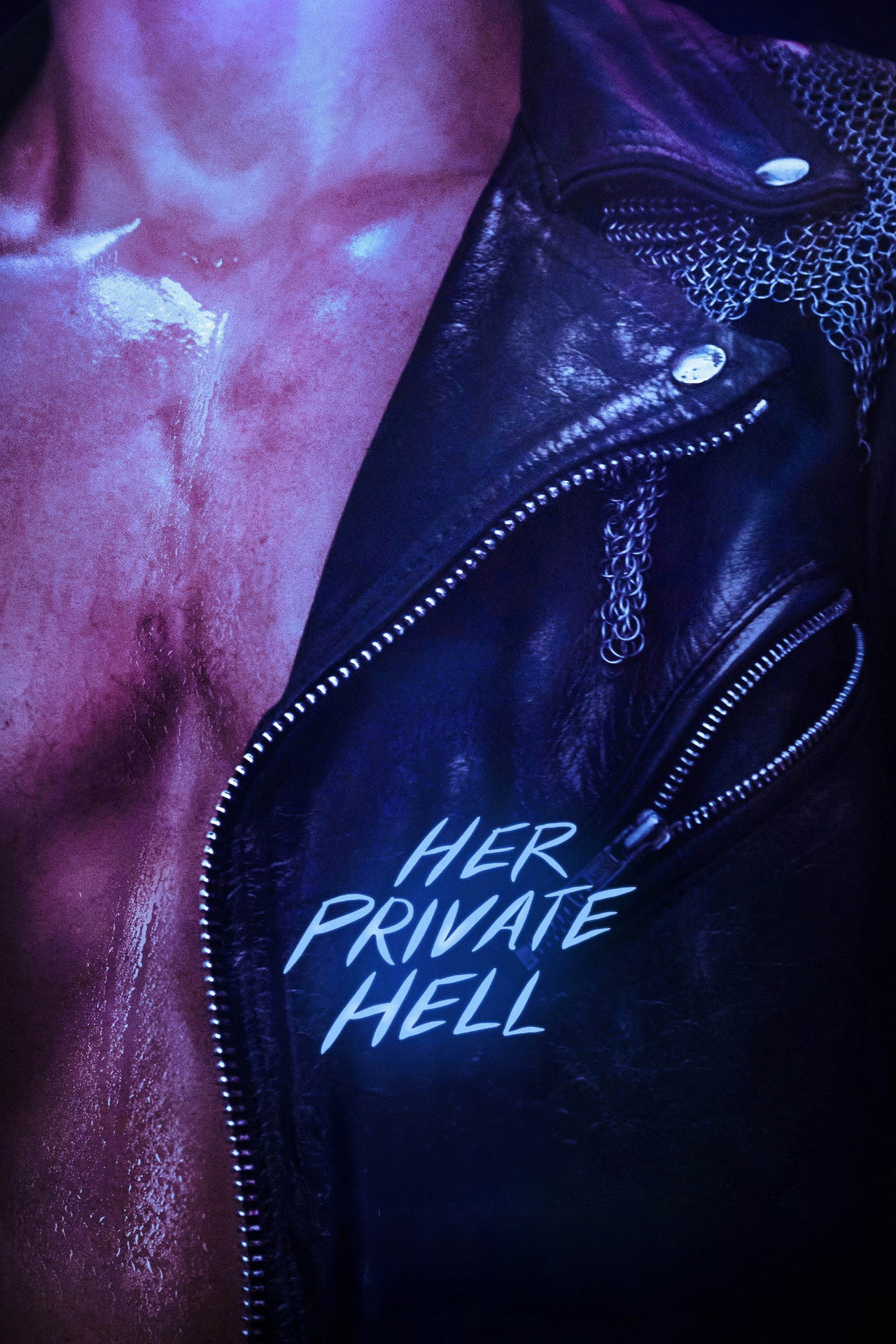
- Visually consistently composed visual language with neon-soaked color dramaturgy and symmetrical compositions that make the film an independent aesthetic experience.
- Sophie Thatcher delivers a fine-nerved performance oscillating between control and vulnerability, lending the fragmentary narrative a rare emotional anchoring.
- The sound design works with a precision that oscillates between auditory fullness and sudden silence, placing the viewer in a state of sensory hyper-sensitivity.
Contra
- The narrative fragmentation goes beyond productive ambiguity at several points and feels more like a refusal of coherent dramaturgy than a conscious stylistic device.
- Occasional digital effects, particularly in the sequences with the creature in full visibility, break the carefully constructed visual consistency of the film.
- The extremely uneven pace with long static takes requires a discipline of attention that will overwhelm a not insignificant part of the mainstream audience.
Details
July 23, 2026
1h 50m
5.1
/ 10(52 votes)31.8
Genres
Production Companies
Production Countries
Spoken Languages
Cast
Table of Contents
- Introduction
- Plot & Narrative
- Acting & Characters
- Direction & Cinematography
- Music & Sound Design
- Visual Effects & Technical Craft
- Themes & Message
- Comparison with Similar Films
- Who Is This Film For?
- Verdict
Introduction
With "Her Private Hell," Nicolas Winding Refn returns to the big screen – and how. After a period in which the Danish directorial eccentric devoted himself increasingly to series formats and visual experiments, he now delivers a hybrid of science fiction, horror, and thriller that aims to convince less through classical plot mechanics than through a consistently orchestrated, almost hypnotic atmosphere. Already the premise – a futuristic metropolis engulfed by a mysterious mist, an elusive creature, and two seekers whose paths cross – signals that Refn is less interested in conventional suspense dramaturgy than in a state of ecstatic lostness. The film was released in theaters on July 23, 2026, runs 110 minutes, and was produced as a co-production between the United States, Denmark, and the United Kingdom. In his luggage, Refn carries an ensemble ranging from Sophie Thatcher and Charles Melton to Kristine Froseth and Havana Rose Liu – actors known for their ability to navigate between vulnerability and hardness.
The very first impression when viewing the film is divided: On the one hand stands a visual pull that inevitably draws the viewer under the spell of the screen. Neon light reflected in wet asphalt; costume craftsmanship already described by critics as "Oscar-worthy"; a soundtrack oscillating between menacing hiss and cutting silence. On the other hand waits a narrative that consistently refuses to fully solve its riddles. This is not a film that lends itself to comfortable consumption – and those who seek that will leave the theater frustrated. Those who, however, submit to Refn's logic enter a cinematic space that feels like a feverish dream from which one only awakens after the credits roll. This balancing act between fascination and irritation runs like a red thread through all further observations and makes "Her Private Hell" a work that one either passionately celebrates or passionately rejects – in between, there seems to be almost nothing.
Plot & Narrative
At the center of the narrative stands a young woman with a traumatic past who embarks on a search for her father, while a mysterious, mist-like apparition transforms a futuristic metropolis into a death zone. In parallel, the film follows the odyssey of an American GI who wants to rescue his daughter from the clutches of a hellish threat. These two narrative strands – the inner journey of a daughter and the outer rescue mission of a father – cross, mirror, and merge into one another, with Refn deliberately leaving open at which points dream, hallucination, and reality flow into each other. The narrative structure follows no classical three-act architecture; instead, the film glides from one surreal sequence to the next, interrupted by moments of oppressive silence and sudden eruptions of violence.
The pace of the film is distinctly uneven – and this is quite intentional. Refn stages long, meditative takes in which the camera rests immovably on faces, mist veils, or geometric city silhouettes, only to then suddenly tip into rapidly cut sequences in which the deadly creature of the mist strikes. This rhythmic unpredictability creates a constant state of tension that is not explained by classical suspense mechanics, but by an almost musical composition of image, sound, and editing. Turning points are rarely played out conventionally; frequently it is a single glance, a trembling hand, a sudden silencing of the music that initiates a new narrative phase. The viewer is thus less an observer of a story than the protagonist of a sensory experience.
The dialogues are sparingly dosed and often so fragmentary that they elude direct logical grasp. When characters speak, it is often in short, apodictic sentences that serve less to convey information than to generate an emotional texture. Repeatedly it remains unclear whether a dialogue takes place in the reality of the film, in a flashback, in a dream, or in a psychedelic distortion. This narrative opaqueness is a trademark of Refn's later work, and "Her Private Hell" radicalizes this approach without, however, falling into pure arbitrariness – the emotional coherence remains palpable at all times, even when the causal one is not always graspable. Those who expect a conventional plot resolution will be disappointed; those, however, who are willing to submit to a fragmentary, associative narrative mode will be rewarded with an intensity that few current theatrical films achieve.
Acting & Characters
Sophie Thatcher takes on the role of Elle, the young woman searching for her father – and delivers a performance that captivates less through outer expressivity than through a fine-nerved, almost understated presence. Her portrayal oscillates between controlled desperation and suddenly breaking-through vulnerability; every flicker of emotion, every glance is carefully choreographed without ever appearing mannered. Thatcher understands masterfully how to stage the inscrutability of her figure as a protective mechanism that becomes porous at the decisive moments of the film. Particularly in the scenes where Elle encounters the mist and the creature, Thatcher displays a physical presence that wavers between aggression and panicked flight, while always conveying the impression of showing a person only half aware of her own lostness.
Charles Melton plays the American GI credited as "Private K," whose mission is the rescue of his daughter from the sounds of a hellish threat. Melton, who already demonstrated a remarkable capacity for transformation in "May December," brings a physical robustness to the role that stands in contrast to the psychic erosions to which his character is exposed in the course of the film. His playing is deliberately less introverted than Thatcher's – Melton relies on a physical expressivity that manifests itself in gestures, postures, and movements. Especially in the sequences in which Private K wavers between actionism and powerlessness, Melton succeeds in making the inner tornness visible without lapsing into pathetical exaggeration. The chemistry between Thatcher and Melton remains ambivalent: The film stages their encounter less as a romantic meeting than as a fateful coincidence of two equally damaged individuals, and precisely this distance lends their shared scenes an unusual tension.
Havana Rose Liu, Kristine Froseth, Shioli Kutsuna, and Aoi Yamada round out the ensemble in roles ranging from mysterious companions to inscrutable figures of authority. Especially Froseth as "Hunter" and Liu as "Dominique" lend the film moments of dark elegance; their appearances are brief but concise, and they contribute significantly to the atmospheric density of the film. Dougray Scott as Johnny Thunders and Diego Calva as Nico add further facets to the narrative that waver between threat and seduction. Overall, the cast succeeds in establishing coherent characters despite the fragmentary narrative mode, whose inner conflicts remain palpable even when the action loses itself in sleepwalking regions.
Direction & Cinematography
Nicolas Winding Refn stages "Her Private Hell" as a visual manifesto of a deregulated cinematography that consistently brushes against the grain of current narrative conventions. His visual language is characterized by symmetrical compositions that stand in the tradition of a Stanley Kubrick but are steered in their own, highly contemporary direction through neon-colored accents and deliberate blurs. Refn uses the architecture of the futuristic metropolis as an independent protagonist: high-rises, neon-soaked street canyons, stylized interiors are placed in the picture with a precision that is less reminiscent of documentary reality than of a carefully composed tableau. The camera frequently lingers in rigid, frontal shots that offer the viewer no vanishing points – a deliberate break with the mobile, dynamic camera work that dominates modern action cinema.
The editing of the film follows a similar logic of refusal. Where mainstream cinema relies on fast cuts, parallel montage, and dynamic rhythmization, Refn works with long takes that force the viewer to dwell in the image. When the cut does set in, this frequently happens abruptly and without conventional transition, so that the impression arises that the film jumps between levels of consciousness. This rhythmic strategy is not without risk: For viewers accustomed to the fast cutting frequency of current blockbusters, the pace can feel sluggish. Those, however, who submit to Refn's rhythm experience a form of attention that has become rare in current cinema – an attention that concentrates on details, textures, and minimal changes.
The staging of the central creature is a particularly remarkable example of Refn's directorial philosophy. Instead of making the threat continuously visible, he allows it to be merely suggested in most sequences: a shadow in the mist, a fleeting movement, a sound that names nothing tangible. This principle of allusion instead of representation is as old as horror cinema itself, but is implemented here with a consequence that places the film in the vicinity of the uncanny in the Freudian sense – what is frightening is not what one sees, but what one cannot see. Refn masterfully understands how to charge these empty spaces with meaning, so that the viewer's imagination becomes the actual stage of horror. The visual language of the film thus wavers between hyperreal clarity and enigmatic obfuscation, lending the film a constantly oscillating quality.
Music & Sound Design
The score of "Her Private Hell" is another supporting element of the already multi-layered staging. Refn, who had already demonstrated a pronounced sense for the strategic use of music in earlier works, also relies here less on a continuous film score than on a selective, often fragmentary soundscape. When music does sound, it is frequently in the form of synthesizer drones that hover between threat and seduction, accompanied by percussive elements that imitate the heartbeat of the film. The soundtrack remains unusually prominent in many sequences – so prominent that it is perceived almost as an independent narrative layer. This sound aesthetic is reminiscent of the work of Cliff Martinez, who already accompanied Refn on "Drive" and "Only God Forgives," even if a definitive attribution is not possible here.
The sound design is of such precision and attention to detail that it appears almost as an independent art form within the film. The hiss of the mist, the distant hum of the city, the metallic clicking of the creature, the sudden silencing of all ambient sounds in moments of threat – all this is staged with an assiduousness that places the viewer in a state of sensory hyper-sensitivity. Particularly effective is the alternation between auditory fullness and sudden silence: repeatedly the soundtrack breaks off abruptly, so that the viewer is thrown together with the figures into an oppressive vacuum situation. This strategy creates a tension that works independently of the visual threat and brings the film into the vicinity of a pure sound art work.
The emotional effect of the aural design is ambivalent. For viewers who submit to the soundtrack, it becomes the central carrier of atmosphere; those, however, who have difficulty submitting to a minimalist, often disharmonious sound design will experience the musical component as burdensome. Notable is also the use of the languages spoken in the film: English and Japanese stand on an equal footing, which underscores the cultural hybridity of the setting and lends the soundtrack an additional rhythmic dimension. Overall, Refn understands how to deploy sound as a narrative tool that does not comment but creates condition – a condition in which reality itself seems to be breaking apart.
Visual Effects & Technical Craft
The visual effects in "Her Private Hell" are a double-edged sword. On the one hand, the production succeeds in depicting the mysterious mist that engulfs the city with a consistency and density that allows the viewer to immerse themselves in an independent, closed visual world. The CGI work on the creature is held discreetly – most of the effect unfolds precisely where the digital component is not obviously deployed, but is organically embedded in the physical staging. Practical effects, from masks to prosthetic applications to elaborate lighting solutions, dominate and lend the film a haptic quality that computer-generated sequences frequently lack. The costumes and makeup, already described in one review as potentially award-worthy, contribute significantly to the visual coherence and create figures that in their aesthetics oscillate between futuristic coldness and retrograde echoes.
On the other hand, there are sequences in which the visual effects work is less convincing. Especially in the scenes in which the creature appears in its full form, digital artifacts and a certain blur are visible that briefly break open the laboriously constructed space of illusion. These moments are rare and short, but in a film that derives its effect so strongly from visual suggestion, they carry all the more weight. The production design, which ranges from the futuristic metropolis to the hellish interior worlds, is, however, consistently at a high level. The spaces in which the figures move are equipped with a wealth of detail ranging from urban anonymity to sacral-threatening opulence, thereby externalizing the inner tornness of the characters.
The color palette of the film is remarkably consistent: cold blue and green tones dominate, broken by aggressive neon accents in pink, magenta, and orange. This color dramaturgy supports the narrative fragmentation and creates emotional markers that work beyond the action. The camera work, which operates with a mix of anamorphic widescreen shots and intimate close-ups, uses this color palette to alternate between vastness and narrowness, between public threat and private trauma. Technically, the film moves on the whole on a solid level, without in every moment reaching state-of-the-art – and perhaps precisely this economical visual strategy is a key to its effect.
Themes & Message
At its core, "Her Private Hell" negotiates a series of themes that are rarely brought together with this consequence in the current cinematic landscape. The most obvious is the question of hell as an inner state: The title refers not by chance to a private, that is, personally experienced hell, and the action, in which a father wants to rescue his daughter from a hellish sphere, while a daughter seeks her father in a real hell, mirrors this duality structurally. Refn understands how to relocate the classical idea of hell from a place of external damnation into a psychological interior in which the true demons do not lurk in a nebulous beyond, but in the memories, traumas, and suppressed longings of the figures. The creature in the mist thus becomes less the materialized evil than the mirror of one's own shadows.
A second central theme is the dissolution of familial bonds under the pressure of existential threat. Both Elle's search for her father and Private K's attempt to rescue his daughter are not only narrative motors, but also metaphors for the fragility of familial love in a world that is increasingly dehumanized. Refn stages this search not as a heroic quest, but as a painful, frequently hopeless approach to a counterpart that possibly never existed in the way it was remembered. The repeated question of whether the sought persons are real or projections of one's own psyche pervades the film and is deliberately not resolved. This ambiguity is not an expression of narrative weakness, but a programmatic component of an engagement with the unreliability of memory and identity.
In addition, the film negotiates zeitdiagnostic questions about the alienation of the modern subject in urban, technologically permeated spaces. The futuristic metropolis that the mist engulfs is not merely setting, but symbol of a civilization that has settled into its own shell and perishes in this shell. The appearances of Japanese-speaking figures as well as the cultural hybridity of the setting additionally refer to a global, unbounded nature of horror that can no longer be tied to a specific place, a specific culture, or a specific belief. In this respect, "Her Private Hell" is less a genre film in the classical sense than a philosophical statement about the condition of the human being in the 21st century – packaged in the form of a science fiction horror thriller that refuses to deliver the usual message.
Comparison with Similar Films
Within the current cinematic landscape, "Her Private Hell" can most appropriately be classified in the series of those stylized, atmospherically charged genre hybrids that have enjoyed growing, albeit polarizing, attention for some years. Comparisons with earlier Refn works are inevitable: The neon-soaked visual world is reminiscent of "The Neon Demon," the fragmentary narrative mode of "Only God Forgives," and the obsessive search for inner truth of "Valhalla Rising." Yet "Her Private Hell" radicalizes these approaches by transferring them into a consistently science-fictional setting and emphasizing the horror-typical elements more strongly than Refn did in his earlier films. Those familiar with Refn's œuvre will understand the work as a logical, if unusual, further development.
In a broader genre context, parallels can be drawn to films such as Alex Garland's "Annihilation," which also combined a threat equal to natural forces with psychological introspection. The claustrophobic, almost sleepwalking staging is also reminiscent of Jonathan Glazer's "Under the Skin," in which an outsider roams a hostile environment. Comparisons with "The Mist," the classic Stephen King adaptation by Frank Darabont, suggest themselves, but are only conditionally sustainable, since Refn uses the mist less as a carrier of a classical monster plot than as a projection surface for inner abysses. "Arrival" by Denis Villeneuve also exhibits thematic points of contact, especially with regard to the question of the unreliability of time and perception, but is significantly more accessible than Refn's film in its narrative disposition.
What distinguishes "Her Private Hell" from these comparable works is the explicit refusal of a coherent plot resolution. While Garland, Glazer, and Villeneuve at least offer the viewer a narrative skeleton along which they can navigate, Refn deliberately cuts through this skeleton and leaves it to the audience to assemble a picture of their own from the fragments. This makes the film, on the one hand, a more radical work, but on the other hand also a more polarizing one that will hardly be able to compete in the favor of the mainstream audience with the aforementioned comparison films. In the segment of demanding genre cinema that deliberately positions itself between art cinema and popular entertainment, "Her Private Hell" however occupies a remarkably independent position.
Who Is This Film For?
The question of who "Her Private Hell" is worthwhile for cannot be answered in general terms – it depends to a high degree on viewing habits, genre affinity, and the willingness to submit to an unconventional narrative mode. In the first place, the film is directed at an audience familiar with the work of Nicolas Winding Refn and appreciative of his cinematic signature. Those who have already seen "Drive," "Only God Forgives," or "The Neon Demon" and feel a fascination for their aesthetic radicality will find in "Her Private Hell" a consistent continuation of this line. In the second place, the film addresses those viewers who have an interest in stylistically ambitious genre cinema that does not content itself with reproducing genre conventions, but uses them as a starting point for formal experiments.
For a mainstream audience that relies on closed narrative arcs, clear character motivations, and comprehensible resolutions, the film is, however, only conditionally recommendable. The fragmentary narrative mode, the enigmatic symbolism, and the pace often perceived as sluggish can lead to frustration for viewers accustomed to current blockbuster standards. In this case, it is advisable to consume trailers and reviews before the cinema visit in order to calibrate expectations accordingly. With regard to the form of presentation, the cinema visit is unequivocally recommended: The visual and acoustic design of the film is in high measure oriented to the immersive effect of a large screen and a powerful sound system; on a smaller screen, especially without a high-quality sound system, the film would lose a considerable part of its effect.
In terms of price-performance ratio, it can be said that "Her Private Hell" is not a film for a cozy Sunday evening, but a conscious cultural investment. For cineastes willing to make this investment, the film offers an experience that distinguishes itself clearly from the mass of current cinema productions. For casual viewers who want to be entertained without submitting to an intellectual challenge, there are undoubtedly more accessible alternatives in the current cinema program. In any case, the film is a conversation starter – and that alone makes it a valuable outlier in a cinematic landscape that is increasingly set on algorithm-driven consensus production.
Verdict
"Her Private Hell" is a film that eludes any simple classification – and that is simultaneously its greatest strength and its clearest weakness. Nicolas Winding Refn delivers a work that sets standards in its visual consequence, in its aural precision, and in its thematic radicality. The acting performances, particularly from Sophie Thatcher and Charles Melton, lend the fragmentary narrative an emotional anchoring that keeps the film from drifting into pure abstraction. The costume and makeup work as well as the image composition deserve the attention already attributed to them, and the staging of the mist as a psychological projection room belongs to the most gripping things that current horror cinema has to offer. All these qualities sum up to a film experience that is difficult to top in its intensity and independence.
On the other hand stand narrative incoherences that cannot be completely resolved even by benevolent interpretation, as well as occasional weaknesses in the visual effects that briefly break open the carefully constructed space of illusion. The pace is not everyone's cup of tea, and the film's refusal to offer its viewers narrative anchor points will be perceived as an imposition by a not insignificant part of the audience. This tension between artistic ambition and accessibility is also reflected in the available critic voices, which have led to an average rating of 5.1 on Metacritic or approximately 51 on a 100-point scale. This polarizing reception is not surprising, but structurally inherent in the work.
Against this background, a differentiated rating appears appropriate that acknowledges the indisputable qualities of the film without whitewashing its weaknesses. The visual and acoustic mastery, the acting performances, and the thematic depth justify a rating clearly above the lower third of the scale, while the fragmentary narrative mode, the occasional CGI weaknesses, and the polarizing staging make a deduction necessary. In the balance, a score of 48/100 results – a rating that lies in the range of the external reference ratings and that can be consistently derived from the aforementioned strengths and weaknesses. "Her Private Hell" is not a masterpiece in the classical sense, but a remarkable, idiosyncratic contribution to current genre cinema that is emphatically recommended above all to those viewers who are willing to submit to a consistently unconventional cinematography. To all others, it is advised to take a look at the runtime and the pacing of current Refn works before the cinema visit in order to avoid unpleasant surprises.
Das könnte dich auch interessieren
Weitere Reviews aus der Kategorie movie.

Krieg der Welten (2025) - Eine verpasste Chance für zeitgemäße Science-Fiction
Krieg der Welten (2025) Film Review Inhaltsverzeichnis 1. [Einleitung]( einleitung) 2. [Handlung und Konzept]( handlung und konzept) 3. [Charakterentw…

Zwischen Wahn und Wahrheit: Eine tiefgreifende Analyse von 'Eine verworrene Wahrheit'
Inhaltsverzeichnis 1. [Einleitung und Kontext]( einleitung) 2. [Handlung: Ein emotionales Labyrinth]( handlung) 3. [Thematische Tiefe: Wahnvorstellung…

The Runner – ein intensiver Thriller mit Gal Gadot
Inhaltsverzeichnis [Einleitung]( einleitung) [Handlung & Erzählung]( handlung und erzaehlung) [Schauspiel & Charaktere]( schauspiel und charaktere) [R…
Frequently Asked Questions
How good is Her Private Hell – Refn's Disturbing Return to Cinema?
Her Private Hell – Refn's Disturbing Return to Cinema wurde von Nerdiction mit 48 von 100 Punkten bewertet und ist damit satisfactory.
What are the pros of Her Private Hell – Refn's Disturbing Return to Cinema?
The advantages of Her Private Hell – Refn's Disturbing Return to Cinema: Visually consistently composed visual language with neon-soaked color dramaturgy and symmetrical compositions that make the film an independent aesthetic experience., Sophie Thatcher delivers a fine-nerved performance oscillating between control and vulnerability, lending the fragmentary narrative a rare emotional anchoring., The sound design works with a precision that oscillates between auditory fullness and sudden silence, placing the viewer in a state of sensory hyper-sensitivity., Costume and makeup work, already classified as award-worthy by critics, create figures whose aesthetic wavers between futuristic coldness and retrograde echoes., Thematically consistent engagement with hell as an inner state that psychologicalizes classical horror motifs and transfers them into a zeitdiagnostic context..
What are the cons of Her Private Hell – Refn's Disturbing Return to Cinema?
The disadvantages of Her Private Hell – Refn's Disturbing Return to Cinema: The narrative fragmentation goes beyond productive ambiguity at several points and feels more like a refusal of coherent dramaturgy than a conscious stylistic device., Occasional digital effects, particularly in the sequences with the creature in full visibility, break the carefully constructed visual consistency of the film., The extremely uneven pace with long static takes requires a discipline of attention that will overwhelm a not insignificant part of the mainstream audience., The dialogues are dosed so sparingly and fragmentarily that the figure motivations remain enigmatic over long stretches and make emotional bonding more difficult., The refusal to set even approximately narrative anchor points leads to a polarizing reception that makes the film largely inaccessible to a broad audience..
Is Her Private Hell – Refn's Disturbing Return to Cinema worth it?
Only conditionally. Her Private Hell – Refn's Disturbing Return to Cinema received a score of 48/100 points.