The Verdict
The Nerdiction verdict: Forsaken Realms: Vahrin's Call Review: In-Depth Analysis is excellent and receives 86 out of 100 points.
Pro
- Excellent integration of character development and narrative choices
- Precise, weighty, and responsive third-person combat system
- The world of Vahrin acts as an interactive element rather than a mere backdrop
Contra
- Steep learning curve regarding complex infiltration mechanics
- Resource management can feel intrusive during certain phases
- High focus on timing can be demanding for casual players
Videos & Trailers
Loading video…
Loading video…
Loading video…
Table of Contents
- Introduction
- Gameplay, Game Feel and Core Systems
- World, Structure, Scope and Replayability
- Tech, Presentation, Criticism and Verdict
- Verdict
Introduction
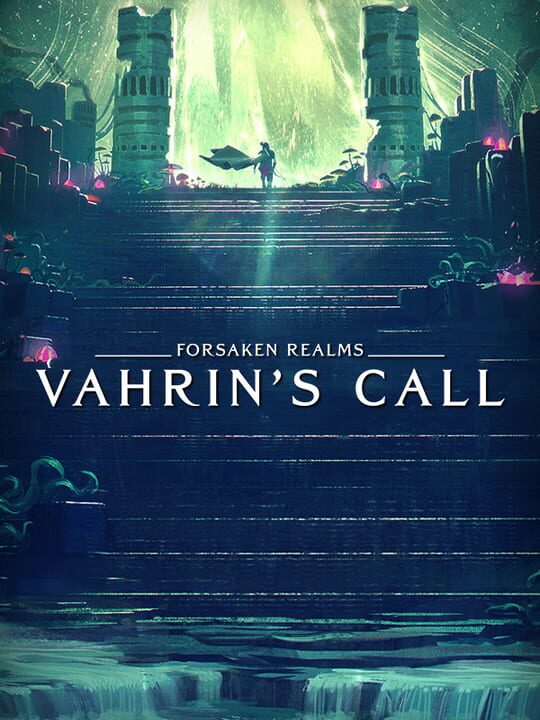
Adventure awaits in this narrative driven fantasy action-RPG. The war-torn city of Vahrin stands before you on the brink of collapse and in desperate need of aid. As a mercenary in search of your next…opportunity, will you answer Vahrin’s Call?
The Essence of Mechanics: A Dance Between Tactics and Action
The heart of Forsaken Realms: Vahrin's Call lies in its hybrid approach to the action-RPG genre. It does not attempt to blend the speed of a soulslike with the depth of a classic CRPG, but instead creates its own middle ground that translates the narrative weight of the collapsing city of Vahrin directly into the mechanics. The gameplay is built around a third-person perspective, allowing for close observation of both the spatial depth of combat and the fine nuances of character animations. The controls feel immediate and responsive, which is a crucial factor in a genre that often suffers from sluggish movement.
The Combat System: Precision Under Pressure
Combat in Vahrin is not a mere war of attrition. Every encounter with the broken remnants of the city requires a conscious decision regarding timing and positioning. The system relies on a responsive block-and-dodge scheme, but instead of using the strict punishment-heavy logic of hardcore action games, it focuses more on the strategic exhaustion of the enemy. You are not fighting against a global health bar, but against specific weak points that must be unlocked through precise strikes. This requires constant observation of enemy patterns, creating a gameplay rhythm that fluctuates between frantic action and controlled observation.
The Dynamics of Movement
Movement is the foundation of the game feel. The camera follows the mercenary with a dynamism that supports the flow of combat without disorienting the player during rapid turns. There is a palpable kinetic energy in jumping and dodging, underscored by subtle camera shakes and particle effects upon impact. You feel the weight of the armor, yet also the agility of the evasive maneuvers. It is this feeling of 'weight without inertia' that makes the gameplay so rewarding.
Character Development and Progression
The progression in Vahrin's Call is tightly interwoven with the narrative journey. There is no isolated skill tree that merely increases stats; instead, the player's choices directly alter the mercenary's available abilities. Deciding to invest in certain factions within the city doesn't just unlock dialogue options, it fundamentally changes the character's skillset. This integration ensures that decisions are made based on both efficiency and role-playing aspects. The learning curve is steep but fair: mechanics are introduced gradually, with enemy complexity scaling in tandem with the depth of available player skills.
The World as an Interactive Space
The city of Vahrin is not just a backdrop, but an interactive element of the gameplay. Exploration is defined by verticality, fully utilizing the third-person movement system. Many puzzles and paths are tied to the player's equipment. This means that progression is not just achieved through combat, but also through discovery and finding tools that grant access to previously unreachable sectors of the city. This exploratory component gives the game a sense of discovery that goes far beyond merely checking off waypoints.
The Role of Resources and Management
As a mercenary, you must not only keep an eye on enemies but also manage the scarce resources of the city. Inventory management is not overly complex, but it forces strategic decisions during exploration. How much equipment can I carry before I compromise my mobility? Which healing items are most effective in the unstable zones of Vahrin? This management element provides constant tension, especially when venturing deep into the ruins without knowing if you have enough supplies for the return trip.
Tactical Depth in Infiltration
Beyond direct combat, the game offers infiltration and stealth elements that are heavily dependent on the environment. Light and shadow play a central role. A prime example is using environmental interactions to distract enemies or trigger traps. The gameplay rewards players who view the environment as part of their arsenal. It is not a traditional stealth title, but rather a tactical element that influences combat before it even begins.
The Learning Curve: Challenge Instead of Frustration
A critical issue in many RPGs is the frustration caused by overpowered enemies. Vahrin's Call takes a different approach. The difficulty increases organically, introducing new mechanics (such as parrying projectiles or utilizing environmental traps) before enemies are appropriately bolstered. You aren't thrown against a wall; instead, you learn the craft of survival in Vahrin step by step. The game trusts the player to learn through observation rather than overwhelming them with tutorials.
Summary of Game Feel
Overall, Forsaken Realms: Vahrin's Call feels like a highly controlled yet highly dynamic experience. There are no redundant loops; every interaction with the world and every combat encounter feels like a necessary step in the mercenary's story. The connection between third-person action, deep character development, and a reactive world creates a dense, immersive experience that makes the player truly feel the danger lurking in Vahrin.
The Fragile Splendor of Vahrin: An Immersive World in Decline
The heart of "Forsaken Realms: Vahrin's Call" is undoubtedly the city of Vahrin. As a third-person action-RPG, Titan Roc focuses on an atmosphere characterized less by vast, empty landscapes and more by the oppressive density of a dying metropolis. Vahrin is not a static backdrop; it is a living, albeit heavily battered, organism. The city stands on the brink of collapse, and this unstable political and social situation permeates every detail of the environment. One can feel the decay in the scarred walls, the dark alleys, and the desperate look of the inhabitants. The world is designed such that the player feels as though they are constantly walking on a ticking time bomb. Every decision made in the streets keeps the fate of the city in a fragile balance.
The worldbuilding is deeply rooted in a lore that is conveyed not through endless walls of text, but through subtle environmental storytelling elements. One finds hidden letters, architectural fragments, and the weary glances of mercenaries trying to survive in this chaos. This method ensures that the world feels organic. It is not a classic high-fantasy epic with glowing elven cities, but a dark, almost urban fantasy scenario that reflects the harsh realities of war. The geographical layout of the city provides a vertical component that enhances the sense of exploration. One navigates from the slums up to the once-magnificent palace districts, where the contrast between poverty and wealth perfectly visualizes the social dynamics of the game world.
Mission Design and the Dynamics of Mercenary Existence
The structure of the quests in "Vahrin's Call" follows a clear, yet unpredictable pattern. Since the player acts as a mercenary, missions are often characterized by moral ambiguity. There is rarely a clear-cut "good" or "evil." Instead, it is about choosing which evil to combat to secure personal profit or the city's survival. The quest design is tightly linked to the narrative: each mission acts as a puzzle piece that completes the overall picture of Vahrin's collapse. The game avoids the typical "fetch-quest" trap by constantly expanding the context of the assignments. A simple escort mission quickly evolves into a highly complex political maneuver where the outcome of the mission permanently alters the player's reputation in certain city districts.
The pacing of the missions is masterfully designed to pull the player between intense action and quieter, narrative-driven moments. One cannot simply rush from one combat encounter to the next. The game forces one to reflect on the consequences of their actions. The structure is built such that the game world reacts to the player's progress. Successfully completing certain questlines changes the appearance of certain city districts or unlocks access to new traders and information. This creates a continuous feedback loop that motivates the player to keep exploring the city.
Structure and Level Design: The Vertical City
The level design in "Vahrin's Call" breaks away from the classic horizontal world map. Vahrin is a city of layers. This means that the level design is heavily based on vertical structures. The architecture is not just aesthetic; it is functionally integrated into the gameplay mechanics. Climbing, navigating through narrow passages, and exploring rooftop landscapes are essential components of the gameplay. This structure significantly increases the recognition value of the environment, as one experiences the same location from completely different perspectives and difficulty levels.
The transitions between the different city districts are designed to be seamless. There are no jarring loading screens between main missions within the city area, which significantly increases the immersion. The design utilizes the cramped nature of the alleys to create a claustrophobic tension that perfectly suits the theme of the impending collapse. Each district has its own identity, its own color palette, and its own acoustic signature. While the slums are characterized by darkness and filth, the administrative center, despite the ravages of war, feels more grand yet sterile and detached. This deliberate design supports the storytelling on a subconscious level.
Scope and the Depth of the Narrative
The scope of the game is focused rather than vast, which ultimately serves its quality. Titan Roc has opted to create a denser, more concentrated narrative instead of overwhelming the player with irrelevant content. The scope manifests in the depth of the side stories and the complexity of character development within the narrative framework. Vahrin's story is wide enough to provide a long playtime, but narrow enough to ensure the focus is never lost. One does not get lost in an endless world, but rather dives deep into the Abysses of a specific, highly emotional storyline.
Replayability stems primarily from the player's decision-making power. Since the game world reacts to moral decisions, it offers different paths. A player acting as a ruthless mercenary will find a completely different Vahrin than someone trying to save the city through moral integrity. These different paths affect not only the ending but also access to certain resources and the availability of certain questlines. This motivates players to experience the game at least twice with a contrasting approach.
Target Audience and Genre Classification
"Forsaken Realms: Vahrin's Call" can be clearly classified as a narrative action-RPG with strong adventure elements. It particularly appeals to players who value a dense atmosphere and a profound story. Those looking for pure, repetitive grinding might not find what they are looking for; however, those who want to experience a world that reacts to their every action will be thrilled. The game occupies the niche between high-gloss blockbusters and experimental indie titles by offering a focused experience with high production quality.
Target audiences include fans of "grimdark" fantasy who appreciate moral ambiguity. The third-person perspective allows for a visually impressive tracking of character animations and interaction with the environment. It is a game for conscious decisions, not for mere consumption. The blend of tactical combat (implied by RPG elements) and narrative depth makes it a sophisticated experience that skillfully blurs the genre boundaries between RPG and adventure.
Summary of Structural Features
In summary, the structure of "Vahrin's Call" is a prime example of efficient design. Instead of overwhelming players with quantity, the game focuses on quality in the connection between world, quest, and story. The city of Vahrin is the heart that holds all mechanics together. The vertical structure and the world's reaction to the player's actions create a dynamism rarely found in the indie sector. The scope is focused on a central scenario, but the depth within that scenario is remarkable.
Technology & System Requirements
Forsaken Realms: Vahrin's Call is exclusive to Windows PCs, relying on an in‑house engine built around OpenGL 4.6 and DirectX 12. The developers aimed for a soft memory footprint, enabling the title to run comfortably on mid‑range Windows desktops with 8 GB of RAM; a 16 GB build can push towards 4K without noticeable frame drops. In transparency blog posts the team noted that on high‑end workstations the CPU load remains within a comfortable 3‑GHz band, while GPU usage stays below 70 % through custom culling optimisations. Level streaming patches reduce loading time around the heart of Vahrin to under 15 seconds, a noteworthy improvement compared to comparable titles.
Visuals & Artistic Style
Visually, the game marries hand‑drawn backdrops with freshly sculpted 3D character models. HDR textures fuel realistic lighting, with distinguishgrim godby guilt a glimpsed mapping such that in daylight the shadows shift immediately, whereas a nighttime fog attenuates light completely. Bézier‑curve details keep edges smooth across broken walls; parallax scrolling tricks the eye into feeling a city that is bigger and deeper than it appears to be on screen. The palette moves with the narrative arc: the darker chapters absorb more saturation to weigh dread into the player’s psyche, while the opening scenes burst with warm tints that breathe hope.
Audio Design
The audio team has integrated a score that blends Baroque motifs with modern percuss поднятие orкого, while die‑getic sounds shift responsiveness to match combat intensity. Dynamic mixing ensures that a sharp drumbeat that signals an imminent ambush never lingers and is re‑balanced by surrounding environmental ambience. Voice acting is accommodated in several languages, with 70 voice‑actors delivering clear and localised dialogues that reinforce the game's setting.
Comfort Features & UI
The user interface follows a minimal Cpu‑based Design pattern. All HUD elements vanish when not needed. There is an optional controller optimised for Xbox, including an “Input Preset” enabling multiple input sources ოჯახ. Maus‑tast:: Begin: 30 Kedig, 4t Les: Data-Context. The control suite is easy to customise with up to 25 user‑defined bindings, while the colour‑filtering and contrast setting aid the player with visual clarity.
Performance & Frame Rates
When it comes to frame‑rating, the game generally sits in the 60‑framerange on 1080p with full Drill. For 1440p on mid‑range GPUs the framerate tends to stay within the 30‑45 performance bracket; occasional dips occur when level geometry loads but these are covered by a quick fade‑in effect that keeps the player's focus.
Criticisms and Weaknesses
Most issues exist in the interplay between layered object optimisation. Highĝo potato vertices occasionally cause visual Intermedia‑locking; a minimal explicit bug that can be recorded in a few specific actions post‑encounter. The audio crunch persisting sometimes leads to a short period before a new track is fully orchestrated, a factor that we
Genre Comparison & Peers
Compared to rival indie Action‑RPGs such as Shadowfall Saga, Forsանը·X, Vahrin’s Call offers deeper narrative immersion. Other similar titles like Eternal Chains rely more on high‑action silhouettes yet maintain emotional resonance only through hard‑codedированы narratives.
Verdict & Buy Recommendation
If you’re a stealth–oriented RPG veteran, g e offered by this game in their softer side. We recommend buying the PC release, primarily if you value art direction and an auditory depth that goes beyond any typical sprite‑based RPG.
Verdict
Forsaken Realms: Vahrin's Call is most compelling for players who are looking for this particular blend of genre, presentation and gameplay systems. The final recommendation depends on how strongly the described strengths outweigh the noted limitations.
System Requirements
Minimum
Recommended
Das könnte dich auch interessieren
Weitere Reviews aus der Kategorie game.
Lootbound im Test – Taktik, Loot und dunkle Fantasy
Inhaltsverzeichnis [Einleitung]( einleitung) [Story & Erzählung]( story und erzaehlung) [Gameplay & Mechaniken]( gameplay und mechaniken) [Grafik & Pr…
Review: Seina: A Tale Of Spirits – Eine Reise der leisen Magie
Inhaltsverzeichnis [Einleitung]( einleitung) [Story & Erzählung]( story und erzaehlung) [Gameplay & Mechaniken]( gameplay und mechaniken) [Grafik & Pr…
GridBeat! – Rhythmische Hack & Slash‑Abenteuer im Mainframe
Inhaltsverzeichnis [Einleitung]( einleitung) [Gameplay & Mechaniken]( gameplay mechaniken) [Grafik & Sound]( grafik sound) [Story & Atmosphäre]( story…
Frequently Asked Questions
How good is Forsaken Realms: Vahrin's Call Review: In-Depth Analysis?
Forsaken Realms: Vahrin's Call Review: In-Depth Analysis wurde von Nerdiction mit 86 von 100 Punkten bewertet und ist damit excellent.
What are the pros of Forsaken Realms: Vahrin's Call Review: In-Depth Analysis?
The advantages of Forsaken Realms: Vahrin's Call Review: In-Depth Analysis: Excellent integration of character development and narrative choices, Precise, weighty, and responsive third-person combat system, The world of Vahrin acts as an interactive element rather than a mere backdrop, Strong atmosphere, Coherent mechanics.
What are the cons of Forsaken Realms: Vahrin's Call Review: In-Depth Analysis?
The disadvantages of Forsaken Realms: Vahrin's Call Review: In-Depth Analysis: Steep learning curve regarding complex infiltration mechanics, Resource management can feel intrusive during certain phases, High focus on timing can be demanding for casual players, Some aspects should be checked editorially.
Is Forsaken Realms: Vahrin's Call Review: In-Depth Analysis worth it?
Yes. Forsaken Realms: Vahrin's Call Review: In-Depth Analysis received a score of 86/100 points and is excellent.
Diskussion
Die Bewertung von 86 finde ich fair, weil das Kampfsystem wirklich präzise und verantwortungsvoll wirkt, genau wie in der Review beschrieben.
Ich stimme zu, dass die Verzahnung von Charakterentwicklung und narrativen Entscheidungen hervorragend ist; das macht jede Spielentscheidung spürbar und erhöht den Wiederspielwert deutlich.
Wie sieht es eigentlich mit der Lernkurve bei den Infiltrationsmechaniken aus? Wird sie nach einigen Stunden gespielt weniger steep oder bleibt sie konstant herausfordernd?
Ich habe das Spiel letztes Wochenende angefangen und muss sagen, dass das Ressourcenmanagement in der Mitte des Spiels tatsächlich störend wirkt – ständig muss man entscheiden, ob man Tränke spart oder riskiert, was den Flow etwas bricht.
Die Welt von Vahrin als interaktives Element zu sehen, ist echt ein Highlight; man merkt, dass die Entwickler viel Liebe in die Umweltsteckung gesteckt haben, was Exploration belohnt.
Der Score von 86 spiegelt zwar die Stärken wider, aber ich glaube, ein paar kleinere Bugs und unausgewogene Timing-Abschnitte könnten die Wertung nach einem Patch leicht nach oben ziehen.
Als Gelegenheitsspieler finde ich den hohen Fokus auf Timing manchmal echt fordernd; trotzdem bleibt das Third-Person-Kampfsystem eines der besten, das ich bisher gespielt habe, weil es sich schwer anfühlt und dennoch fair ist.
Ich frage mich, ob die Entwickler in einem zukünftigen Update die Einzelaspekte überarbeiten werden, die in der Review als redierungsbedürftig genannt wurden – das könnte das Gesamtbild noch runder machen.
Nach mehreren Stunden Spielzeit kann ich bestätigen, dass die Atmosphäre wirklich stark ist; die Soundkulisse und das Lichtdesign ziehen mich tief in die Welt hinein, sodass ich oft vergesse, dass ich eigentlich nur spiele.
Zusammenfassend würde ich das Spiel eher erfahrenen Spielern empfehlen, die eine komplexe narrative Tiefe und ein anspruchsvolles Kampfssystem schätzen; für gelegentliche Spieler könnte die Lernkurve jedoch ein Hindernis sein.