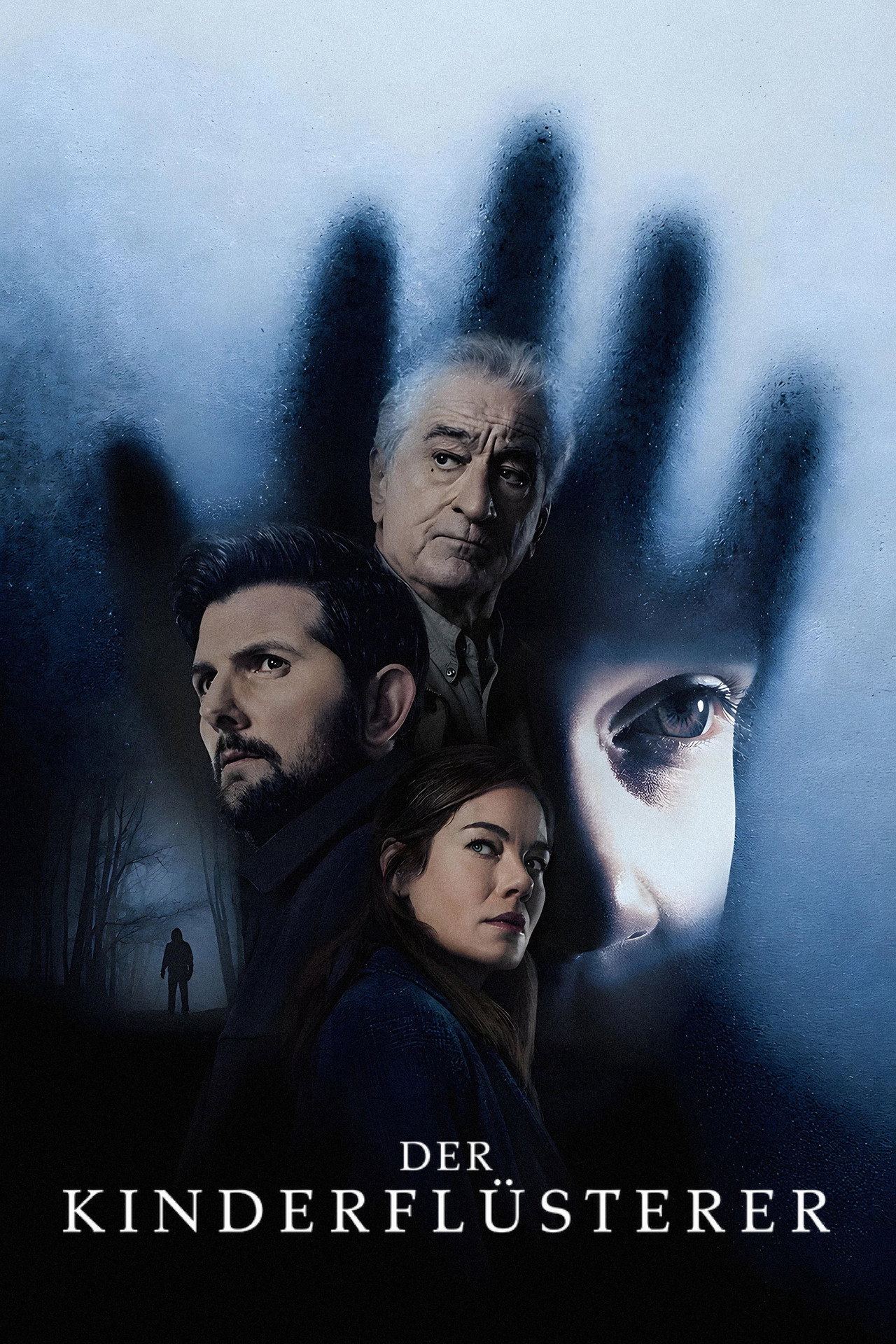
The Verdict
The Nerdiction verdict: The Whisper Man – Netflix Thriller Starring De Niro in a Serial Killer's Shadow is satisfactory and receives 64 out of 100 points.
Pro
- Outstanding chemistry between Adam Scott and Robert De Niro, who carry the emotional foundation of the film and credibly embody the cross-generational estrangement.
- Careful, atmospherically dense sound design that creates a continuously oppressive mood through targeted use of ambient and whisper sounds and shapes the film beyond the visual layer.
- Assured, unagitated direction by James Ashcroft, who establishes a distinctive visual language with precise compositions, a cool color palette and a deliberate rejection of frenetic pacing.
Contra
- Several supporting characters – in particular Michael Keaton's Frank Carter – remain too pale in motivation and function, which unnecessarily dilutes the resolution in the third act.
- The narrative pacing lingers too long in static arrangements across several scenes, causing the suspense to sag noticeably in the second half before the film finds its finale.
- The score remains too restrained in the dramatic moments to acoustically underpin the heightened situations, thereby squandering potential at the decisive turning points.
Videos & Trailers
Loading video…
Details
August 27, 2026
1h 54m
6.3
/ 10(161 votes)179.5
Genres
Production Companies
Production Countries
Spoken Languages
Cast
Table of Contents
- Introduction
- Plot & Narrative
- Acting & Characters
- Direction & Cinematography
- Music & Sound Design
- Visual Effects & Technical Craft
- Themes & Message
- Comparison with Similar Films
- Who Is This Film For?
- Verdict
Introduction
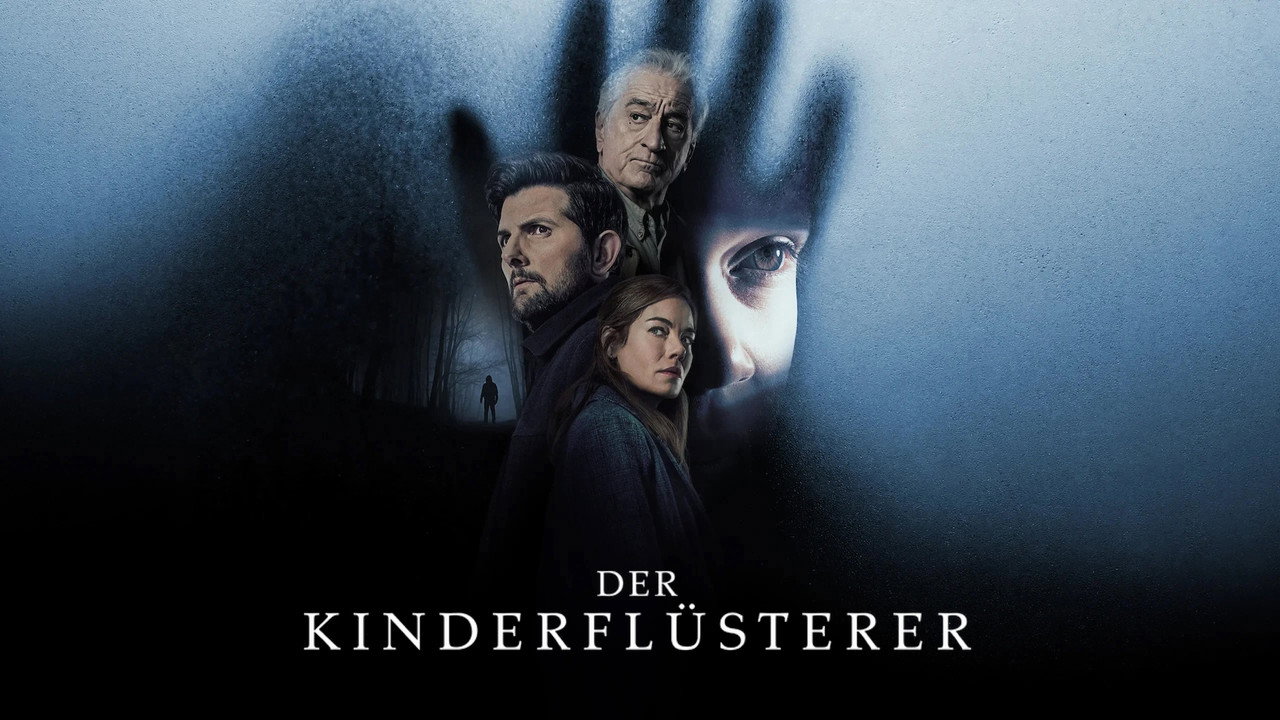
With The Whisper Man (German title: Der Kinderflüsterer), Netflix delivers a late-summer 2026 thriller that generated buzz well ahead of its release – not least because of an unusually assembled cast for the genre. Director James Ashcroft, who previously made his mark with the New Zealand indie thriller Coming Home in the Dark, stages a feature-length crime thriller that, based on available research, revisits the mechanics of classic serial-killer narratives while embedding them in a contemporary family tragedy. The film launches directly into the streaming subscription and deliberately bypasses a theatrical run – a distribution decision that raises questions for such a high-profile project, yet meets the audience where thriller viewers increasingly spend their time.
The first impression conveyed by trailers and pre-release coverage is that of an atmospherically dense, measured thriller that relies less on bloody spectacle than on a creeping, almost claustrophobic menace. With Robert De Niro, Adam Scott, Michelle Monaghan and Michael Keaton in leading roles, the film features an ensemble that spans the full range from dramatic character actor to seasoned genre performer. The fact that a retired police officer and the father of an abducted child stand at the center signals a narrative navigating between personal grief, generational estrangement and the pursuit of an unpredictable perpetrator. This blend raises expectations for a quiet but inexorable thriller – expectations the film largely meets while, in select areas, also falling short.
Even before pressing play on the streaming player, it becomes clear that The Whisper Man is no classic whodunit in the manner of an Agatha Christie puzzle. Instead, Ashcroft appears to chart a path that oscillates between family melodrama, police procedural and serial-killer mythos. This is appealing, because it forces the audience to engage with several narrative layers simultaneously. At the same time, such a hybrid construction carries structural risks – not every tonal register blends seamlessly with the menacing foundation of a child abduction thriller. The following analysis takes that tension seriously and examines to what extent The Whisper Man successfully balances emotional characterization with genre-typical suspense.
Plot & Narrative
At the heart of the story is a widowed crime author whose eight-year-old son disappears without a trace. This dramatic inciting incident is far more than a classical MacGuffin – it immediately establishes the film's emotional coordinate system. The father, played by Adam Scott, is confronted with nothingness: his wife has already passed, his child is gone, and the police are groping in the dark. At this point the titular generational conflict is introduced, as the protagonist turns to his estranged father – a retired police officer who once arrested the now-suspected serial killer. This constellation gives the plot a dual investigative layer: on one hand, the desperate search for the boy in the present; on the other, the resumption of a case that was apparently never fully closed in the past.
Screenwriter Alex North adapts the story together with Ben Jacoby and Chase Palmer in a structure that works on two temporal planes. The present-day thread around the abduction and search is told consistently from the father's perspective, while flashbacks and conversations between the retired detective and his son gradually expose the historical case line. Particularly intriguing is how the script uses the motif of the "whisper" – a detail already hinted at in the original title and deployed in the staging as a recurring, unsettling motif. The script refreshingly avoids simply repeating the serial-killer template; instead, it weaves the investigative lines so that personal guilt, familial silence and a criminal pattern interlock.
The narrative pacing is measured without becoming sluggish. Ashcroft and his co-authors rely on long, quiet takes that give the family's research work as much room as the police investigation embodied by the character Sgt. John Dyson. The turning points are carefully placed: an initial hot lead leads nowhere, an apparent tip turns out to be a distraction, and toward the end the tonal register shifts toward a more direct confrontation. Without spoiling the ending in detail, the resolution rests less on a shocking plot twist than on a painful, human realization. This is a courageous choice, because it deliberately prepares the audience for a more emotional finale – but it may alienate viewers expecting a classic showdown with a grand revelation.
In dialogue terms, the film operates on a consistently solid level. The conversations between father and grandfather are imbued with suppressed pain and decades of silence – a circumstance that significantly elevates the characterization, even if it also causes some confrontations to hesitate too long before escalating. The verbal sparring between Tom Kennedy and his father Peter Willis carries the film in its strongest moments, while the police procedural dialogues occasionally feel a touch too conventional to truly stand out. Overall, the narrative largely succeeds in balancing family drama and crime thriller, even though some transitions between tonal registers come across as slightly abrupt.
Acting & Characters
The ensemble is undoubtedly one of the strongest arguments in favor of The Whisper Man. Adam Scott, who established a completely different screen profile through his role in Severance than what is required here, delivers a deeply inward, controlledly desperate Tom Kennedy. His performance lives off micro-expressions: a barely perceptible tremor in the hands, a gaze drifting into the void, a sharp breath before each new blow. Scott avoids channeling his character's pain into loud outbursts, which – in combination with the somber staging – produces an enormous effect. Particularly in the scenes where Tom communicates with his son – whether in flashbacks or in remembered moments – Scott conveys a warmth that becomes all the more painful later on.
Robert De Niro takes on the role of retired police officer Peter Willis and delivers a performance that distinguishes itself pleasingly from his more recent genre appearances. Instead of relying on the iconic blend of restrained rage that he cultivated in films like Heat or Ronin, he gives us here an older, scarred man whose police experience grants him a deceptive sense of authority. The chemistry between De Niro and Scott carries the film: their joint scenes are marked by a precise timing that simultaneously expresses suppressed emotion and long-standing estrangement. Especially impressive is a longer confrontation scene in which both actors manage without grand gestures and yet carry the entire tension through their looks and timing.
Michelle Monaghan complements the ensemble as Amanda Beck, although her role remains ambivalent: on one hand, she provides the necessary police counterpoint to the private investigation; on the other, her character feels underutilized in several scenes. Nevertheless, she manages to command presence in the moments the script grants her. Michael Keaton appears as Frank Carter in a capacity that is more than a cameo but also not fully developed as a central figure – an observation that is not insignificant for the film's assessment. Owen Teague as Frank Carter Jr. and Hamish Linklater as Norman Collins round out the ensemble, with Linklater in particular standing out positively in a supporting role, adding an additional emotional facet to the film in its quieter moments.
Acston Luca Porto as Jake Kennedy faces a difficult task: as a child actor he must convince in a thriller whose entire plot is carried by his disappearance. Porto solves this challenge with a mixture of childlike curiosity and a quiet vulnerability that makes the later loss weigh all the heavier. The character development overall is nuanced: the film takes its time not to use its figures as mere functional elements of a crime plot but as human beings with wounds, secrets and unspoken bonds. However, some supporting characters – including the already mentioned Frank Carter – remain somewhat pale in their motivation, which is reflected in the later resolution and slightly tarnishes the overall impression of the character work.
Direction & Cinematography
James Ashcroft directs The Whisper Man with a clear, unagitated signature that deliberately sets itself apart from the hyperkinetic aesthetics of many contemporary streaming thrillers. His background in independent cinema – particularly Coming Home in the Dark – is clearly palpable: Ashcroft trusts in long takes, precisely framed images and a tempo that gives the audience time to grasp the threat not only intellectually but atmospherically. The camera work follows this approach, often lingering in medium to close shots and capturing the emotional states of the characters without destroying them through frantic editing.
Particularly noteworthy is the deliberate use of space. Many scenes play in interiors – the empty family home, a somber police precinct, an abandoned industrial site – which serve not merely as locations but as visual metaphors for the inner state of the figures. The composition frequently follows a strict symmetry that leaves the figures little room to unfold between the framing lines – a stylistic device that effectively underscores the sense of constriction. In the exterior shots, a cool, bluish color palette dominates, plunging the North American setting into a mood caught between bleakness and latent danger. It is a visual language that recalls David Fincher's early work more than contemporary mainstream thriller conventions.
The editing works predominantly in classical fashion, with shots that are allowed to develop their effect before the next cut intervenes. Some sequences – particularly an interrogation scene that plays out without visible cuts – impressively demonstrate how much Ashcroft trusts his performers. In other moments, however, one might have wished for a bolder rhythm: some scenes linger too long in their static arrangement, which certainly contributes to the atmosphere but unnecessarily slows the narrative pace. The staging of the titular "whisper" – whether through close-ups of mouths, subtle off-screen sound or the deliberate omission of dialogue – is one of the film's strongest visual ideas and lends it a distinctive profile within the genre.
All in all, Ashcroft succeeds in establishing his own tonal register between family melodrama, police thriller and atmospheric crime. His direction is not revolutionary, but consistently competent and in the decisive moments even impressive. Those seeking a thriller that prioritizes solid craftsmanship over visual spectacle will find what they are looking for here. Those, however, hoping for a more dynamic staging may feel somewhat underserved in certain passages.
Music & Sound Design
The sound design is – alongside the camera work – the second pillar on which the film's atmosphere rests. Already in the opening minutes it becomes clear that the sound design is not understood as an accessory but as an independent narrative device. Ambient recordings of empty streets, the ticking of an old wall clock, the rustling of leaves in front of a house that seems too quiet – all these details combine into a soundscape that constantly carries an underlying threat. The film deploys these acoustic details with a care reminiscent of works like Prisoners or No Country for Old Men.
The score, by contrast, remains deliberately restrained. Where other genre offerings immediately resort to orchestral crescendi or percussive patterns in moments of tension, The Whisper Man trusts in what happens between the notes. When music does appear, it is often as a long-drawn, frequently dissonant surface sound that settles under the dialogue without overlaying it. This strategy works excellently in the quieter scenes because it makes the inner tension of the figures audible without illustrating it. In the more action-heavy moments of the third act, however, the score sometimes lacks the force to acoustically underpin the heightened situation – a point where one would have wished for a somewhat bolder score.
Particularly worth mentioning is the handling of the titular whisper: a central scene works almost entirely with whisper and breathing sounds that are spatially precisely placed and, when watched at home with a good sound system or headphones, produce a physical effect. This is cinematic sound design at a high level and one of the reasons why the film offers an intense experience despite its restrained staging. The emotional effect of the music reveals itself especially in the final third, where a recurring musical motif from the father-son thread is taken up and transferred into a darker context – an elegant, if not in itself groundbreaking, artistic move.
Visual Effects & Technical Craft
For a thriller of this scope, digital effects are not – as expected – in the foreground, and that is a good thing. The Whisper Man is not a film that builds on CGI set pieces or spectacular action sequences – it is a craft-driven crime story whose visual strength results from composition, light and editing. The few computer-generated shots – such as exterior views of a small town or the simulation of certain weather conditions – are cleanly integrated and do not disturb the otherwise naturalistic look. In fact, in some places it is hard to distinguish digital from practical effects, which speaks to the high production quality.
The production design contributes significantly to the credibility. The apartments, offices and locations feel authentically inhabited without straying into the over-stylized ambiance of many thrillers. Particularly impressive is the outfitting of the family home, which tells a story through personal objects, family photos and subtle details that goes beyond the screenplay. Make-up and costume support the characterization: Adam Scott's crime writer wears the slight dishevelment of a man who has barely taken care of himself since the loss of his wife, while Robert De Niro's retired police officer appears with a controlled, almost old-fashioned elegance that underscores his one-time authority.
The color grading works with a cool, slightly desaturated palette that gives the film a continuous gloom without tipping into monochromatic bleakness. Individual warm-toned scenes – such as a flashback to a sunlit garden – stand out all the more clearly and emotionally precisely mark what has been lost. Overall, the technical execution is at a level that is remarkably solid for a streaming project of this caliber. The film looks so good that it could easily have held its own in cinemas – an observation that, given the decision against a theatrical release, reads somewhat ambiguously.
Themes & Message
On the thematic level, The Whisper Man is more than a conventional serial-killer thriller. At its core, the film negotiates three closely interwoven thematic complexes: grief and its management, the silence between generations, and the question of how far we will go to protect the people we love. The widowed father embodies the modern discourse of grief in a manner that is neither pathetic nor emotionally numb, but rather shows the paralysis that sets in when pain finds no outlet. His father, in turn, stands for a generation of men who channel their emotions into the fulfillment of duty – an attitude that once made him a successful police officer but in the private sphere became the source of decades of speechlessness.
The motif of the whisper serves as a thread for a message that fully reveals itself only in the second half: words can heal, but they can also leave wounds – especially when they are spoken at the wrong moment or, at the right moment, left unsaid. Without offering spoilers, it can be said that the film processes this theme in a way that goes beyond a simple perpetrator-victim logic and raises the question of what role trust, silence and familial loyalty play in the emergence of violence. It is a socially relevant question that resonates strongly in a time when familial bonds suffer under the pressure of individualization and mobility.
Emotionally, the film works predominantly through suggestion rather than grand gestures. That makes it potentially less immediately accessible for a mainstream audience, but it rewards those viewers who are willing to engage with its tonal register. The central message of the film could, in pointed form, be formulated as follows: true threat does not always come from the darkness, but sometimes from what we have never said to one another. Whether the film truly transports this message in a way that lingers depends not least on how openly one as a viewer responds to its quiet undertones.
Comparison with Similar Films
In the marketing accompaniment of the film, the comparison to David Fincher's Se7en is repeatedly drawn, and indeed the reference points are obvious: a central serial killer, a disturbing pattern of crimes, an atmosphere of moral bleakness and an investigator duo moving on unfamiliar terrain. However, The Whisper Man is in its tonal register closer to films like Denis Villeneuve's Prisoners or Sean Penn's The Pledge, in which the elucidation of a crime is inseparably linked with the emotional state of the investigators. Mystic River by Clint Eastwood can also be cited as a reference, although the family constellation in The Whisper Man is more strongly foregrounded.
At the same time, the film distinguishes itself from these models through its specific streaming origins. Compared to similarly conceived Netflix productions such as The Guilty or individual installments of the Fear Street trilogy, The Whisper Man feels distinctly more grown-up and unagitated. It shares this quality with titles like The Devil All the Time, which likewise featured a prominent cast and a dark Southern atmosphere, but conveyed a significantly more pessimistic worldview. In this respect, The Whisper Man is more accessible without losing its hardness. The desperation remains human, the violence remains tangible, the tone remains serious.
What sets the film apart from its direct genre relatives is the consistent linkage of the family and crime layers. While many modern thrillers tend to use the personal story of their protagonists merely as a frame narrative, here it becomes the actual core. That is a courageous narrative step that does not fully come off in every moment but already sets its own note. Those who appreciate genre films that are not satisfied with pure procedural entertainment will find here an above-average representative – even though The Whisper Man does not reach the format of a modern classic.
Who Is This Film For?
The Whisper Man is a film for viewers who appreciate a quietly told, atmospherically dense thriller with strong performances. Those who liked films such as Prisoners, The Pledge or the quieter second half of Gone Girl will find a similar tonal register here. The film is less suitable for those expecting a fast-paced action thriller with frequent set pieces or a classic whodunit puzzle with a spectacular resolution. Fans of jump-scare-heavy horror cinema will also find little to their liking here.
The value-for-money ratio in the streaming context is above average: for a Netflix subscription, you receive an approximately 114-minute feature film with a top-flight cast, careful staging and a narrative that goes beyond pure genre entertainment. Those who are already subscribed to Netflix can dive in without regret. Those who, however, switch between several streaming services should keep in mind that the film does not unleash a kinetic pull that forces a spontaneous start – it works best on a quiet evening when one can surrender to its quiet moments of suspense.
For a single cinema experience, the film – which in any case has not been released theatrically – is no option. For a streaming evening, a good sound system or at least high-quality headphones are recommended to fully enjoy the strengths of the sound design. Age recommendation: due to the depicted child abduction and the tense foundation, not suitable for very young viewers; for an adult audience from 16 years upward, the film is fine, provided one is prepared for emotionally intense scenes.
Verdict
The Whisper Man is a solid, craft-conscious streaming thriller that convinces above all through its cast, its sound design and its atmospheric staging. Director James Ashcroft succeeds in telling a story that goes beyond the mechanisms of the classic serial-killer thriller and takes the emotional entanglements of his figures seriously. Adam Scott and Robert De Niro carry the film with precise, restrained performances that place the family drama at the center, while the sound design ensures a continuously oppressive underlying mood.
On the other hand, the staging lingers too long in some scenes in its quiet arrangement, the score remains somewhat too restrained in the dramatic moments, and not all supporting characters – including the prominently cast Frank Carter – are developed as the story would deserve. Also, the tonal register between family drama and crime negotiation does not succeed fully convincingly at every transition, which is why the film does not fully exhaust its enormous potential.
In relation to the external reference rating of 6.3/10, this assessment slots in plausibly. We award a score of 64/100 – slightly below the average of the external ratings – because the noted weaknesses in character development and pacing noticeably dim the overall picture, while the fundamental craft quality and the strengths in acting, sound and staging clearly outweigh them. The Whisper Man is not a masterpiece, but an adult, distinctive thriller that fits perfectly into a single evening's program. Those who already use the streaming provider and can settle in for quieter suspense should give it a chance – miracles, however, should not be expected.
Das könnte dich auch interessieren
Weitere Reviews aus der Kategorie movie.
UNABOMBER
Einleitung In diesem Drama nach wahren Ereignissen wird Ted Kaczynskis Weg vom Harvard Wunderkind und Testobjekt zum berüchtigten, vom FBI gejagten Un…

Die Frau ohne Vergangenheit – Eine tiefgründige Thriller-Rezension 2026
Inhaltsverzeichnis [Einleitung]( einleitung) | [Handlung & Erzählung]( handlung und erzaehlung) | [Schauspiel & Charaktere]( schauspiel und charaktere…
Primetime – Eine medienkritische Analyse von Lance Oppenheim
Inhaltsverzeichnis [Einleitung]( einleitung) [Handlung & Erzählung]( handlung erzaehlung) [Schauspiel & Charaktere]( schauspiel charaktere) [Regie & I…
Frequently Asked Questions
How good is The Whisper Man – Netflix Thriller Starring De Niro in a Serial Killer's Shadow?
The Whisper Man – Netflix Thriller Starring De Niro in a Serial Killer's Shadow wurde von Nerdiction mit 64 von 100 Punkten bewertet und ist damit satisfactory.
What are the pros of The Whisper Man – Netflix Thriller Starring De Niro in a Serial Killer's Shadow?
The advantages of The Whisper Man – Netflix Thriller Starring De Niro in a Serial Killer's Shadow: Outstanding chemistry between Adam Scott and Robert De Niro, who carry the emotional foundation of the film and credibly embody the cross-generational estrangement., Careful, atmospherically dense sound design that creates a continuously oppressive mood through targeted use of ambient and whisper sounds and shapes the film beyond the visual layer., Assured, unagitated direction by James Ashcroft, who establishes a distinctive visual language with precise compositions, a cool color palette and a deliberate rejection of frenetic pacing., Solid screenplay that consistently interweaves the family and crime layers and raises socially relevant questions about grief and silence beyond the simple perpetrator-victim scheme., High craft quality in production design, make-up and outfitting that lend the streaming format a cinematic appearance and make the world of the film feel credible..
What are the cons of The Whisper Man – Netflix Thriller Starring De Niro in a Serial Killer's Shadow?
The disadvantages of The Whisper Man – Netflix Thriller Starring De Niro in a Serial Killer's Shadow: Several supporting characters – in particular Michael Keaton's Frank Carter – remain too pale in motivation and function, which unnecessarily dilutes the resolution in the third act., The narrative pacing lingers too long in static arrangements across several scenes, causing the suspense to sag noticeably in the second half before the film finds its finale., The score remains too restrained in the dramatic moments to acoustically underpin the heightened situations, thereby squandering potential at the decisive turning points., The tonal register between family drama and serial-killer thriller feels somewhat abrupt at some transitions, leaving the screenplay's hybrid construction not fully smoothed., Michelle Monaghan's character Amanda Beck remains underutilized in several scenes, although her presence as the police counterpoint to the private investigation could have provided important impulses..
Is The Whisper Man – Netflix Thriller Starring De Niro in a Serial Killer's Shadow worth it?
Only conditionally. The Whisper Man – Netflix Thriller Starring De Niro in a Serial Killer's Shadow received a score of 64/100 points.