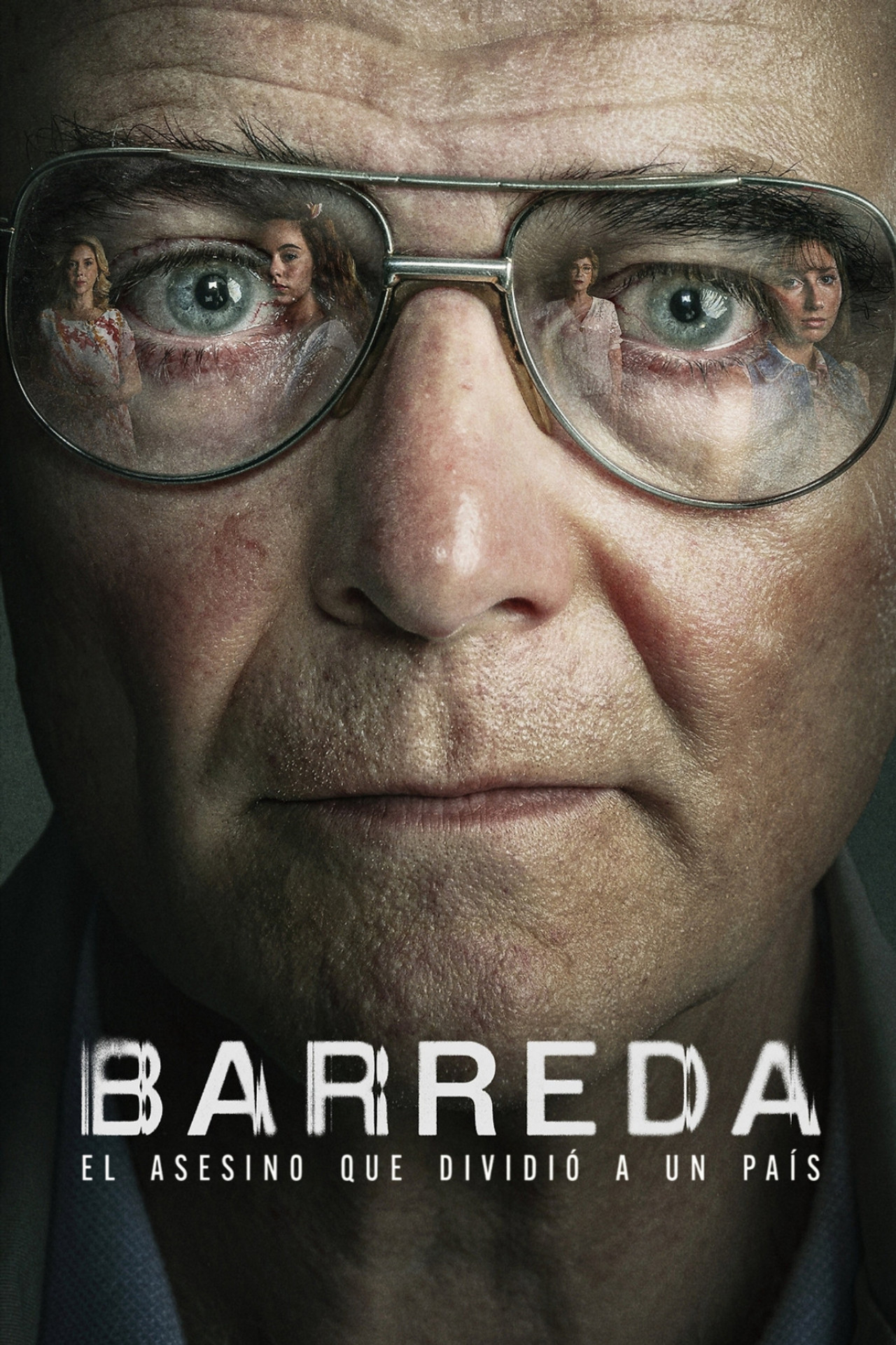
The Verdict
The Nerdiction verdict: Barreda: A Horrific Crime and the Media That Exploited It is good and receives 74 out of 100 points.
Pro
- Exceptional performance by Luis Machín in the lead role
- Thoughtful, balanced direction from Daniela Goggi
- Authentic production design and period-appropriate costumes
Contra
- At times overly detached narrative style slows emotional connection
- Pacing issues in several quieter scenes reduce momentum
- Lacks groundbreaking visual innovation or stylistic risk-taking
Details
August 28, 2026
1h 45m
7.3
/ 10(59 votes)51.1
Genres
Production Companies
Production Countries
Spoken Languages
Cast
Table of Contents
- Introduction
- Plot & Narrative
- Acting & Characters
- Direction & Cinematography
- Music & Sound Design
- Visual Effects & Technical Craft
- Themes & Message
- Comparison with Similar Films
- Who Is This Film For?
- Verdict
Introduction
The film Barreda, set to release in theaters on August 28, 2026, promises a fictionalized exploration of one of the most scandalous murders in Argentine history. With Daniela Goggi directing and Luis Machín starring as Ricardo Barreda—the former dentist who killed his wife, mother-in-law, and two adult daughters—the film blends psychological drama with a critique of media manipulation. The anticipation surrounding this project has sparked debates among critics and audiences alike, particularly over its nuanced portrayal of the perpetrator.
From the opening moments, it's clear that Barreda is not merely a condemnation of its central figure but a deeper analytical examination of public perception and media influence. Drawing from a real-life mass murder that shocked Argentina in 1992, the movie dramatizes events without veering into sensationalism. Instead, it interrogates how quickly society can be swayed by emotional narratives.
Expectations for this film run high, promising intelligence, relevance, and a thoughtful treatment of violence, identity, and media dynamics. Yet, the story also raises ethical questions: Does depicting such a criminal humanize him, or merely expose systemic flaws?
Plot & Narrative
The narrative structure of Barreda follows a linear progression, occasionally interrupted by flashbacks and internal monologues to delve deeper into the protagonist’s psyche. The film opens with investigations into the aftermath of the massacre before tracing back to the days leading up to the crime. This reverse chronology builds tension while fostering understanding of the escalating circumstances that led to the tragedy.
Dialogue throughout remains sparse and measured, reflecting the gravity and realism of the subject matter. Most scenes unfold within the familial setting, showing Barreda as an ordinary figure until his eventual descent. The writers—Juan Cavoti Caterbona, Daniela Goggi, Josefina Licitra, Tamara Talesnik, and Donna Tefa—deliberately avoided melodrama, choosing instead to highlight the banality of evil.
A key element of the plot involves Barreda’s self-portrayal as a victim post-murder. He fabricates a story of an unknown attacker, leveraging public sympathy to his advantage. The film illustrates how swiftly attention shifts and how easily truths can be distorted by those who control the narrative.
Despite its emotional heavy lifting, the tone stays detached. This prevents glorification of the killer and invites critical reflection. Through this lens, the film conveys not only the horror of the act but also the societal responsibilities tied to shaping collective memory.
Acting & Characters
Luis Machín’s portrayal of Ricardo Barreda is a masterclass in restraint and unsettling normalcy. His performance sidesteps melodrama, presenting a man whose emotional detachment proves more chilling than any explosive outburst. Machín embodies the way Barreda moves through space—as seemingly harmless—all while concealing dark impulses. Critics commend this restrained approach, noting how it elevates the film’s psychological depth.
Supporting performances add significant weight to the ensemble. Mercedes Morán as Elena Arreche stands out, alongside strong contributions from Carla Peterson and Maite Lanata, who breathe life into pre-tragedy family dynamics. Their interactions feel lived-in rather than scripted, grounding the domestic moments with authenticity.
Chemistry among cast members reinforces believability across tense confrontations and quiet domestic exchanges alike. Especially striking is how the actors convey emotional numbness following the murders, avoiding melodrama in favor of haunting realism.
Direction & Cinematography
Daniela Goggi exercises a thoughtful directorial style—clear-eyed yet emotionally resonant. She resists romanticizing the perpetrator while refusing to reduce him to pure villainy. Her direction maintains an atmosphere of ambiguity, compelling viewers to oscillate between judgment and comprehension.
Cinematographically, the film favors static shots and distant framing, enhancing verisimilitude. During crime revelations, the visual language stays clinical yet impactful, communicating trauma without sensational flair. Editing proceeds at a deliberate pace, supporting contemplative inquiry into events rather than accelerating toward spectacle.
Light palettes shift subtly throughout—from warm domestic tones to cooler investigative hues—reinforcing thematic contrasts. Visual choices serve the story without overwhelming viewer engagement.
Music & Sound Design
The score in Barreda operates quietly but powerfully. Minimalist compositions build tension without overshadowing dialogue or ambient noise. Emotional sequences lean on soft string arrangements that evoke sorrow and loss without descending into manipulative territory.
Sound design mirrors this understated strength. Everyday sounds—like clock ticks or distant playground laughter—are used sparingly to create unease. These auditory cues enhance mood without dominating the cinematic experience.
Visual Effects & Technical Craft
Technically, Barreda leans heavily on realism over flashiness. There are no elaborate VFX sequences; instead, everything serves the grounded narrative. Production design meticulously recreates mid-90s Argentina, complete with accurate wardrobe details and lived-in interiors.
Camera work remains steady and unaffected, lending a documentary-like quality to proceedings. Lighting techniques subtly underscore tone shifts—from warmth in memory-filled scenes to stark contrasts during interrogations.
Overall, technical execution supports storytelling seamlessly, never drawing unnecessary attention away from core themes and performances.
Themes & Message
At its heart, Barreda grapples with society’s tendency to manipulate truth through narrative control. By showing how Barreda leveraged media sympathy, the film critiques modern information warfare and public gullibility—timely issues in today’s digital landscape.
Another major theme centers around the normalization of violence. The movie demonstrates that horror often hides behind ordinary facades—not monsters under beds but neighbors next door.
Comparison with Similar Films
Comparisons inevitably arise with titles like The Act or Dopesick, both of which mine true crimes for dramatic effect. However, Barreda diverges sharply by focusing more on institutional responses and media ethics rather than individual pathology. Its restrained aesthetic further separates it from these counterparts.
Who Is This Film For?
This film suits viewers drawn to intelligent dramas tackling moral ambiguity. Fans of character-driven narratives anchored by powerful acting will find much to appreciate here. Ideal for streaming or theatrical settings alike.
Verdict
In conclusion, Barreda delivers a gripping, unflinching depiction of a horrific true crime while maintaining ethical integrity. Spearheaded by a stellar performance from Luis Machín and guided by Daniela Goggi’s measured direction, the film offers a compelling meditation on truth, tragedy, and responsibility. Despite occasional pacing lulls, it stands as a vital contribution to contemporary historical cinema.
Score: 74/100
Pros:
- Exceptional performance by Luis Machín in the lead role
- Thoughtful, balanced direction from Daniela Goggi
- Authentic production design and period-appropriate costumes
- Subtle yet effective use of sound design and musical score
- Strong thematic relevance addressing media manipulation and accountability
Cons:
- At times overly detached narrative style slows emotional connection
- Pacing issues in several quieter scenes reduce momentum
- Lacks groundbreaking visual innovation or stylistic risk-taking
- Morally ambiguous characterization risks unintended glorification
- Secondary characters remain underdeveloped despite capable cast
Das könnte dich auch interessieren
Weitere Reviews aus der Kategorie movie.
Toxic Review: Stil über Substanz – Yash glänzt, die Story schwächelt
Inhaltsverzeichnis [Einleitung]( einleitung) [Handlung & Erzählung]( handlung und erzaehlung) [Schauspiel & Charaktere]( schauspiel und charaktere) [R…
Der Kinderflüsterer – Netflix-Thriller mit De Niro im Serienkiller-Schatten
Inhaltsverzeichnis [Einleitung]( einleitung) [Handlung & Erzählung]( handlung erzaehlung) [Schauspiel & Charaktere]( schauspiel charaktere) [Regie & I…
Don't Say Good Luck – Eine herzliche Netflix-Dramedy
Inhaltsverzeichnis [Einleitung]( einleitung) [Handlung & Erzählung]( story und erzaehlung) [Schauspiel & Charaktere]( schauspiel und charaktere) [Regi…
Frequently Asked Questions
How good is Barreda: A Horrific Crime and the Media That Exploited It?
Barreda: A Horrific Crime and the Media That Exploited It wurde von Nerdiction mit 74 von 100 Punkten bewertet und ist damit good.
What are the pros of Barreda: A Horrific Crime and the Media That Exploited It?
The advantages of Barreda: A Horrific Crime and the Media That Exploited It: Exceptional performance by Luis Machín in the lead role, Thoughtful, balanced direction from Daniela Goggi, Authentic production design and period-appropriate costumes, Subtle yet effective use of sound design and musical score, Strong thematic relevance addressing media manipulation and accountability.
What are the cons of Barreda: A Horrific Crime and the Media That Exploited It?
The disadvantages of Barreda: A Horrific Crime and the Media That Exploited It: At times overly detached narrative style slows emotional connection, Pacing issues in several quieter scenes reduce momentum, Lacks groundbreaking visual innovation or stylistic risk-taking, Morally ambiguous characterization risks unintended glorification, Secondary characters remain underdeveloped despite capable cast.
Is Barreda: A Horrific Crime and the Media That Exploited It worth it?
Yes. Barreda: A Horrific Crime and the Media That Exploited It received a score of 74/100 points and is good.